
Israel and Lebanon have agreed to a 45-day extension of a ceasefire US president Donald Trump declared on April 16th, the US state department said on Friday.
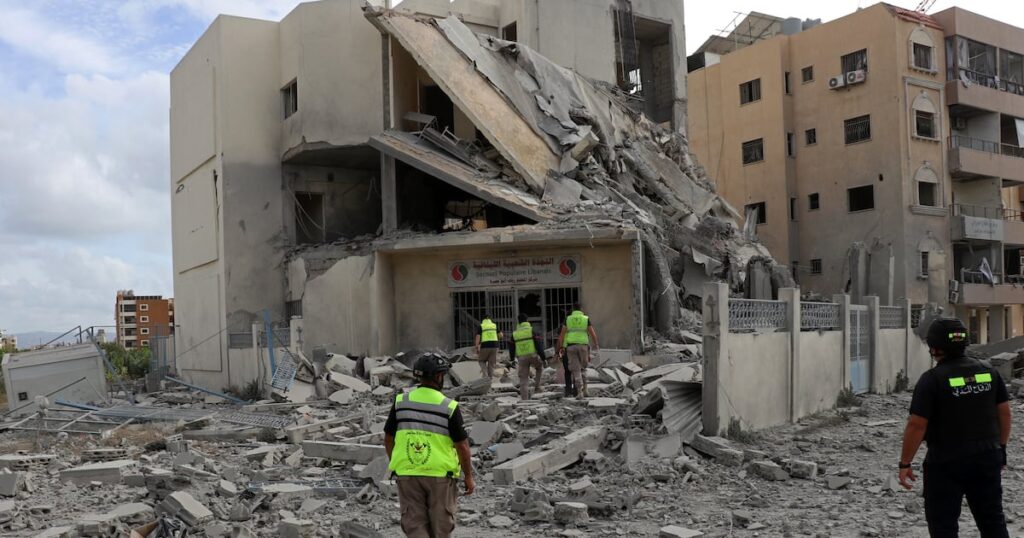
Later on Friday, at least six people were killed, including three paramedics, and 22 were wounded in an Israeli strike on a civil defence centre in southern Lebanon, the Lebanese state news agency said.
“The April 16 cessation of hostilities will be extended by 45 days to enable further progress,” state department spokesman Tommy Piggott said.
The state department cast Israel-Lebanon talks – held in Washington on Thursday and Friday – as “highly productive” and said the countries would reconvene negotiations on June 2nd and June 3rd.
This week’s talks were the sides’ third meeting since Israel intensified air attacks on Lebanon after Hizbullah fired missiles at Israel on March 2nd, three days into the US-Israeli war on Iran. Israel had widened its ground invasion into Lebanon’s south last month.
Fought in parallel to the US-Iran conflict, Israel’s war in Lebanon has rumbled on since Trump declared the ceasefire, though hostilities have largely been contained to southern Lebanon since then.
Minister for Foreign Affairs Helen McEntee welcomed the ceasefire extension’s announcement but said “extensive attacks against clearly civilian infrastructure have continued and civilians, including health care and rescue workers, continue to be killed. There is no real prospect of peace while civilians in southern Lebanon continue to live under threat, displacement and insecurity”.
“It is vital that all sides fully respect the ceasefire and engage constructively in the negotiations ahead.”
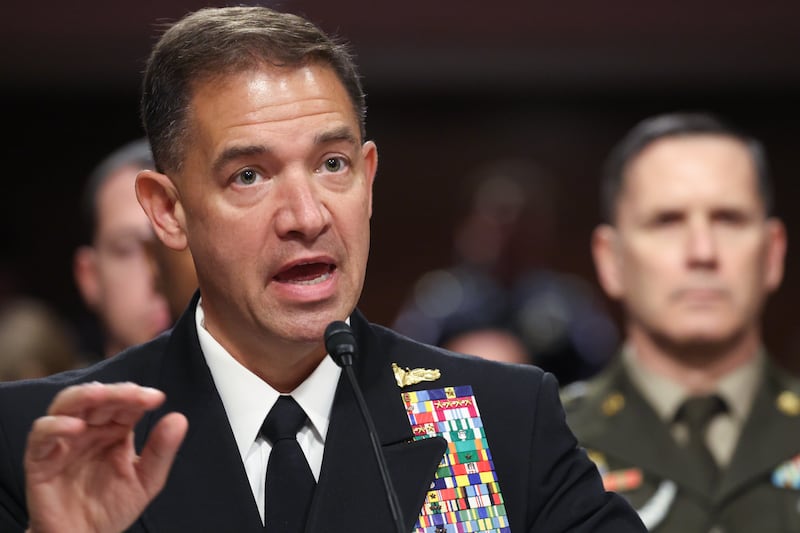
Admiral Brad Cooper testifies during a Senate armed services committee hearing in Washington, DC. Photograph: Win McNamee/Getty Images
Earlier, the senior Pentagon officer overseeing combat operations in Iran told the US Senate that the destruction of an Iranian school, which Iranian officials said killed 175 people, may have been caused by a US bomb and was the only civilian casualty incident he was aware of in a campaign of more than 13,600 strikes.
Admiral Brad Cooper’s testimony suggested he believed the US military’s record since that February 28th strike had been near perfect, a fact belied by investigations from human rights groups and news media organisations.
Senators greeted Cooper’s claims with deep scepticism, and a human rights group that investigates civilian casualties in war called it “ridiculous”.
The US military still has not taken responsibility for the school strike, which Cooper, the head of US Central Command, said remained under investigation.
The New York Times has verified damage to 22 schools and 17 healthcare facilities. The Iranian Red Crescent Society, the country’s primary humanitarian relief organisation, said on April 2nd that at least 763 schools and 316 healthcare facilities had been damaged or destroyed in the war.
At least 1,700 Iranian civilians have been killed in the war, according to the Human Rights Activists News Agency.
“How do you explain the publicly available information that 22 schools have been hit and multiple hospitals?” asked senator Kirsten Gillibrand, a Democrat, citing the New York Times report.
“There’s no way we can corroborate that,” Cooper replied. “No indication of that whatsoever.”
In his testimony, Cooper described the prevention of civilian deaths on the battlefield as “a matter that I’m passionate about”.
[ Thorny issues set aside as Trump and Xi reach rosy consensusOpens in new window ]
But he also conceded his staff had not investigated any of the incidents documented by the media or human rights groups.
“The idea that they only are looking into one is pretty ridiculous,” said Emily Tripp, executive director of Airwars, a British non-profit that investigates civilian deaths in war.
Airwars has recorded at least 300 civilian casualty events in Iran, many of which resulted from large bombs being dropped on heavily populated areas.
“Why are they not looking into any of those?” Tripp asked. “We know they have the team and the infrastructure to do so.”
Capt Tim Hawkins, a spokesperson for US Central Command, said other preliminary reviews of suspected civilian casualty incidents would occur, but he did not specify which incidents would be covered or when they might be initiated.
Cooper said the US still had the military power to permanently reopen the Strait of Hormuz but would not be drawn on why this has not happened.
Iran’s stranglehold on the strategic Gulf waterway since the US and Israel triggered the war has affected economies around the world, including the UK’s.
The effective closure of the shipping lane to oil and gas supplies has sparked a global energy crisis and sent fuel prices soaring.
A separate naval mission ordered by Trump to reopen the sea route lasted only a few days before it was pulled amid reports of Saudi opposition, with fears it could lead to more attacks by Tehran and threaten the fragile ceasefire.
Tensions continue to flare in the area with one ship seized and another sunk after being attacked in the latest incidents.
Appearing before the Senate armed services committee, Cooper was asked if the US was able to permanently open the strait.
In reply, he said: “Without getting into specifics we have the military power, yes.”
On the ability of Iran to carry out attacks in the region, he said: “They have a very moderate, if not small, capability to continue strikes and we, of course, have accordingly prepared for such a contingency.” – This article originally appeared in The New York Times. Additional reporting: Reuters