
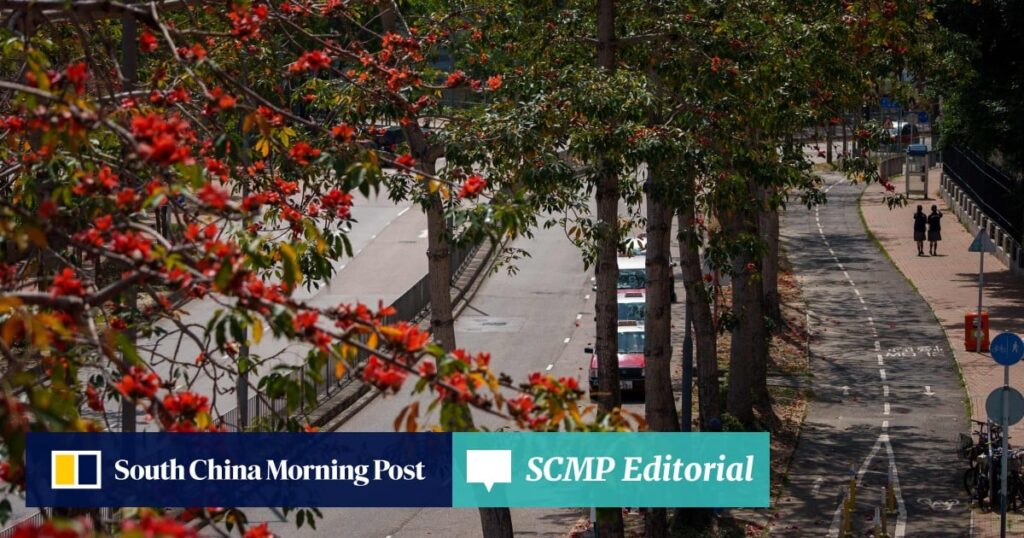
Climate change has had an unmistakable impact in Hong Kong, which has experienced everything from super typhoons and intense heat to historic rains, landslides and flooding. But a more subtle yet equally alarming symptom can be found in the city’s green spaces where trees and other plants are growing in unexpected ways.
Phenology or the study of life cycle events is seen as essential to understanding changes that impact far more than how the city looks each season. Professor Jim Chi-yung, research chair of geography and environmental science at the Education University of Hong Kong, warned that shifted timing of flowering disrupts the work of pollinators like insects, birds and bats. In turn, food chains and human food security are threatened.
A five-to-10-year systematic study has been suggested to fully understand the biological shifts and develop strategies to protect urban green spaces. Authorities and the public alike have a role to play in helping to document anomalies as well as take action when mitigation moves are identified.
It is encouraging that the city is taking proactive steps to manage climate risks, including using artificial intelligence in new 3D flood-forecasting systems as well as drainage robotics.
Phenology is worth a similar investment of resources. Jim said advances in understanding growth patterns would better equip the city to handle challenges ahead and seek effective solutions.