
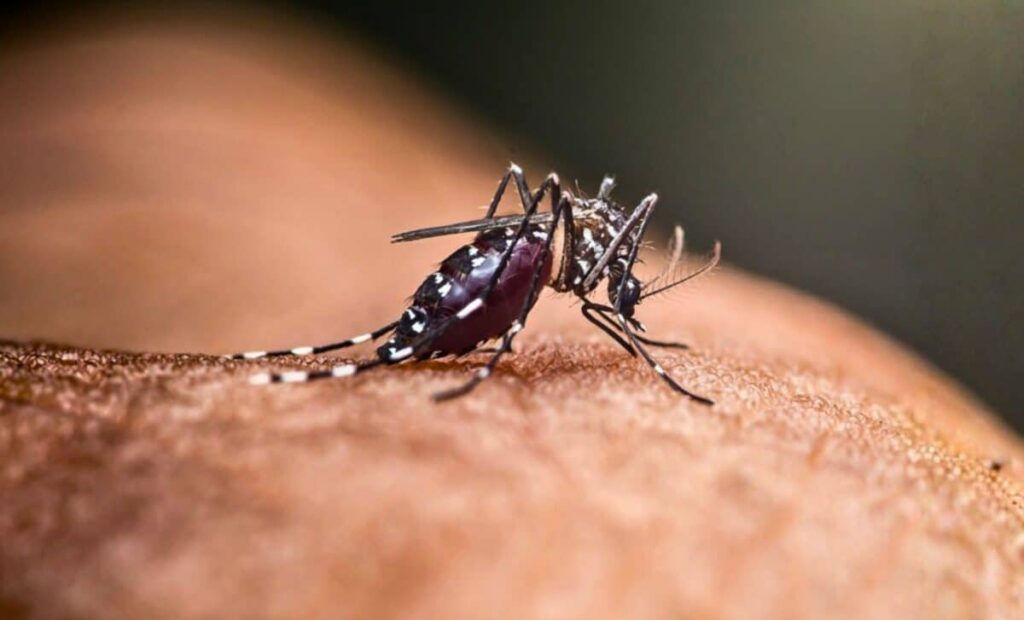
For decades, one question followed Icelandic biologists everywhere: why are no mosquitoes in your country? Tourists asked. Scientists asked. The answer held steady. Iceland’s winters were too erratic. Mosquito pupae would stir during a thaw, then freeze when the cold snapped back. The life cycle never completed. The island stayed untouched.
That answer collapsed in October 2025. Björn Hjaltason had set a wine rope, a simple lure for moths, on a farm called Kiðafell in western Iceland’s Kjós region. At dusk on October 16, he noticed movement that didn’t fit. “I caught sight of a strange fly on a red wine ribbon,” he said. “I immediately suspected what was going on and quickly collected the fly. It was a female.”
Two more followed within days. One male. One female. Hjaltason sent the three insects to the Natural Science Institute of Iceland. Entomologist Matthías Alfreðsson examined them and delivered a finding the country had braced for but never recorded: wild mosquitoes had reached Icelandic soil. The species was Culiseta annulata, a large, cold-hardy mosquito common across Europe and the Nordic region. It marked the first confirmed detection of any mosquito living wild in the country, according to the institute.
A Biological Loophole Centuries in the Making
Cold alone was never the shield outsiders assumed. Greenland hosts Aedes nigripes, a mosquito that hibernates beneath ice as pupae and surfaces when melt arrives. Iceland threw a different problem at would-be colonizers. Its winters oscillate. Temperatures spike, eggs or pupae activate, then temperatures crash before development finishes. That rhythm functioned as a kill switch for millennia, explained biologist Gísli Már Gíslason in a widely cited paper on the country’s mosquito absence.
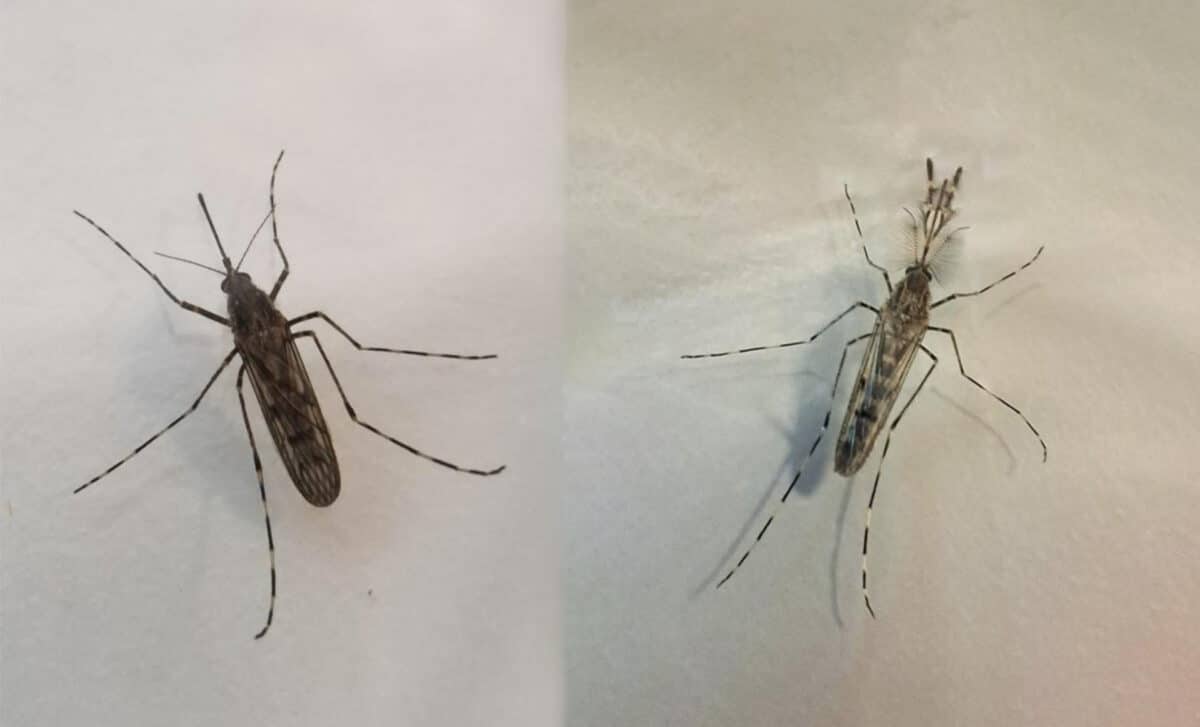 The mosquito fly (Culiseta annulata) was first identified in Iceland. This species, widespread in Europe, can survive the winter in sheltered locations. In the photo, a female is on the left and a male on the right. © Matthías S. Alfreðsson/ Natural Science Institute of Iceland
Culiseta annulata sidesteps the switch. Instead of overwintering as eggs or pupae in water, adults tuck into human-made structures: basements, outbuildings, barns. Any enclosed space that buffers against deep cold works. When warmth returns, they emerge already flight-capable and ready to feed. The species does not need a stable freeze-thaw cycle. It only needs somewhere to wait.
The discovery scratched Iceland from a shrinking list. Antarctica now stands as the only mosquito-free landmass on Earth.
Heat, Freight, and a Widening Door
The insects did not land in an ordinary year. Iceland baked through 2025. On May 15, Egilsstaðir Airport in the east hit 26.6 degrees Celsius, roughly 79.9 degrees Fahrenheit. Other regions ran about 10 degrees Celsius above long-term averages. The Arctic zone overall is warming at roughly four times the pace of the rest of the planet.
Warmer air eases survival. But heat does not explain how mosquitoes crossed hundreds of kilometers of open ocean. The institute suspects freight shipping as the likeliest carrier. Insects, eggs, or larvae can travel in cargo, containers, or vehicles. Mosquitoes had turned up before on airplanes arriving from Greenland. None of those established wild populations. This time, the specimens were collected outdoors, behaving as a resident population would.
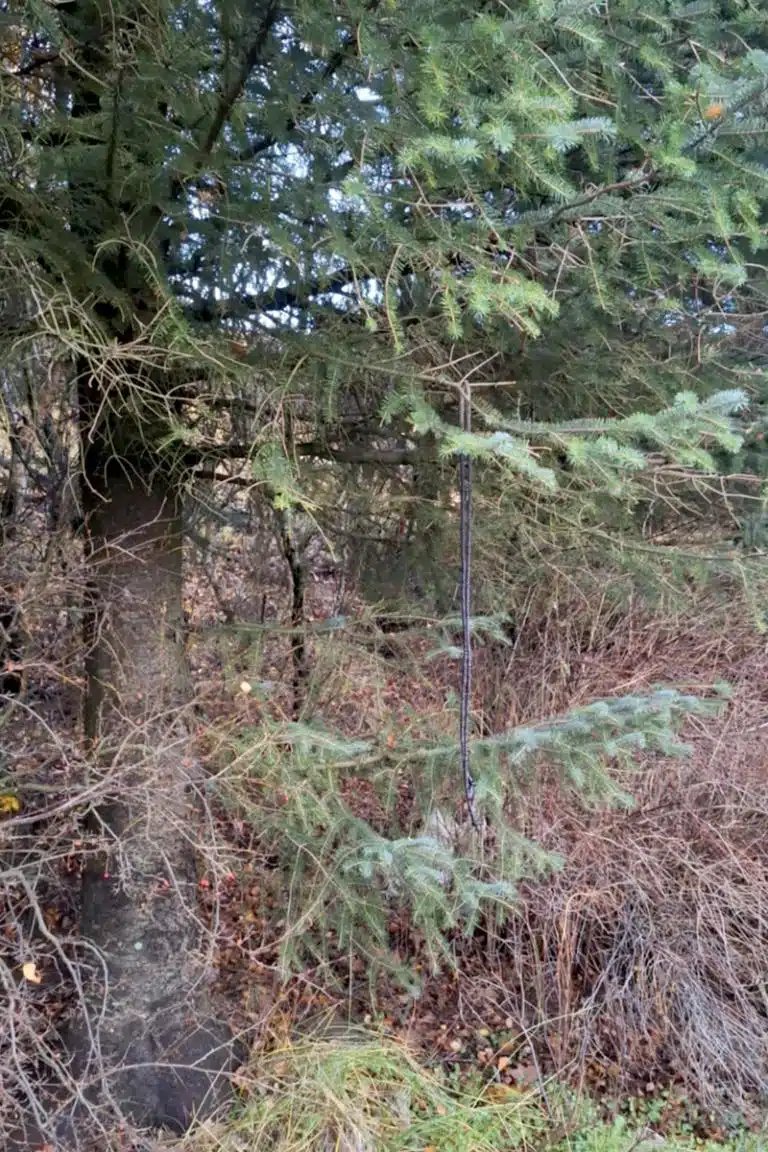 The photo shows the red wine ribbon on which the mosquitoes appeared. © Matthías S. Alfreðsson/ Natural Science Institute of Iceland
The Natural Science Institute had forecast the arrival for years. Breeding habitat across Iceland is abundant. Marshes, ponds, and shallow water offer ideal larval conditions. The missing ingredient was a species capable of navigating Icelandic winter. That ingredient appears to have arrived.
A Nuisance, Not a Crisis
Culiseta annulata bites. But unlike mosquito species stirring alarm elsewhere, it is not recognized as a major disease vector. It carries no dengue, chikungunya, or Zika. Across northern Europe, it registers as a biting nuisance, an outdoor irritant rather than a public health threat.
That distinction carries weight because other species are expanding their range in parallel. Egyptian mosquito eggs and adult Asian tiger mosquitoes, both capable of spreading tropical diseases, have been detected in the United Kingdom. Those arrivals warrant close monitoring. The Icelandic case does not raise equivalent concern.
 Björn Hjaltason found the mosquitoes on a red vine at Kiðafell in Kjós . © Matthías S. Alfreðsson/ Natural Science Institute of Iceland
Still, the institute treats the find as consequential. It extends a pattern of new insect species appearing in Iceland, pushed by warming conditions and swelling global transport. Each arrival tests which ecological boundaries still hold force.
What the Institute Is Tracking Now
The pressing question is whether three specimens signal a foothold or a dead end. Culiseta annulata possesses the biological toolkit to survive Icelandic winters. If it secures consistent shelter and breeding sites, permanent establishment is plausible. The institute has not yet verified a breeding population.
It has asked the public to assist. Anyone encountering a mosquito elsewhere in Iceland is urged to photograph it or collect a sample and forward it to the institute. Wider detection would indicate spread beyond the initial capture site. Absence of further finds would suggest the Kiðafell specimens were an isolated arrival that failed to take root.
For now, the three insects from Kjós mark a threshold crossed. Iceland’s national broadcaster RÚV confirmed the species identification, and the country long described as mosquito-free has logged its first wild residents of an insect the rest of the world knows intimately.