
Citing operational data from the first year of Russia’s full-scale aggression against Ukraine, Estonia argued that this amount would be more than sufficient to implement the strategy, including expanded training, artillery ammunition, UAVs, air defense, fighter aircraft, and related defense-industrial production.
If allies approve the idea, annual financial flows to Ukraine would effectively triple, reaching $143 billion, according to Politico. The estimate is based on the alliance’s own assessment of NATO countries’ aggregate figures.
Rutte’s proposal was partly a response to frustration in some capitals that they are doing far more than others to help Kyiv. According to the Kiel Institute think tank’s Ukraine Support Tracker, the Nordic and Baltic countries, the Netherlands, and Poland allocate a larger share of their gross domestic product to military aid for Ukraine than many other allies.
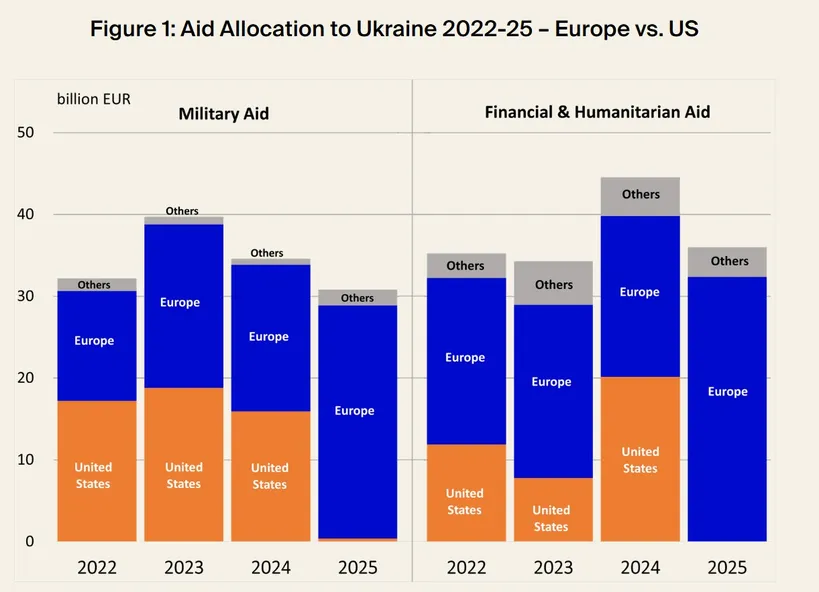
Europe significantly stepped up its support for Ukraine in 2025. Photo: Kiel Support Tracker
The think tank emphasized that the Nordic countries are contributing far more than would be expected, while major Western European countries are contributing broadly in line with the size of their economies. Southern Europe, meanwhile, remains a relatively small donor by comparison.
Rutte is trying to shore up support for Ukraine while reducing divisions within the alliance. Aid to Ukraine has been in disarray since U.S. President Donald Trump left the main burden of helping Kyiv to European countries and other allies.