
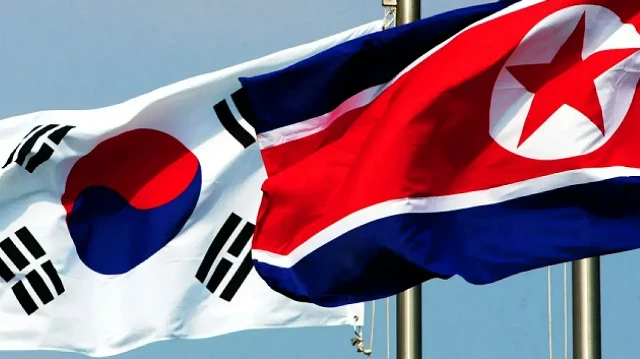
South Korea has unveiled a new approach toward North Korea focused on “peaceful coexistence” and reducing tensions on the Korean Peninsula, marking a sharp departure from the harder-line policies of the previous administration. The policy direction was outlined in a white paper released Monday by Seoul’s Unification Ministry under President Lee Jae Myung’s government.
Shift from pressure to dialogue
According to the report, the Lee administration aims to rebuild communication channels with Pyongyang through mutual trust rather than political pressure or confrontation. The document highlighted that Seoul does not seek regime collapse, forced unification or hostile action against North Korea.
The new stance contrasts with the policy pursued by former conservative President Yoon Suk Yeol, whose government favored sanctions pressure and information campaigns targeting the North Korean leadership.
Steps to ease military tension
The white paper pointed to several recent decisions designed to lower tensions along the heavily fortified border separating the two Koreas. These measures include halting anti-Pyongyang leaflet campaigns and suspending loudspeaker broadcasts directed toward North Korea.
Seoul also signaled interest in restoring the inter-Korean military agreement signed in September 2018 by former South Korean President Moon Jae-in and North Korean leader Kim Jong-un. The agreement was previously viewed as a key mechanism for preventing accidental military escalation near the Demilitarized Zone.
Relations remain frozen
Despite the softer tone from Seoul, relations between the two neighboring states remain largely inactive. Political dialogue, tourism and economic cooperation projects have been suspended for nearly five years amid growing regional security concerns.
Earlier this month, North Korea reportedly amended its constitution to remove references to peaceful reunification with the South, while further reducing remaining cross-border ties. The move was interpreted by analysts as another sign of deepening division on the Korean Peninsula.
The latest policy shift from Seoul is expected to draw attention from regional powers including China, Japan and the United States, all of which closely monitor stability and security developments in East Asia.