
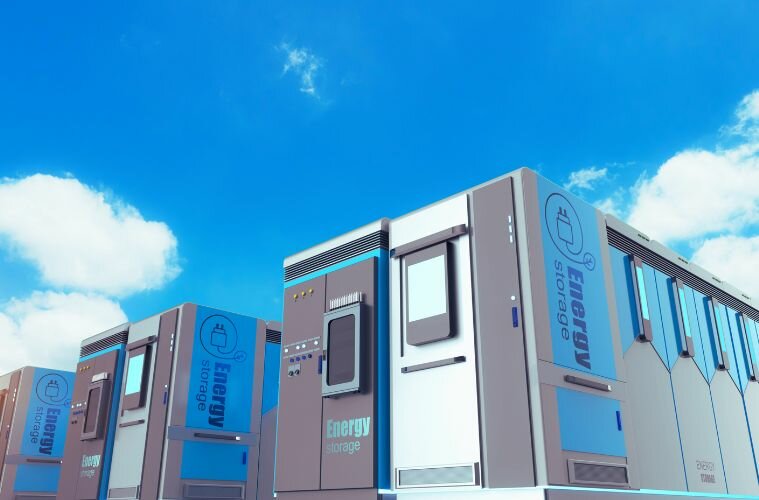
New York leads the country in local opposition to battery energy storage systems (BESS), accounting for nearly two-thirds of all municipal moratoriums nationwide. Two Adirondack Park towns passed new restrictions in March, and a developer-backed push to expand state permitting authority is moving through the legislature with no guarantee of passage.
The towns of St. Armand and Northampton, both in New York’s Adirondack Park, each passed one-year moratoriums on battery energy storage system construction in March 2026, adding to a statewide count that Carina Energy’s BESS Moratorium Monitor places at 98 active municipal restrictions across 37 New York counties. New York accounts for 65% of the roughly 150 municipal moratoriums tracked nationwide across 17 states, more than the remaining 16 states combined.
The Northampton moratorium followed a standing-room-only public hearing at a Great Sacandaga Lake firehouse, where more than 160 residents attended and not one spoke in support of a 10-megawatt (MW) project planned by New York City-based developer Carson Power adjacent to a local auto body shop. The St. Armand moratorium came days after a March storm left parts of the town without power for close to a full day. Both boards cited the need to gather more information on public safety and environmental risk before permitting could proceed.
More Than 1 Gigawatt of Planned Battery Capacity Is Delayed Across New York State
William Acker, executive director of the New York Battery and Energy Storage Technology Consortium (NYBEST), testified before state lawmakers in January that more than 100 municipalities had passed moratoriums stalling over 1 gigawatt (GW) of battery energy storage projects. New York has a statutory goal of 6 GW of installed energy storage by 2030, a target the New York State Energy Research and Development Authority (NYSERDA) estimates would spare ratepayers at least $2 billion in transmission infrastructure costs. The The Solar Energy Industries Association (SEIA) reported that the U.S. installed a record-shattering 57.6 GWh of battery storage capacity in 2025, with projections anticipating an increase to 70 GWh in 2026.
The Adirondack Park Agency (APA) approved the Northampton project, the first and only utility-scale battery storage approval the agency has issued. Its permit required wetland restoration and monitoring, vegetative buffers, a decommissioning bond posted to the town, and an emergency response plan with a contracted battery fire specialist required to arrive on site within four hours of an incident. Those conditions were not well understood by residents at the March hearing, and confusion about the scope of the APA’s regulatory authority over private lands contributed to opposition that ultimately moved faster than the permitting process.
Updated State Fire Code Took Effect January 1 but Has Not Resolved Local Resistance
New York updated its fire code governing battery energy storage systems following a 2023 safety review convened by Governor Kathy Hochul after fires in Jefferson and Orange counties. The updated code, effective January 1, 2026, requires independent peer reviews funded by developers for installations exceeding established energy capacity thresholds, explosion protection for all battery units including individual cabinets, qualified personnel available for dispatch within 15 minutes of a fire alarm, central station monitoring with 72-hour video look-back capability, and site-specific training for local fire departments. A third fire occurred in Orange County in December 2025, just weeks before the revised code took effect.
Post-fire investigations following the 2023 events found no air, water, or soil contamination beyond project fencelines. That finding has not been broadly accepted in communities where opposition is driven less by specific incident data than by general distrust of the technology and uncertainty about emergency response capacity. In rural Adirondack communities, volunteer fire departments with roughly 20 members face legitimate staffing concerns when a battery fire could require sustained response over hours or days.
ORES Expansion Legislation Pending; Setback Bills Also Moving Through Albany
Under current New York law, the state Office of Renewable Energy Siting and Electric Transmission (ORES) can override local permitting authority for energy projects exceeding 25 MW, but only when battery storage is co-located with a qualifying renewable generation facility. Standalone battery projects below that threshold must navigate local zoning, where moratoriums can halt development entirely. Senate Bill S5506 and Assembly Bill A8378 would extend ORES jurisdiction to standalone battery storage systems. Both bills remain in committee as of May 2026 and have not passed either chamber. Several municipalities, including Carmel and Yorktown, have passed resolutions in opposition.
Separately, Senate Bill S7197-A would require minimum setbacks of 750 feet between commercial battery storage systems of 5 MW or larger and residential property, with a reduced setback of 300 feet applying in cities with populations over one million. An Assembly companion bill sets the commercial threshold at 3 MW. Both setback bills remain in the Energy and Telecommunications Committee. The density of expiring moratoriums expected in the second half of 2026, particularly in Chautauqua and Erie counties in western New York, may create near-term development windows depending on whether the state legislature acts on any of the pending measures before those restrictions lapse.