
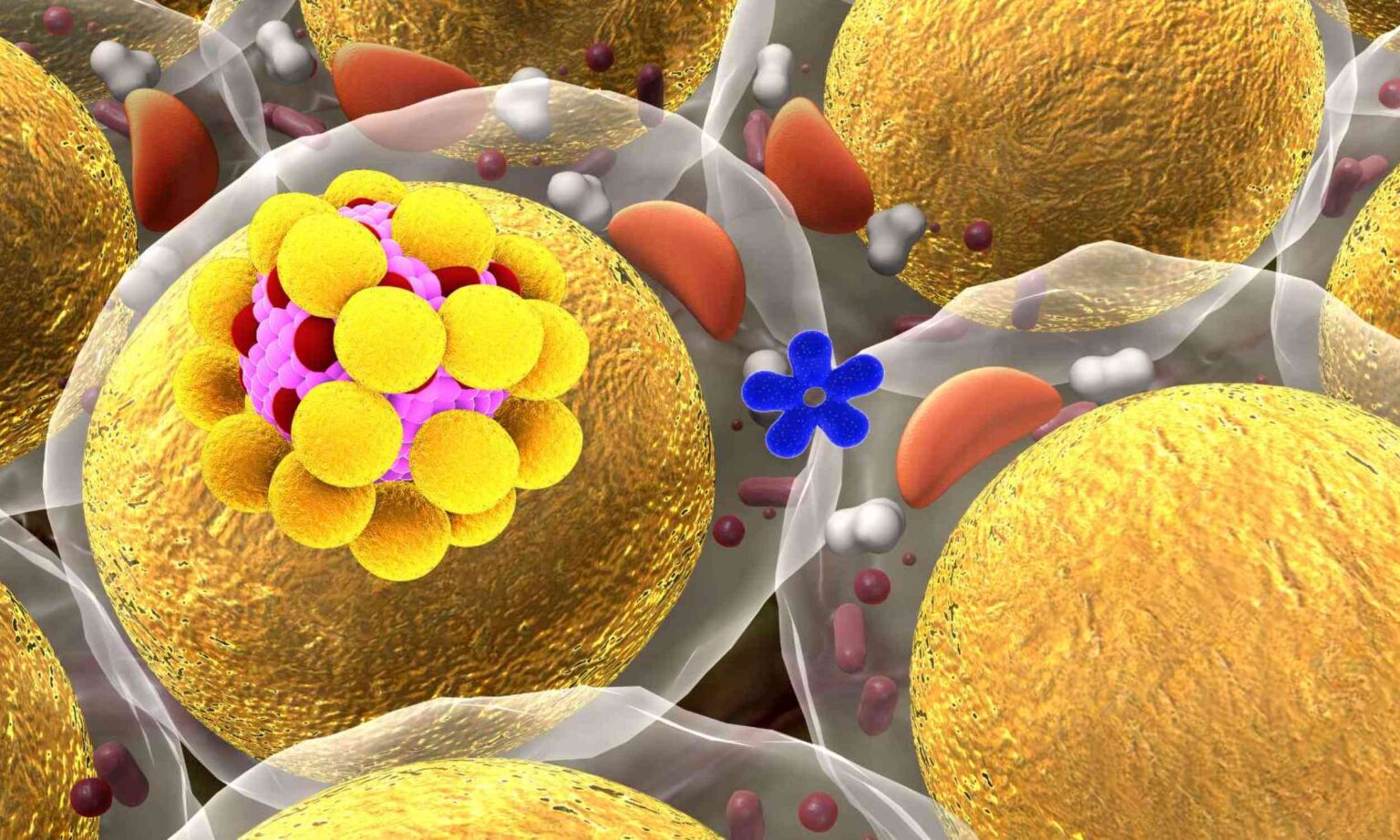
Fat cells and bone cells are tasked with two completely different jobs. One burns or stores energy, the other builds and maintains the skeleton.
Researchers who study metabolism and those who study bone disease have long worked in separate worlds.

However, something in biology just cut across that divide, as seen in a new study. A single enzyme has been found in both systems, using the same molecular trigger for each.
A second heat pathway
The classic system uses a protein called UCP1, known to heat . In recent years, scientists noticed brown fat could still generate heat even with UCP1 disabled.
This left them puzzled because a second heat-producing route had to exist. They named it the futile creatine cycle but still couldn’t pin down what activated it.
At McGill University (McGill), Professor Lawrence Kazak led a team at the Rosalind and Morris Goodman Cancer Institute. The team successfully identified the trigger.
This research builds on an earlier paper that established the cycle’s role in classic brown fat. The earlier work had left the activation step up for debate.
Finding the switch
When the body breaks down stored fat in the cold, it releases glycerol. The McGill team found that glycerol does not just drift around as a metabolic leftover.
Rather, it binds to a previously unrecognized spot on an enzyme called TNAP.
When it does, the enzyme becomes considerably more active. They named the binding site the glycerol pocket.
Working with structural biologist Alba Guarné, Kazak’s group mapped the pocket using X-ray crystallography, tracing the structure atom by atom.
They found that once glycerol locks in, TNAP drives the futile creatine cycle much harder.
“This is the first time we’ve identified how an alternative heat-producing pathway is activated, independent of the classic system,” said Kazak.
Fat meets bone
What came next was unexpected. TNAP is not only active in fat, but it also helps drive bone mineralization.
This is the process that hardens the skeleton by clearing molecules that would otherwise block calcium from settling in.
Until this study, no one had reason to think the two jobs shared a single molecular switch. The research team showed that they do, and used the same lab tools to prove it.
The same glycerol pocket required for heat production also appears to be essential for bone-building cells.
These cells, called osteoblasts, are responsible for proper mineralization. When the pocket is disrupted, both functions suffer.
Diseased, soft bones
When TNAP doesn’t work well, bones don’t harden properly. That is exactly what happens in hypophosphatasia, a rare inherited disorder.
This can result in fractures, chronic pain, dental loss, and skeletal deformities. Founder mutations have made it more common in parts of Quebec and Manitoba.
A current enzyme replacement therapy does help some patients. It requires repeated injections, however, and doesn’t address the underlying defect in the enzyme itself.
A drug that could boost a patient’s own TNAP would be a different kind of fix entirely.
Human genetic evidence
Even with the mouse and structural findings, one question remained: does the pocket actually influence human bone health?
Using UK Biobank data, they searched for people carrying natural genetic variants encoding the glycerol pocket. The pattern was clear.
Those carriers had lower activity of the enzyme in their blood, and lower bone mineral density, too.
The link between the pocket, enzyme activity, and skeletal strength was demonstrated in living people, not just lab dishes and mice.
New drugs on the horizon
Kazak’s team has already screened dozens of candidate molecules that bind the glycerol pocket.
Luckily, several can boost TNAP activity. A drug like that would increase the activity of the patient’s own enzyme, restoring mineralization without repeated injections.
Whether that approach could also affect heat production in brown fat is a separate question.
Brown fat remains a major target in obesity research, and a defined activation pocket provides doctors with a concrete starting point.
One switch, two systems
The team identified a single molecular site with two completely different functions. Glycerol – the routine byproduct of fat breakdown – was the key to both.
That insight connects separate fields of study that were unaware they shared a mechanism.
For patients with the disorder, this is good news. A new generation of treatments could boost TNAP rather than replace it.
Some of the candidate compounds are already lined up for the next round of testing.
The study is published in Nature.
—–
Like what you read? Subscribe to our newsletter for engaging articles, exclusive content, and the latest updates.
Check us out on EarthSnap, a free app brought to you by Eric Ralls and Earth.com.
—–