
In South Korea, about one in every 10 elderly persons suffers from dementia, a rate that is rising with the aging population. In
2026, the number of dementia patients aged 65 and over passed 1 million, with projections
reaching 2 million by 2044. The burden of care for these patients then often falls on family members,
and national health studies show significantly higher odds of depressive
symptoms among caregivers.
Recently, creative advertising agency Daehong,
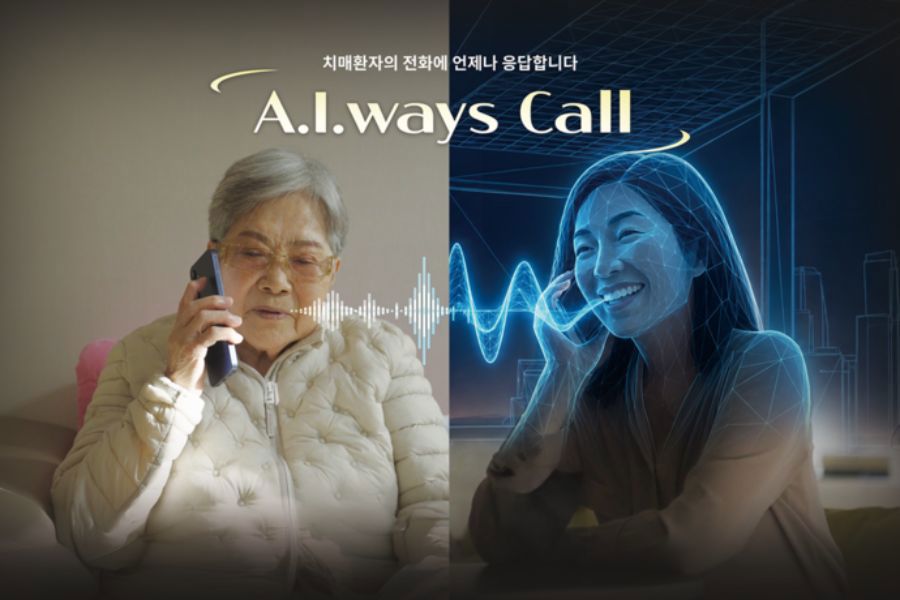
a Lotte Group subsidiary, launched A.I.ways Call, a social impact campaign
developed with Bobath Memorial Hospital. The program uses generative AI voice
technology to support early-stage dementia patients and their caregivers by
recreating familiar family voices and conversational patterns, while providing
caregivers with summaries of patients’ psychological states and encouraging follow‑up calls.
A pilot study by Ewha Womans University’s
Department of Communication and Media found a 70% drop in anxiety‑related
expressions and an increase in positive responses such as “I feel reassured
because you’re here.” Caregivers also reported less stress from repetitive
phone calls.
Hospitals in South Korea have increasingly adopted AI as a
support tool, with projects such as
Dr. Answer 2.0 and Seoul National University Hospital’s Kmed.ai. Still,
vulnerable patients remain at risk if safeguards fail.
In January 2026, South Korea became the first
country to enforce a comprehensive AI Basic Law. Unlike The EU’s phased rollout of obligations
under the AI Act and the US’ sector-specific approach, South Korea’s model
applies immediately but relies on voluntary industry assessments and ongoing refinement
based on “real-world feedback”. This flexibility promotes innovation but leaves
weaker guardrails, especially for vulnerable populations.
The agency emphasised that the
campaign is not meant to replace human care but to maintain emotional
connection and reduce caregiver burden. While the app informs users they are
interacting with an AI service while providing caregivers with conversation
summaries for family records, concerns remain about over‑reliance and diminished genuine engagement.
Campaign’s take: A.I.ways
Call is a supportive assistant tool, offering emotional reassurance to dementia
patients and easing caregiver stress. Yet government policy framework around AI
in healthcare remains under refinement, with limited guardrails and training in
place. Errors such as AI hallucinations and data privacy leaks – driven by
flaws in training data, model design, inference methods – persist and inadequate
security guardrails leave patients vulnerable.
Still, the campaign
reflects a growing commitment to human‑centered innovation. With
continued
refinement of safeguards and stronger oversight, it could evolve into reliable
companion tools that enhance care without replacing the human touch.