
- by croatiaweek
- May 20, 2026
- in
(Photo credit: Branimir Kralj)
The Croatian Mint (Hrvatska kovnica novca), in cooperation with the Croatian National Bank (Hrvatska narodna banka), has presented a new numismatic issue titled “Vučedol Culture”, continuing its “Croatian Heritage” series.
The new collection pays tribute to one of Europe’s most significant prehistoric cultures, which developed more than 5,000 years ago in the area of present-day eastern Slavonia and Srijem.
The Vučedol civilisation flourished during the late Eneolithic period and is considered a key part of Europe’s transition into the Bronze Age, known for its innovation, craftsmanship, and early scientific understanding.
Archaeological evidence suggests that the Vučedol people lived in the Danube, Drava, and Sava river region and expanded their influence across what is today 13 European countries.
Their legacy is particularly notable in metallurgy and standardised production techniques, which demonstrate a high level of technological development for the time.
A defining feature of the culture is its distinctive pottery. Vučedol ceramics are characterised by dark polished surfaces decorated with white inlays and symbolic motifs.
These markings are widely believed by researchers to represent astronomical constellations, leading to the theory that the Vučedol people may have developed one of the earliest known Indo-European calendars.
(Photo credit: Branimir Kralj)
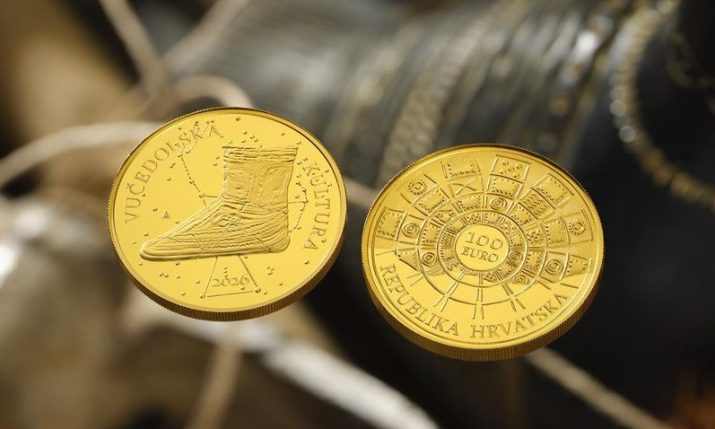
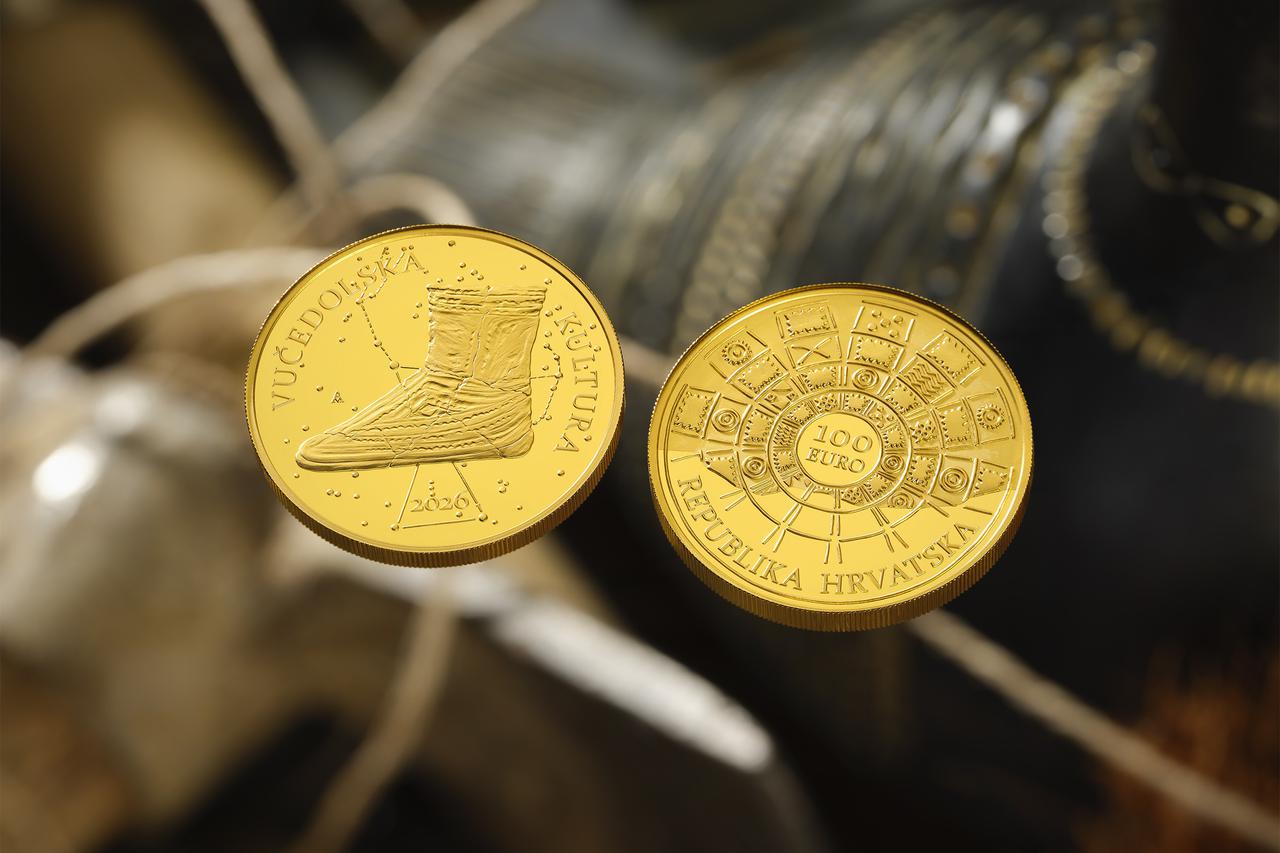
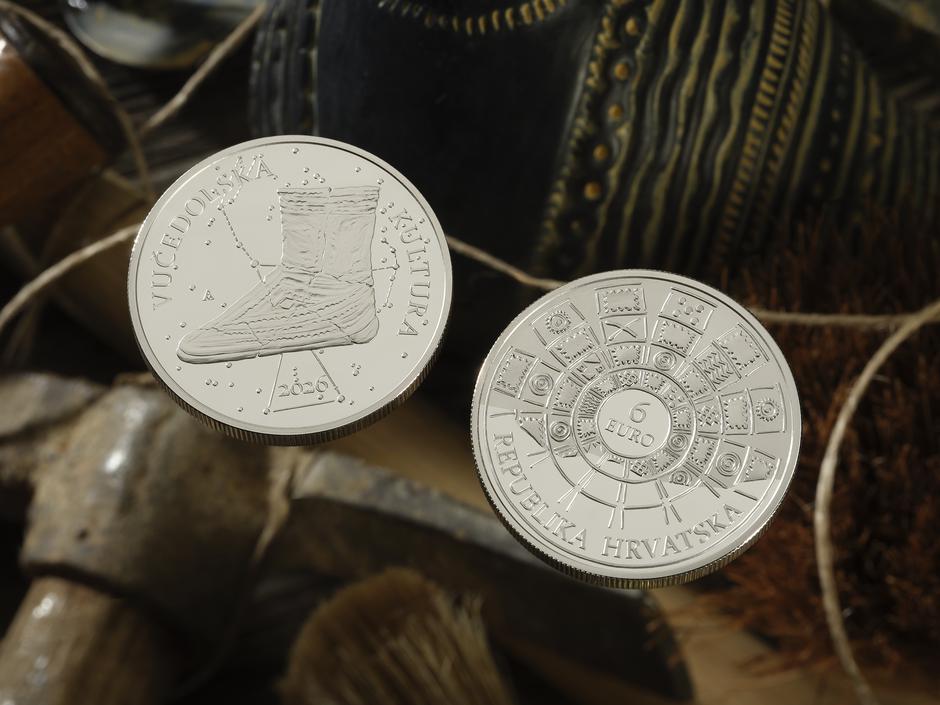
One of the most recognisable artefacts is the so-called “Vučedol shoe”, a small ceramic model that reflects the civilisation’s advanced craftsmanship and attention to form and design.
Another significant artefact is the “Orion” vessel, often associated with early calendar systems based on celestial observation.
The new coin design has been created by Matej Pašalić, who incorporated these key motifs into the numismatic concept.
The obverse of the coin features the Vučedol shoe, while the reverse depicts an unfolded ceramic surface with four symbolic bands representing constellations across seasonal night skies during the Vučedol period. The vessel is dated to the third millennium BC (around 2880–2630 BC) and is widely interpreted as an ancient astronomical calendar.
The coins will be issued in strictly limited editions. The collection includes a one-ounce gold coin limited to just 50 pieces, a 1/4-ounce gold coin limited to 200 pieces, a 1/16-ounce gold coin limited to 1,000 pieces, a one-ounce silver coin limited to 1,500 pieces, and a two-ounce silver coin limited to 200 pieces.
(Photo credit: Branimir Kralj)
All coins are produced in high-relief minting quality, with the exception of the one-ounce gold coin, which is struck in the highest proof quality finish.
The Croatian Mint has also expressed gratitude to several cultural institutions for their cooperation and support, including the Vinkovci City Museum (Gradski muzej Vinkovci), the Vukovar City Museum (Gradski muzej Vukovar), the Vučedol Culture Museum (Muzej Vučedolske kulture), and the Archaeological Museum in Zagreb (Arheološki muzej u Zagrebu), all of which provided access to artefacts and visual materials.
The “Vučedol Culture” coin series will be available for purchase from 21 May at 9:00 am via the Croatian Mint’s online shop.