
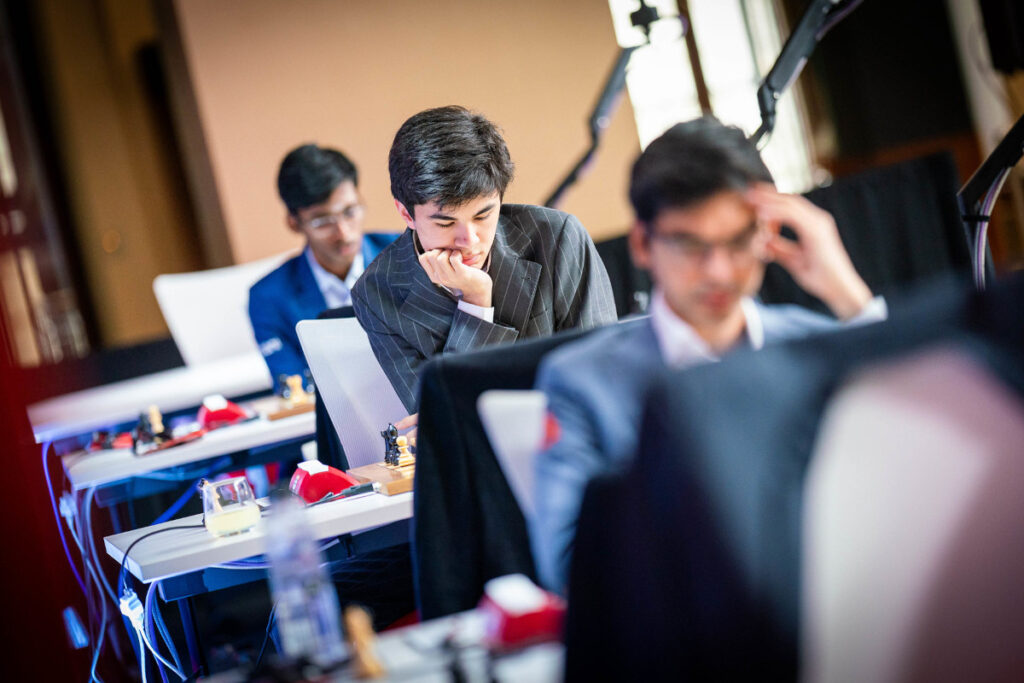
Caruana under the weather
The four games played on Wednesday at the Super Chess Classic Romania all ended drawn, while Vincent Keymer increased his lead without moving a piece. Following Alireza Firouzja’s withdrawal due to an ankle injury, Keymer was the first player to receive a forfeit win. Firouzja had played more than half of his games (five out of nine) including two from a hotel room while wearing a cast, so his results from the first five rounds remain part of the standings, while the four opponents he had yet to face receive forfeit wins in the remaining rounds.
The situation left Keymer a full point ahead of a four-player chasing group made up of Fabiano Caruana, Anish Giri, Praggnanandhaa Rameshbabu and Jorden van Foreest.
Round 6 results
 This video course includes GM Anish Giri’s deep insights and IM Sagar Shah’s pertinent questions to the super GM. In Vol.1 all the openings after 1.e4 are covered.
Bo.
Rtg
Result
Rtg
Caruana, who drew in 34 moves with the white pieces against Javokhir Sindarov, later told commentator Cristian Chirila – his co-host on the C-Squared Podcast – that he had also been unwell during the event. He said he first felt ill during his round-three game against Wesley So and had since been spending up to 14 hours a day in bed, at times with a very high fever. Caruana added that he was beginning to feel like himself again, though he remained tired.
Caruana v. Sindarov and Van Foreest v. Giri were the shortest draws of the day by move count. Caruana obtained a small edge from the white side of an Italian Opening, but concluded that the position did not offer enough prospects to play for more. The all-Dutch game between Van Foreest and Giri included a few good-looking tactical shots, but it never moved far from equality and also ended peacefully.
Bogdan-Daniel Deac v. Praggnanandhaa lasted 68 moves, though the game remained under control throughout. From a Dutch Defence, Praggnanandhaa gained some initiative with the black pieces, but Deac defended accurately. The ensuing rook and bishop endgame did not give Black enough to create decisive problems, and the point was split.
 In this video course experts examine the games of Bent Larsen. Let them show you which openings Larsen chose, where his strength in middlegames were, how he outplayed his opponents in the endgame & you’ll get a glimpse of his tactical abilities!
Bent Larsen (1935–2010) was the greatest chess player in Danish history, and for a time, the second-strongest player in the Western world behind Bobby Fischer. Between 1954 and 1971, he won the Danish Championship six times, and achieved numerous international tournament victories throughout his career.
Free video sample: Introduction to Bent Larsen by Peter Heine Nielsen
Free video sample: Introduction to the Opening Section
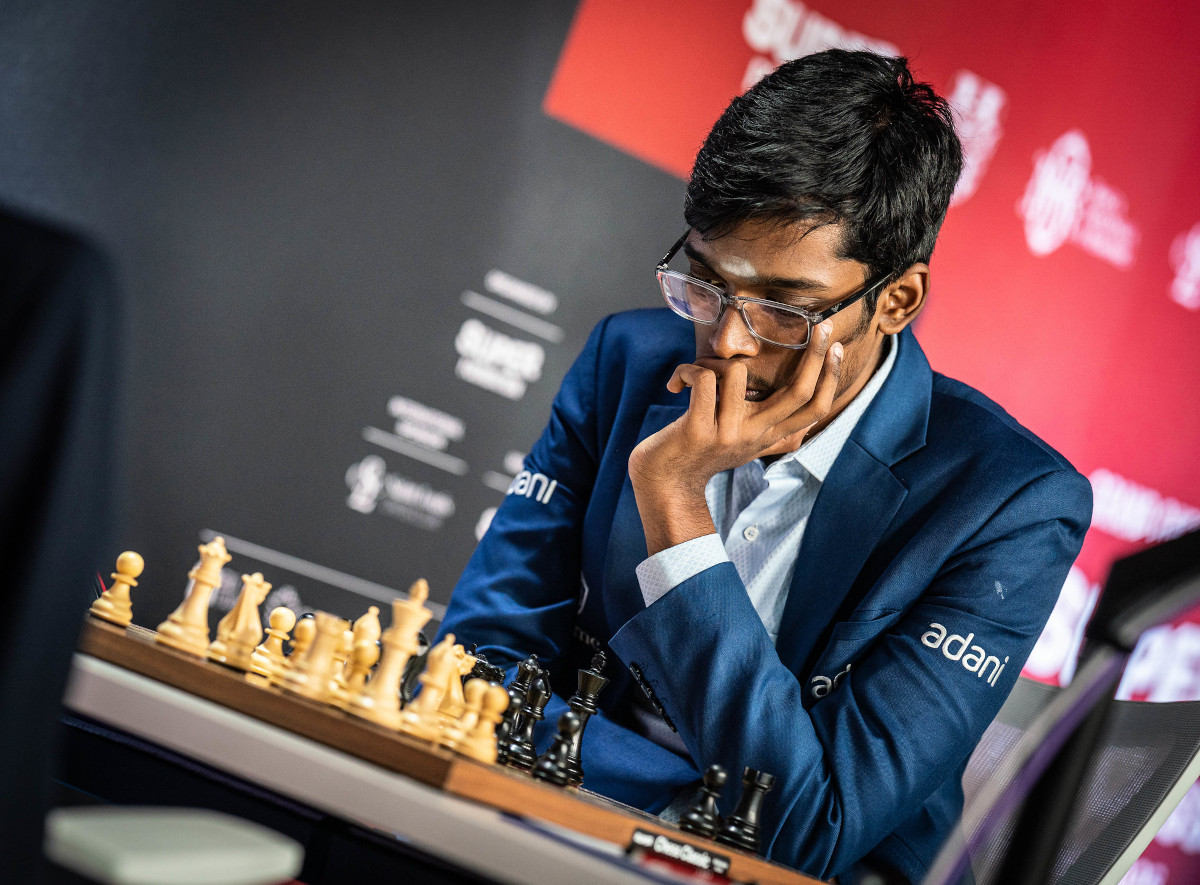
Praggnanandhaa Rameshbabu | Photo: Lennart Ootes
The longest and most testing draw came in Wesley So v. Maxime Vachier-Lagrave. So gained an advantage from a Sicilian Defence and managed to get an outside passed pawn in the late middlegame.
Vachier-Lagrave began to take long thinks and demonstrated his experience by finding strong defensive resources, as he succeeded to steer the game into a pure rook endgame in which White had an extra pawn. Even after So later gained a second extra (doubled) pawn, Black held the balance – sometimes it does look like all rook endgames are drawn.
 Most players prefer to attack rather than defend. But what is the correct way to do it? GM Dr Karsten Müller has compiled many rules and motifs to guide you, along with sharpening your intuition for the exceptions.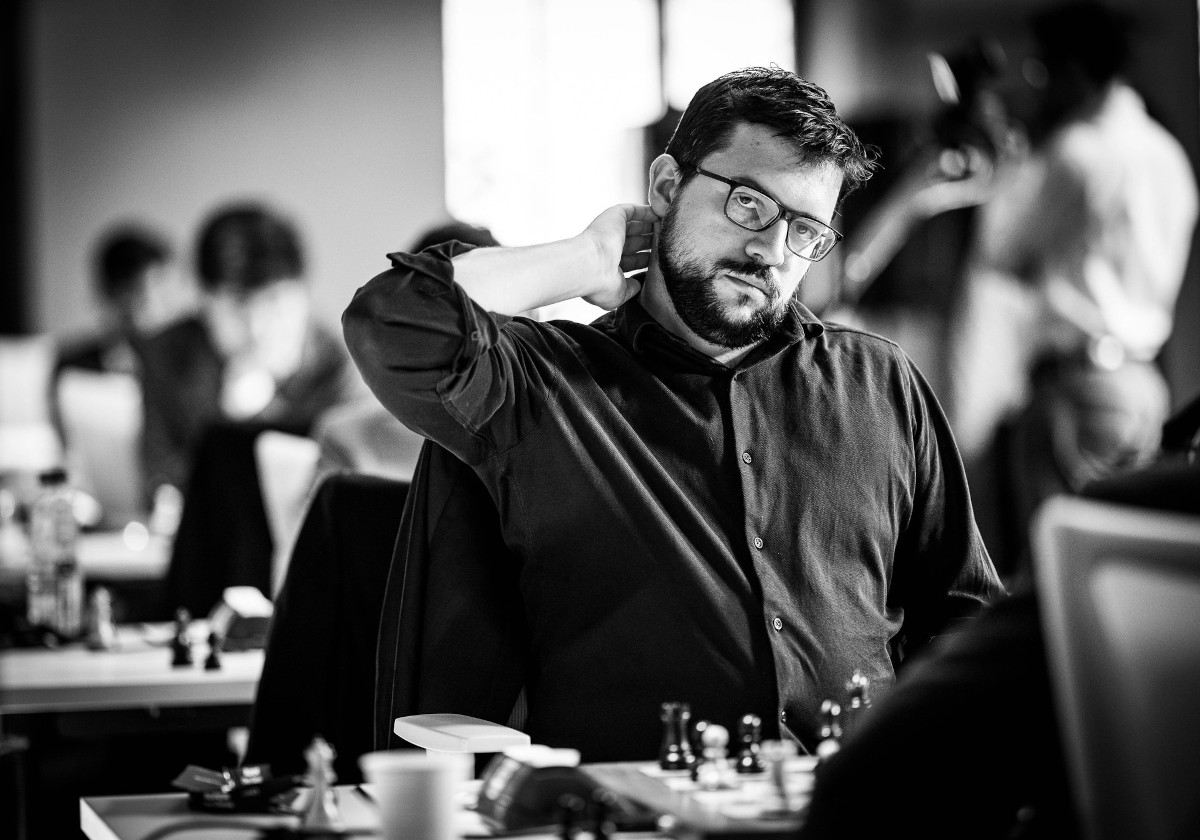
Maxime Vachier-Lagrave | Photo: Lennart Ootes
Standings after round 6
All games
Links