
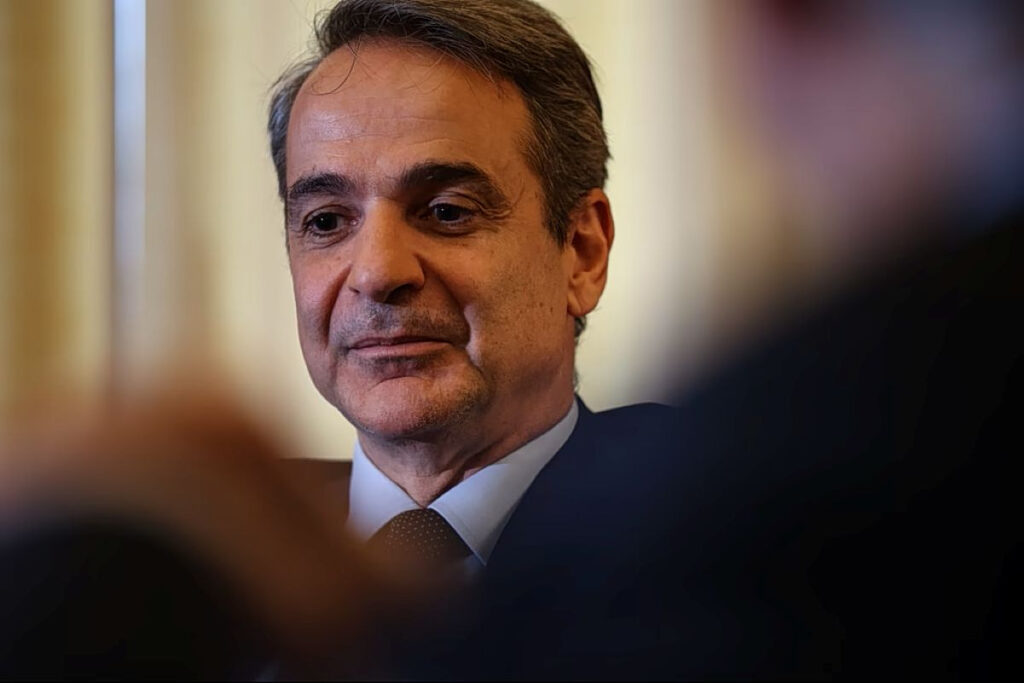
Greek Prime Minister Kyriakos Mitsotakis warned of the serious risks that escalating tensions in the Middle East pose to global trade and maritime transport during an interview on the The Rachman Review podcast of the Financial Times with Gideon Rachman.
With instability in the region already disrupting international shipping routes, Mitsotakis stressed that Greece has a direct stake in developments, noting that the country controls roughly 25% of the world’s shipping fleet. He said this was one of the key reasons Athens assumed leadership of the European Union’s “ASPIDES” naval mission in the Red Sea.
“Ninety percent of global trade moves by sea,” the prime minister said, warning that rising transport costs or any attempt to weaponize freedom of navigation for geopolitical purposes could undermine decades of progress in global commerce.
Addressing Greece’s relationship with Israel, Mitsotakis emphasized that Athens retains the ability to criticize its allies when necessary, pointing to Greece’s public objections to Israeli military operations in Gaza and Lebanon.
He also highlighted the significance of Article 42(7) of the European Union treaty, which concerns mutual defense assistance among member states. Referring to the recent crisis involving Cyprus, Mitsotakis argued that the clause had effectively — though not formally — been activated, as a “coalition of willing” European countries moved swiftly to support Nicosia in practice.
According to the Greek prime minister, Europe should draw lessons from the episode by developing basic military coordination capabilities — not to replace NATO, but to strengthen the continent’s strategic autonomy and demonstrate to the United States that Europe is taking its own defense responsibilities seriously.
Debt Burden and Fiscal Discipline
On the economy, Mitsotakis said he expects Greece to cease being Europe’s most indebted country by the end of 2026, marking the end of a fiscal burden that had weighed on the country for years.
While noting that Greece’s 2025 primary surplus allows limited temporary relief measures, Mitsotakis stressed that broader fiscal pressures remain and ruled out higher spending that could lead to renewed deficits, reaffirming his commitment to EU fiscal rules.
Reform Agenda and the Rise of Populism
Looking ahead, Mitsotakis said Greece’s key challenges include economic convergence with Europe, public sector reform, demographic decline, climate change and the integration of artificial intelligence. On the rise of populism, he argued that while governments must address legitimate public concerns, they should also expose unrealistic populist solutions.