
As we trundle past signposts chalked with images of bottles, gramophones, corks and holey cheeses, I find myself longing for a taste of the city’s wines, 80% of which are white. Stopping by the wooden benches and green parasols of Mayer am Nussberg, I climb down to scour the menu, which lists bottles of grüner veltliner, wiener gemischter satz and riesling. There are salads, too, along with wurzelspeck — dry-cured pork belly. But with the autumn wind beginning to needle my ears, I fancy something warming, although I can’t find hot food on the menu. “This is a buschenschank,” says Gabi, joining me. “It’s like a heuriger but it has a strict legal definition. It can only be open from April to October, four days a week, and you can only sell cold food. It’s popular in summer with young people.”
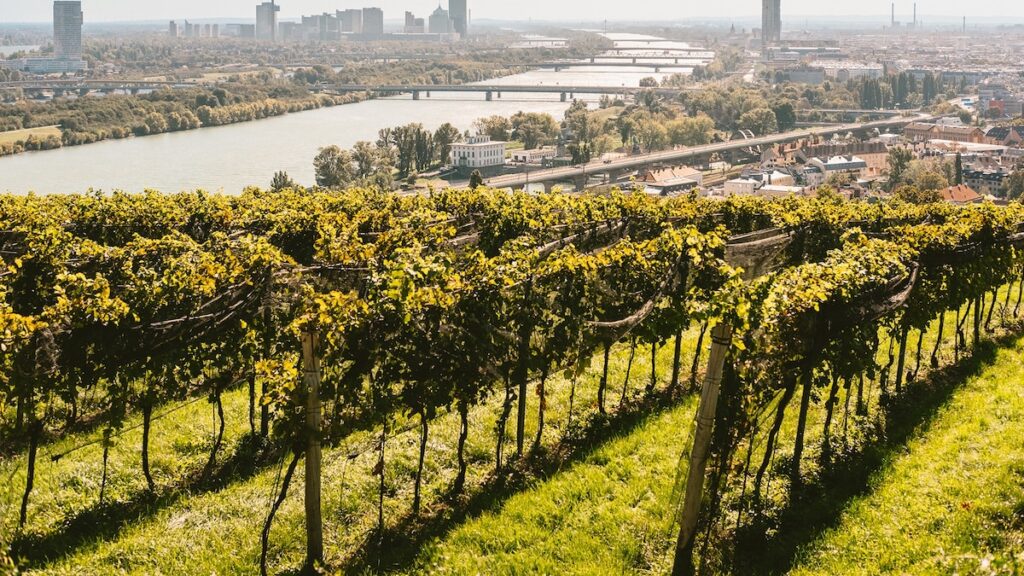
Döbling is situated at the edge of Vienna’s woods in the city’s 19th district and has a comprehensive wine list.
Stefan Fürtbauer
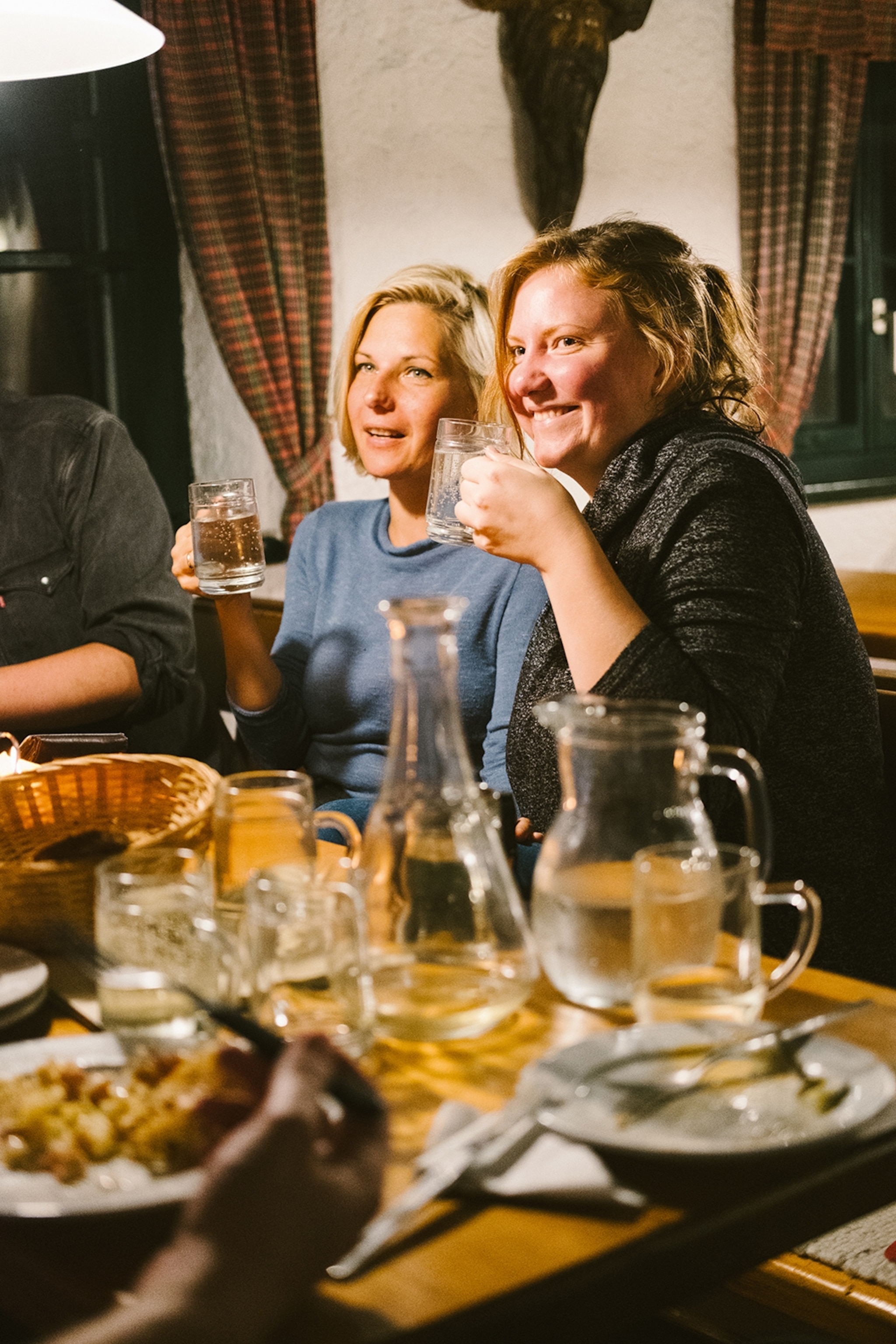
Around 80% of the locally grown wines are white and usually served with a side of traditional music.
Stefan Fürtbauer
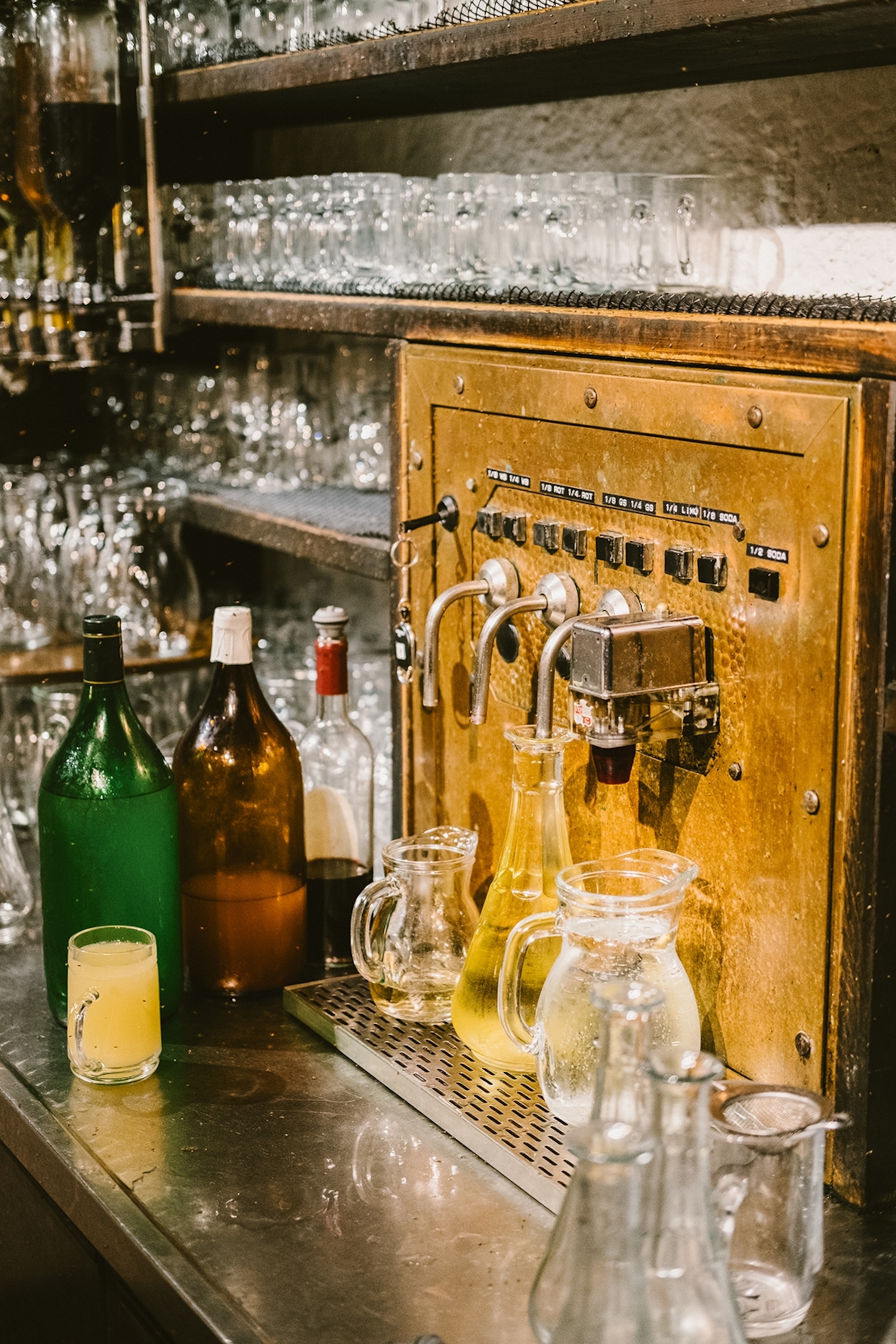
On her advice we hop aboard the waiting train and bump our way downhill to visit sister establishment Mayer am Pfarrplatz— a heuriger where the aroma of roasting pork wafts through the vine-covered courtyard. It’s only 6pm but the tables are filling up — all locals, according to the perfectly coiffed head sommelier, Pascal Raab. I slide into a cushioned booth and listen to the cheerful glug as he pours a freshly opened bottle into my glass. It’s the city’s signature wiener gemischter satz, a bottle as unique as it is delicious. Its crisp and faintly citrussy with a fruity, pear-like finish. “The name means ‘mixed set’,” says Pascal. “Legally, it must be made from a minimum of three grapes and a maximum of 20. They’re not just blended in the cellar — the grapes are grown together on the field, on the vineyards, interplanted.”
Those fields are found mainly in the 19th district of Vienna, which was once part of the Roman Limes — a series of fortified borders along which the Romans started growing Italian vines in the third century. Since then, Vienna’s vineyards have proliferated, owing to the city’s location and the limestone sediment in its soil, which enhances moisture retention. Walking me towards the hot buffet, Pascal describes how the Danube River brings wind into the city alongside warmth from Eastern Europe. Vienna is also surrounded by forest, enhancing the air quality and allowing for cooler nights in the vineyards. “The triangle of warm, cold and fresh makes for ideal wine-growing conditions,” he adds.
Did you know?
The 300-year-old Schlumberger cellars in the city’s 19th district house an escape room where groups have 60 minutes to solve puzzles and find the secret recipe — all while sipping from a bottle of Schlumberger’s signature sparkling wine.
We arrive at a glass counter filled with dishes of stuffed olives, pickled onions and a number of cheeses, creamed and whipped into peaks. Most have come from small farmers and regional suppliers. Pascal hands me a tray and explains that my gemischter satz requires a pairing with “something fatty and rich like schnitzel or backhendl — a type of fried chicken served with a slice of lime”. It’s hard to choose between the spinach strudel, chicken legs and crisp pork belly still sizzling from the oven. There’s blood sausages and truffle salami, too, along with a fridge of florentines, apple strudel and chocolate-coconut domes known as kokoskuppeln. I learn from Pascal that I’m in time for martinigansl, a slow-roasted goose served only once a year, but opt for the slightly lighter option — a creamy goose soup containing cubes of dark, tender meat.
Not usually keen on white wine in cold weather, I’m surprised to find it’s a perfect partner to a cast-iron pan piled with steaming slabs of soft pork and gravy-drenched crackling, all held together by the sturdiness of dumplings and cabbage. Suddenly, an accordion groans to life as an elderly musician starts up a cheerful waltz. It’s clear how a love of wine has shaped the social lives of this city’s residents, but Vienna’s wine culture runs deeper still.