
From reproductive rights to climate change to Big Tech, The Independent is on the ground when the story is developing. Whether it’s investigating the financials of Elon Musk’s pro-Trump PAC or producing our latest documentary, ‘The A Word’, which shines a light on the American women fighting for reproductive rights, we know how important it is to parse out the facts from the messaging.
At such a critical moment in US history, we need reporters on the ground. Your donation allows us to keep sending journalists to speak to both sides of the story.
The Independent is trusted by Americans across the entire political spectrum. And unlike many other quality news outlets, we choose not to lock Americans out of our reporting and analysis with paywalls. We believe quality journalism should be available to everyone, paid for by those who can afford it.
Your support makes all the difference.
Read more
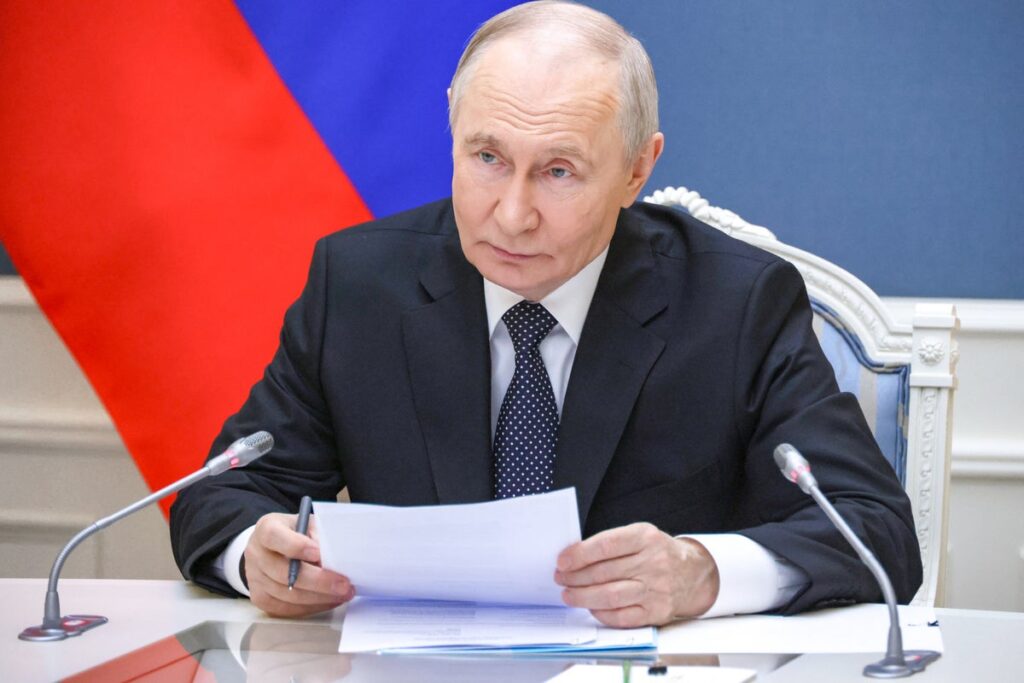
Vladimir Putin on Thursday said that the use of nuclear weapons was a “last resort” measure after Russia and Belarus held massive nuclear drills on land, sea and air.
The Russian president claimed that Moscow’s nuclear arsenal acted as a guarantor of “sovereignty” as his army wrapped up its biggest nuclear exercise in years, involving 64,000 troops as well as submarines and hypersonic missiles.
Europe has condemned the nuclear drills as provocative as tensions rise with Nato, with the alliance’s secretary general Mark Rutte warning that any attacks on Nato would incur a “devastating” response.
The three-day drills that began Tuesday come amid a surge in Ukrainian drone strikes, including on Moscow‘s suburbs that killed three people and damaged several buildings and industrial facilities.
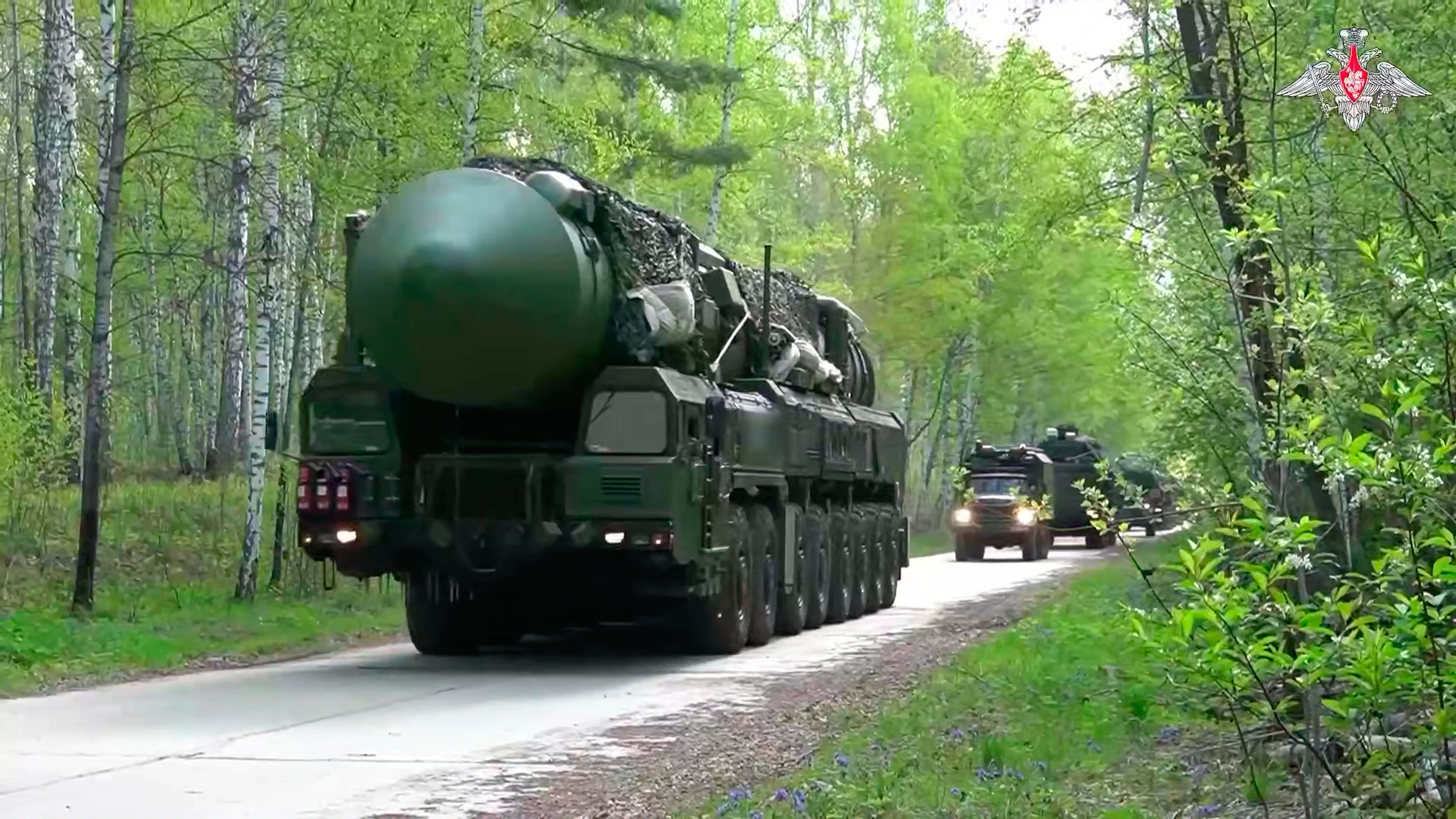
A Yars intercontinental ballistic missile during the drills (Russian Defense Ministry Press Service)
The strikes made it harder for officials in the Kremlin to cast the conflict in Ukraine — now in its fifth year — as something so distant that it doesn’t affect the daily routines of Russian civilians.
Russia’s Defence Ministry said the exercise involved 64,000 troops, over 200 missile launchers, more than 140 aircraft, 73 surface warships and 13 submarines, including eight armed with nuclear-tipped ICBMs. The drills will focus on the “preparation and use of nuclear forces under the threat of aggression,” it said.
The drills also practice cooperation with Belarus, an ally that hosts Russian nuclear weapons. Russian arsenals in Belarus include its latest intermediate range nuclear-capable Oreshnik missile system.
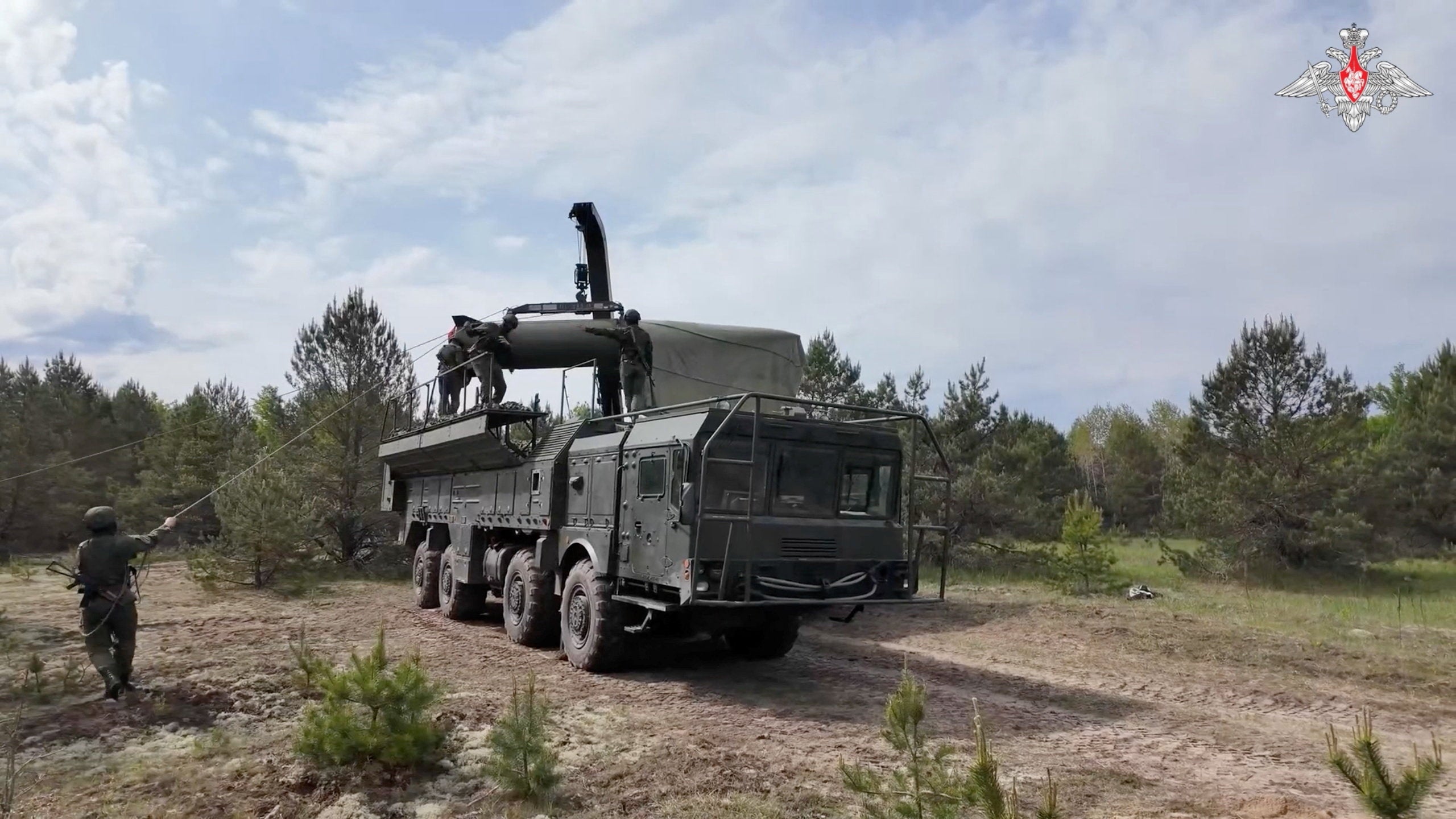
Service members mount a missile on a Russian Iskander-M missile launcher during nuclear forces exercises at an unidentified location in Belarus (Russian Defence Ministry)
UK Senior Military Advisor, Colonel Joby Rimmer, said the drills reflected how Russia had “repeatedly employed irresponsible nuclear rhetoric and coercive signalling” during its war in Ukraine.
“The consequences are clear. As trust erodes, the risk of miscalculation increases; any reduced transparency over doctrine and force posture severely narrows the margin for error,” he said.
“When a participating State retreats from these frameworks while simultaneously intensifying nuclear signalling, the security environment deteriorates for all.”
Russian nuclear exercises typically use dummy warheads. One video released by the defence ministry showed a tarp-backed military truck travelling with minimal security, while others showed nuclear submarines, aircraft and warships.
Putin has repeatedly reminded the world about Moscow’s nuclear arsenals after sending troops into Ukraine in February 2022 to try to deter the West from ramping up support for Kyiv.

(AFP/Getty)
In 2024, Putin adopted a revised nuclear doctrine, noting that any nation’s conventional attack on Russia that is supported by a nuclear power will be considered a joint attack on his country.
That threat was clearly aimed at discouraging the West from allowing Ukraine to strike Russia with longer-range weapons and appears to significantly lower the threshold for the possible use of Moscow’s nuclear arsenal.
The revised doctrine that placed Belarus under the Russian nuclear umbrella. Putin has said that Moscow will retain control of its nuclear weapons deployed in Belarus but would allow its ally to select the targets in case of conflict.
Moscow has accused Baltic countries of allowing Ukraine to fly over their territory to attack northern Russia, an accusation that Nato has denied.
The Baltic states, all strong backers of Ukraine, counter that Russia is redirecting Ukrainian drones into their airspace from their intended targets in Russia.