
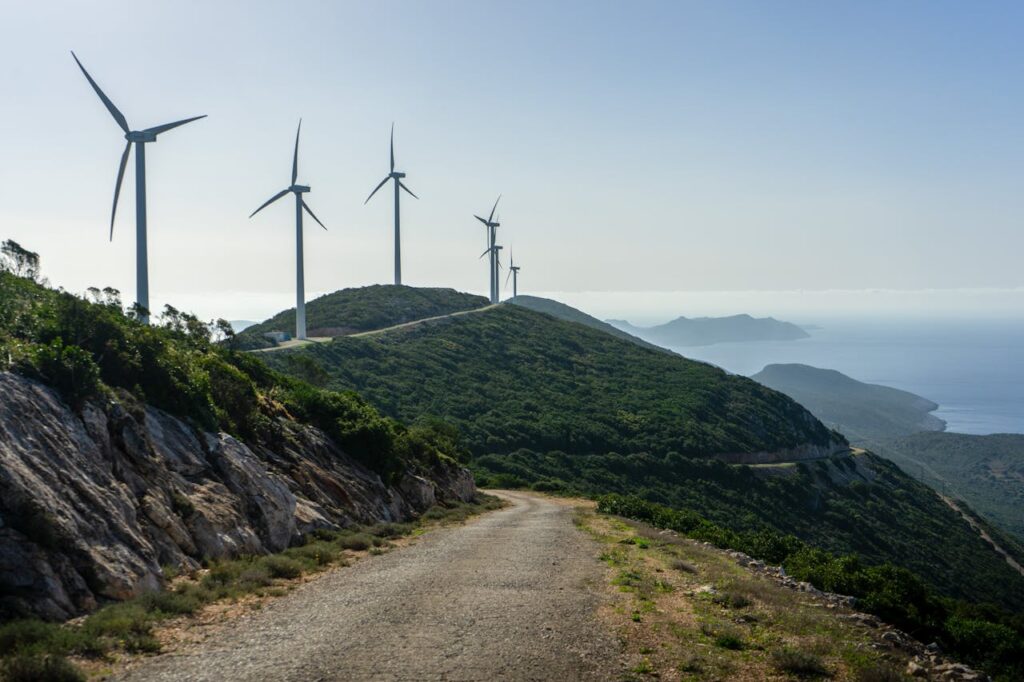
Over the past seven years, Greece has significantly increased the share of renewables in its energy mix. Today, more than 50 per cent of its electricity consumption is covered by renewable energy sources (RES), while the country ranks 3rd worldwide in solar energy penetration and 9th in wind energy. Installed RES capacity has reached 18 GW, up from 6.3 GW in 2019. Since 2024, Greece has become a net exporter of electricity.
This progress requires clear rules, planning and balance, according to the Ministry of Energy. Greece is therefore introducing a new Special Spatial Planning Framework for Renewable Energy Sources (SPRF-RES). The framework, currently under public consultation, sets rules for the installation of new renewable energy and storage projects.
Solat plants are no longer permitted:
- In protected areas of the Natura 2000 network
- In forests and woodland areas
- In Ramsar wetlands and small island wetlands
- In national parks, declared natural monuments and aesthetic forests
- In areas designated as landscapes of outstanding natural beauty
- In World Heritage sites and other major monuments, as well as in certain archaeological protection zones
- In areas with protected or abandoned terraces
- In areas without road access, as defined by the Ministry of Infrastructure and Transport decisions
- On swimming beaches
New siting rules and criteria are also introduced:
- The maximum land coverage by new photovoltaic plants (not yet environmentally licensed) may not exceed 1.5 per cent per regional unit.
- Minimum distance requirements will apply between photovoltaic plants and residential areas, along with limits on visual impact.
- A visual impact assessment will be required for PV installations within 1,500 metres of UNESCO World Heritage sites and other major monuments, archaeological sites and historic areas, and within 1,000 metres of the absolute protection zone (Zone A) of other protected cultural sites and traditional settlements.
Wind farms are no longer permitted:
- In Attica and the metropolitan area of Thessaloniki
- At altitudes above 1,200 metres
- In Ramsar wetlands and small island wetlands
- In landscapes of outstanding natural beauty and in the core zones of national parks
- In absolute nature protection zones and nature protection zones under Law 1650/1986
- On islands smaller than 300 square km, except where required for public interest needs (e.g. desalination plants)
- In areas with high tourism development, as defined in the new Tourism Spatial Framework
- In off-plan areas designated for tourism and recreation
- In active quarrying, mining and extraction zones
- In areas without road access, as defined by Ministry decisions
- On swimming beaches
Within Special Protection Areas (SPAs) under Natura 2000 (bird protection zones), wind farms are permitted only exceptionally, and only where the project is explicitly provided for in the approved Special Environmental Study, and wind potential exceeds 7.5 m/s, according to the national wind map published by RAEH.
In island regions, the maximum land coverage (carrying capacity) by wind farms may not exceed 4 per cent of the area per municipal unit.
Projects already in operation, as well as those at an advanced stage of permitting, remain governed by the existing spatial planning framework.
The new SPRF-RES also introduces specific zoning rules for offshore wind and solar installations. For the first time, it defines protection and exclusion zones, specific siting criteria, and mandatory specialised studies to protect the marine environment and ecosystems.