
Estonia is targeting a threefold expansion of its film industry within five years, with two new sound stages under construction forming the cornerstone of a bid to become a full-service hub for international productions, officials said at the Cannes Film Festival.
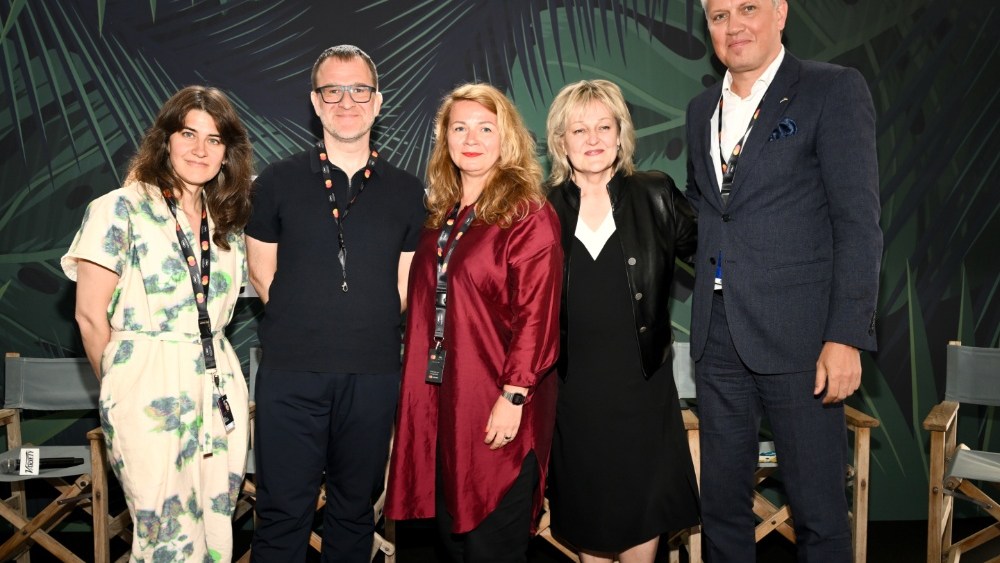
The ambition was laid out at a Variety Global Conversations panel bringing together Edith Sepp, CEO of the Estonian Film Institute; Nele Paves, film commissioner at Film Estonia; Joonas Tartu, head of Tallinnfilm Studios; producer and Stellar Film partner Evelin Penttilä; and Viljar Lubi, Estonia’s ambassador to France.
Two studio complexes are now under construction: a facility in eastern Estonia scheduled to open later this year and a second, purpose-built complex in Tallinn. Tartu described the Tallinn project as designed by filmmakers rather than driven by real estate interests, framing the new complex as an anchor for the wider Nordic-Baltic region. “Stop just visiting us. Come and stay,” he said.
The Tallinn studio is pursuing LEED Gold certification, incorporating solar panels, geothermal energy and smart water management – efficiencies, Tartu said, translate into lower operational costs rather than additional burdens on productions.
Lubi said the government is fully behind the expansion. “Estonia is not the market, it’s a country,” he said, arguing that the absence of a substantial domestic market has always required the industry to compete internationally from the outset. He set the five-year goal of tripling the industry’s size, with the studio build-out as the primary catalyst, adding that the government sees its role as an enabler by reducing regulation and red tape rather than intervening.
The studio push is backed by a cash rebate recently increased to 40%, up from 30%, which Paves said positions Estonia among the top incentive regimes in the region. Sepp pointed out that both Paramount and Warner Bros. have filmed in Estonia, and argued the country’s advantage in a tightening global production landscape is institutional nimbleness. “We listen to our filmmakers. We stay responsive to them, we stay flexible and one key word for Estonia is definitely less red tape,” Sepp says.
Stellar Film’s Penttilä is about to begin her company’s 10th Estonian cash rebate project. “I could compare it to like having an experience of a boutique hotel, very personal and friendly, but reliable,” she said of working in the country.
On the question of capacity, Paves was direct. “We can’t do five big Hollywood productions at the same time. It’s impossible. We just don’t have the crew for it,” she said, adding that one large Hollywood project could run alongside a handful of smaller productions, with crews supplemented from neighboring Latvia, Lithuania and Finland as needed. The country’s film school in Tallinn produces new professionals annually, and Penttilä said the workforce has roughly doubled since Christopher Nolan’s “Tenet” filmed in Estonia.
“Tenet” remains the benchmark for what the country can deliver at scale. Paves recalled the production’s opening shoot days drawing between four and five thousand extras and described the reaction from the production team at the wrap party: “You are a small country doing amazingly great big things.”
Paramount Plus’ “The Agency” series, which filmed in Estonia last year, is a more recent marker of the country’s growing track record with major productions.
On the domestic side, Estonian films reached a 14% local market share last year against a target of 20%. European titles collectively account for around 45% of the domestic box office, with U.S. releases taking most of the remainder. The country’s international festival profile was raised by Anna Hints’ documentary “Smoke Sauna Sisterhood,” which won the best director award at Sundance in 2023 and took the European Film Award for best documentary, and by Hints’ short “Sauna Day” that screened in Critics’ Week at Cannes two years ago.
Sepp said talent development and co-production are the other priorities for the years ahead, with the IDA Hub complex in eastern Estonia focusing specifically on cultivating the next generation of film professionals.