
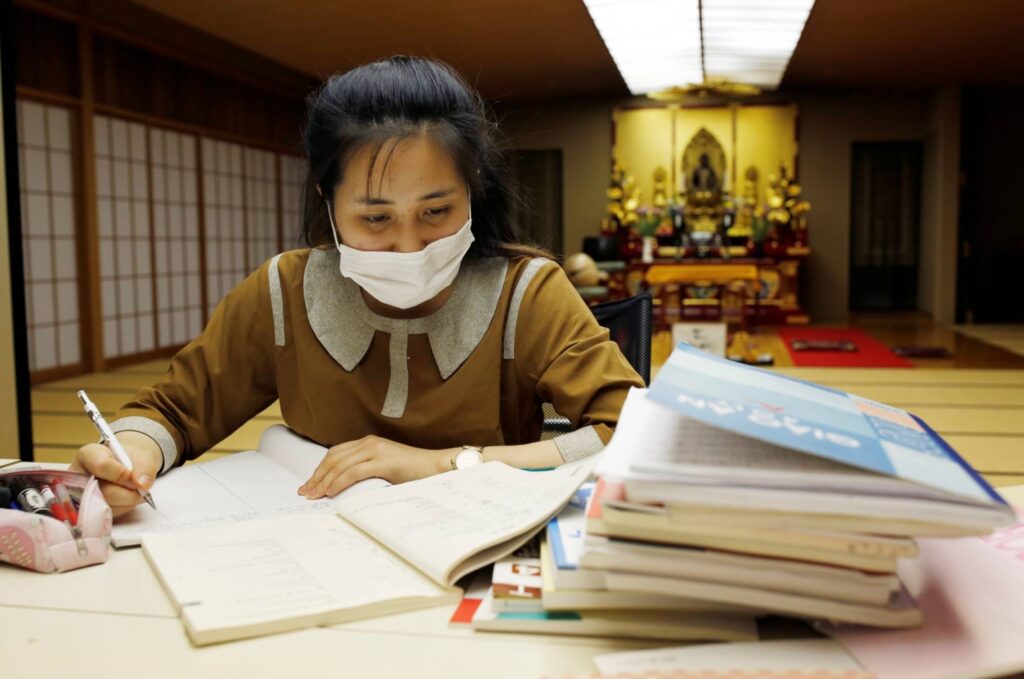
Japan continues to draw an unspoken but influential boundary — one that sorts and evaluates people according to whether they can speak Japanese “like a native.” Even highly proficient speakers often find themselves kept at arm’s length, judged against an imagined linguistic ideal that few can meet. The result is a narrowing of possibilities not only for learners, but for Japanese society.
This sits uneasily with the government’s own Reference Framework for Japanese-Language Education — a national guideline created in 2021 that uses six levels from A1 to C2 and focuses on what learners can actually do with the language — which does not position native speakers as the default model.
Yet the expectation remains: Those who live or work in Japan should sound “like a Japanese person.” Many learners internalize this pressure. The question, then, is why this contradiction endures.