
The Windup Newsletter ⚾ | This is The Athletic’s MLB newsletter. Sign up here to receive The Windup directly in your inbox.
The first item in my Sliders column today is a conversation with former Orioles All-Star Al Bumbry, a Vietnam veteran who’s being honored at the MLB alumni game in Cooperstown ahead of Memorial Day this weekend, but it needs more space than we have here. So, we’ve got the quick-hitters up now.
Levi will be back after the holiday. I’m Tyler Kepner, welcome to The Windup!
3 Questions With: Toronto’s rookie lefty from Slovakia
Elmer Valo — born in Rybnik, Slovakia, in 1921 — played his final game on Oct. 1, 1961, ending a two-decade career spent mostly with the Philadelphia A’s. It would be 23,605 days until another player born in Slovakia — as classified by Baseball Reference — appeared in the major leagues.
“Philadelphia A’s?” Adam Macko said Tuesday. “To be honest, I didn’t know that was a team.”
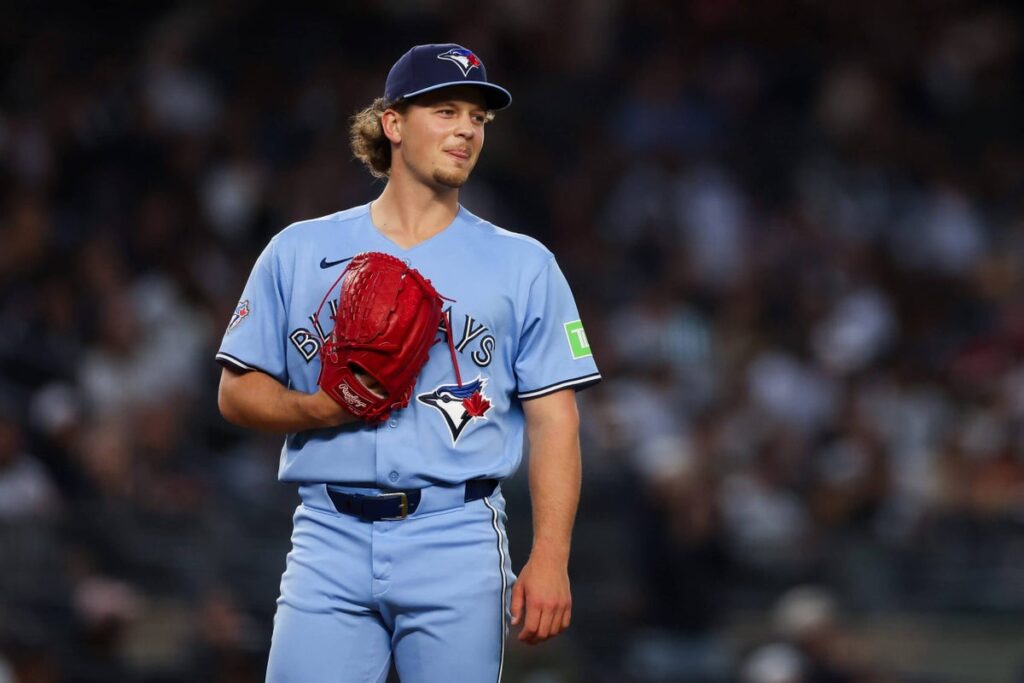
That’s understandable; when Valo played, Macko’s team wasn’t around, either. Macko, a left-hander for the Toronto Blue Jays, was born in Bratislava, Slovakia, in 2000, and made his major-league debut Monday at Yankee Stadium. He faced three hitters and retired them all.
“I was super nervous from when I threw my last pitch in the bullpen to running out here getting on the mound,” Macko said. “That’s when everything started racing, speeding up on me. And then when I started throwing my warm-up pitches, that’s when things kind of started to come back to me: ‘OK, I know this game.’”
He knows the game because he fell in love with it halfway around the world. Macko’s family moved from Slovakia to Ireland when he was 11, and then to Canada soon after. In 2019, the Seattle Mariners drafted him in the seventh round from Vauxhall (Alberta) High School and traded him to Canada’s team three years later in a deal for Teoscar Hernández.
Macko — who played for Canada at the WBC this year — is the fourth player born in Slovakia to reach the majors after Valo, Jack Quinn, who pitched from 1909 to 1933, and Carl Linhart, who had two at-bats for the 1952 Detroit Tigers.
None of the others lived there as long as Macko, who happily talked about his improbable journey to the top.
Why did you want to play baseball?
“I started at 7, but it was more like T-ball. Initially at the tryouts it was just ball-pit balls that we were hitting into a net. So it was very loose, just a little extracurricular activity after school. As I started to get better at it, they sent me up a level (where) it was actually like a team, and then I played there for a little bit.
“There were only two teams in my area that we were playing. Another team, I believe, was on the other side of the country. So we just played that one team and it was a lot of fun. It was competitive; we got to know the guys on the other team. We were just kind of playing for bragging rights and medals. There’s a lot of medals that I have from those times playing in Slovakia, because we were always either first or second. Gold or silver. (Laughs.)”
What was your first awareness of Major League Baseball?
“When we moved to Ireland (at age 11), we were walking down a street and there was a bar that had TVs on. It was the Orioles versus I don’t remember who, but that was the first time that I saw a baseball game on TV. I was like, ‘Oh, that’s interesting,’ so I did some research. I was like, ‘Oh, there’s this Major League Baseball league — well, who’s the best pitcher?’ And this is 2012 when I was looking it up, and Justin Verlander had won the Cy Young, MVP, Triple Crown in 2011. So he was the best pitcher, and I said, ‘OK, I want to be like him.’ He was very smooth, and I loved how he started the game throwing 93, 94, and ended the game throwing 101, 102 (mph). I thought that was so cool. Later on, I started finding some lefties and I landed on David Price, so I had some good role models.”
Do you think of yourself as Slovakian, Irish or Canadian?
“I’m kind of a global citizen. It’s interesting, my roots are Slovakian, I am Slovakian, born and raised, and my family and I speak Slovak all the time, so that’s very close to home, that’s kind of where I’m from, those are my roots. But most of my adult life I spent in Canada, so I have love for both countries.”
Check out my Sliders column, with Macko’s full Q&A here.
Off the Grid: Every player’s story is interesting
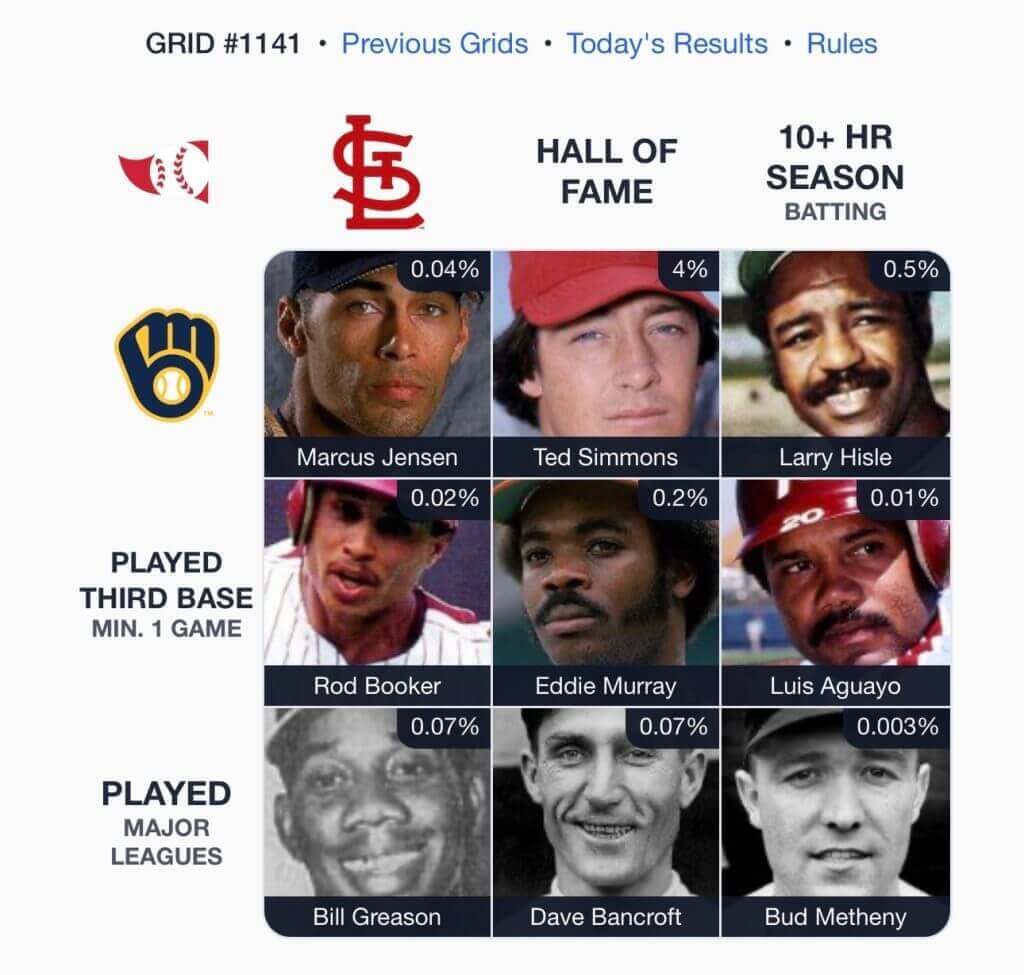
The Immaculate Grid is a pathway to all sorts of fascinating baseball connections. Last Sunday, when a friend of mine used the name Bud Metheny, I had to find out more about him. After doing some research, I mentioned Metheny to New York Yankees pitcher Ryan Yarbrough, who instantly recognized the name.
“That’s the field’s name,” he said. “The Bud!”
Bud Metheny Ballpark at the Ellmer Family Baseball Complex is the home of the baseball team at Old Dominion University, where Yarbrough played before embarking on a long professional career. It honors Metheny, who helped the Yankees win a title in 1943 and hit 14 home runs the next season.
Metheny went on to coach the ODU baseball team for 32 years, and also served as the school’s basketball coach and athletic director. He played all four of his MLB seasons with the Yankees, and that’s why Old Dominion wears navy pinstripes.
The program has sent 17 players to the majors, including Justin Verlander, Daniel Hudson and Vinnie Pasquantino, but Yarbrough is the only one who has worn both Yankee pinstripes and the college pinstripes they inspired.
“Pinstripes, they’re all about it,” Yarbrough said. “I don’t think I ever actually put that together, but it actually makes a lot of sense now that you bring it up.”
Classic Clip: The Padres dance for McDonald’s
The sale of the San Diego Padres, for a record $3.9 billion valuation, could be approved as soon as next month at the quarterly MLB owners’ meetings. José E. Feliciano and Kwanza Jones, the lead investors, would own up to 40 percent of the franchise and take control from the Seidler family.
The first time the team was sold, by owner C. Arnholt Smith in 1974, the price was $12 million, which is now roughly the annual salary of infielder Jake Cronenworth. The buyer was Ray Kroc, the chairman of McDonald’s, who had tried to buy his boyhood team, the Chicago Cubs, the day before.
“Buying the Padres was strictly an afterthought on the rebound at the end of a lifetime romance,” read a 1974 UPI profile. “When Kroc told his wife what he was up to, she thought he was talking about taking over some California mission.”
If Ronald McDonald was Kroc’s red-headed child, the Padres were — ahem — his red-headed “stepchild.” (His words, more or less.)
“My first love outside of my personal life is McDonald’s and always will be,” Kroc said in that UPI story. “The Padres will always be like a stepchild to my one and only child, McDonald’s.”
In that case, consider this clip a home movie. In 1985, the year after Kroc’s death, Kurt Bevacqua, Tim Flannery, Tony Gwynn and an impressive Carmelo Martínez hammed it up in a local commercial for the restaurant chain.

Handshakes and High Fives
In the pitch clock era, everybody’s a base stealer now, as Chad Jennings explains.
The Pirates are leaning into “Yinzerpalooza Weekend” by giving away bobbleheads of Noah Wyle’s character, Dr. Robby, from the hit Pittsburgh-based medical show, “The Pitt.”
A Yasiel Puig card just sold for $6,000, but the value was actually driven by a Kobe Bryant cameo in the background of the photo.
Jim Bowden took a look at some underperforming veteran star players and tried to decipher whether they’re just slumping or on the true downslope of their careers. See the full group.
Mets closer Devin Williams is dominant again after ditching a “fix” in his delivery and returning to the more comfortable movement that made him an elite closer.
Most-clicked yesterday: Don Mattingly making history with the Phillies’ turnaround.
📫 Love The Windup? Check out The Athletic’s other newsletters.