
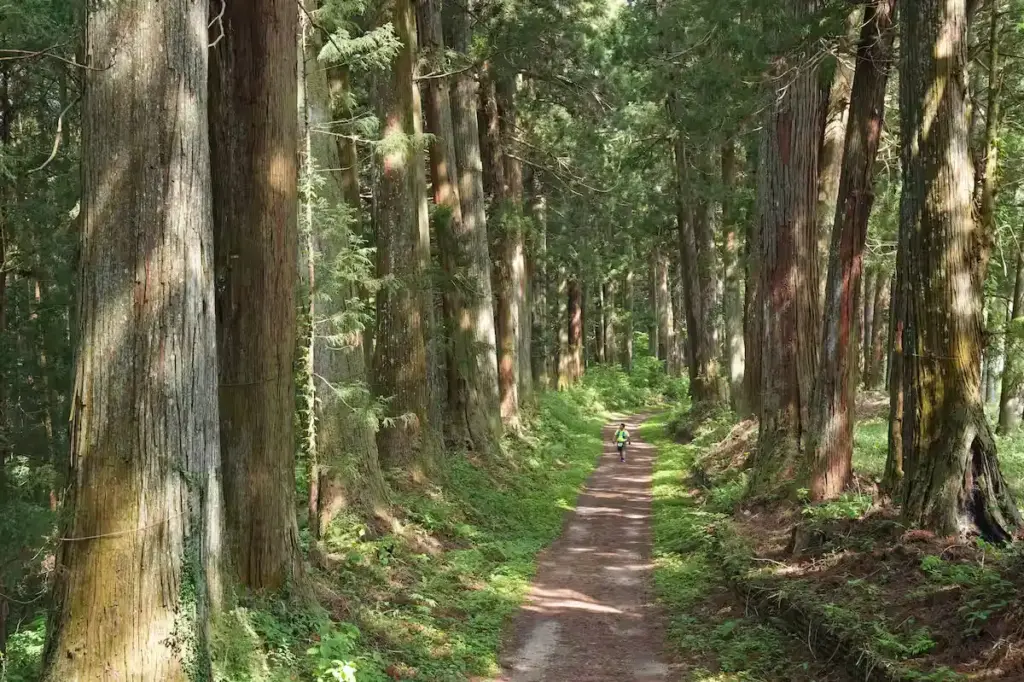
Towering cedars line a dense, overgrown road, their massive trunks rising like the walls of a living tunnel. The path leads to Nikko Toshogu Shrine in Nikko, Tochigi Prefecture. It has been over 400 years since the first cedar was planted in 1625 during the Edo period.
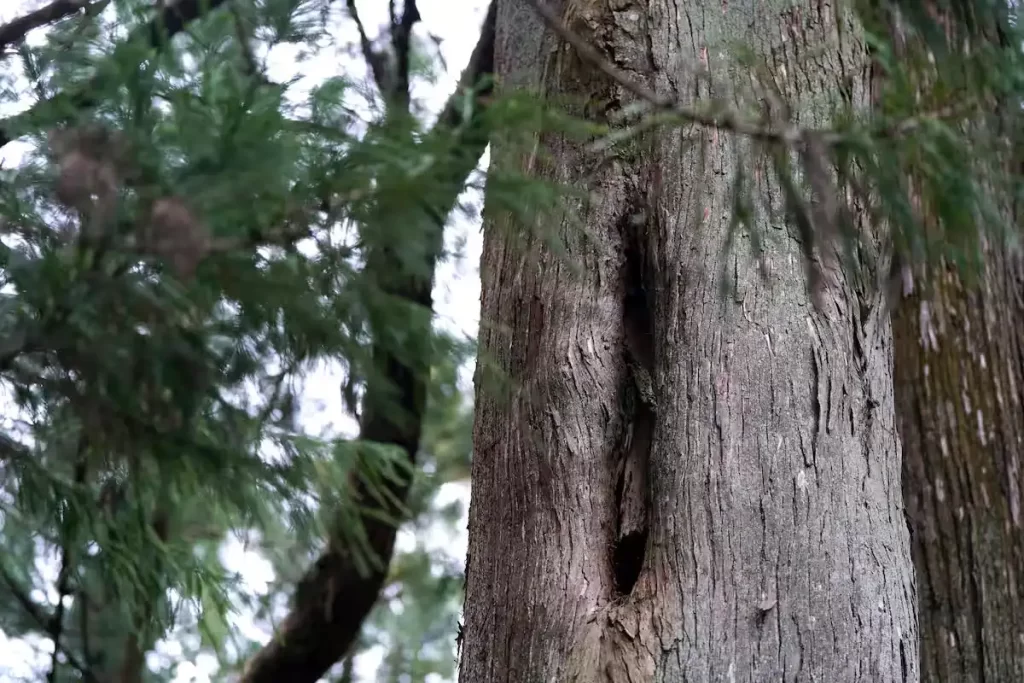 A cedar tree still bears marks from a cannonball strike during the Boshin War.
Tokugawa Ieyasu, founder of the Tokugawa shogunate, is enshrined at Nikko Toshogu. The cedar trees were planted over more than two decades by feudal lords who served the Tokugawa family, including Matsudaira Masatsuna. During the Edo period, the avenue served as a route for successive shoguns traveling to the shrine on pilgrimage.
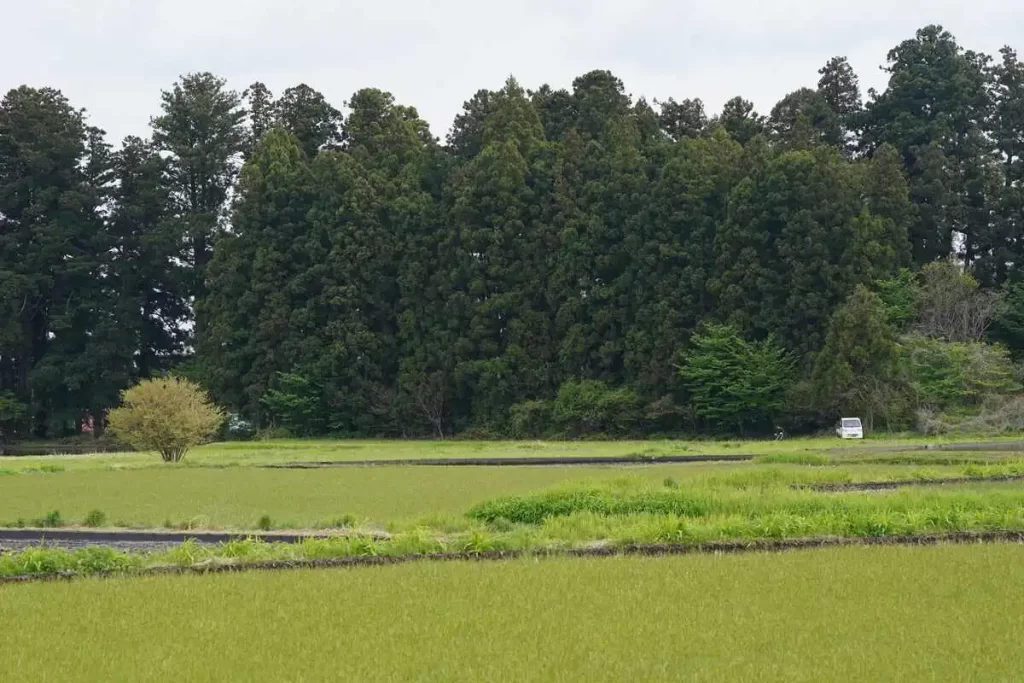 The cedar-lined avenue viewed from outside.
Together with the Reiheishi Road, which was used by imperial envoys carrying offerings from Kyoto to the shrine, and the Aizu Nishi Kaido connecting Aizu and Nikko, these cedar-lined roads stretch for a total of about 37 kilometers (23 miles). The network is recognized by Guinness World Records as the world’s longest tree-lined avenue.
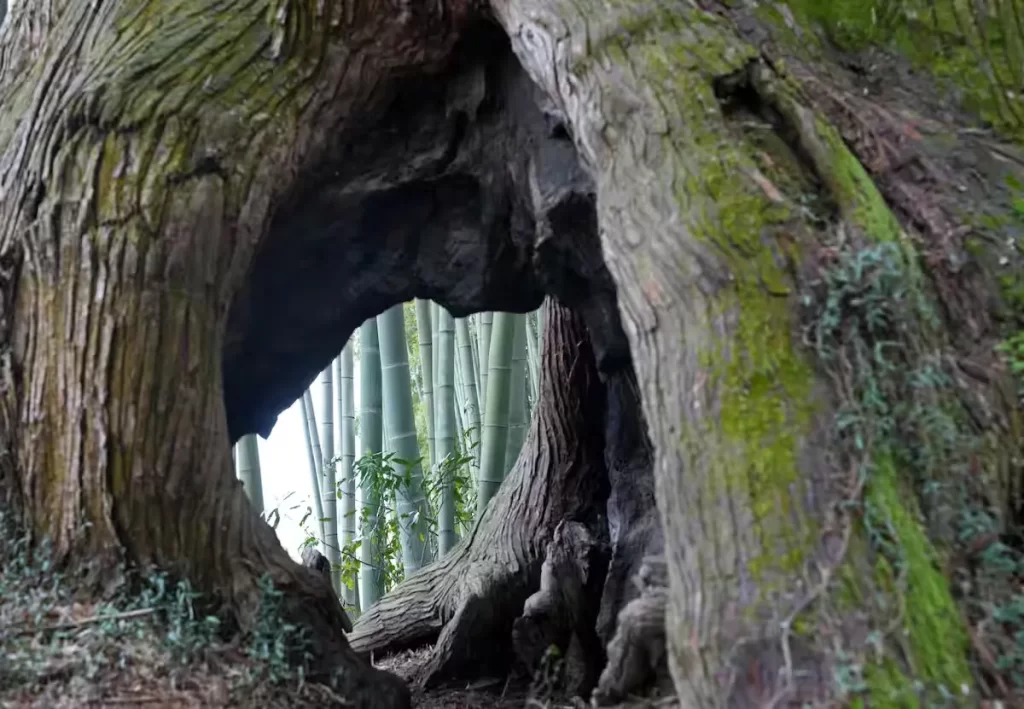 A cedar tree with a hollow large enough for a person to enter at its base, affectionately known as the “Tree Hotel.”
Preservation Efforts
Around 50,000 cedars are believed to have stood when planting was completed, but aging and natural disasters have steadily reduced that number. As of the end of March this year, only about 12,000 remain.
To preserve the landscape, Tochigi Prefecture has begun taking action. While the existing cedars are owned by the shrine, the prefecture plans to plant new saplings to maintain the population. It will also manage the area to prevent fallen trees from causing damage.
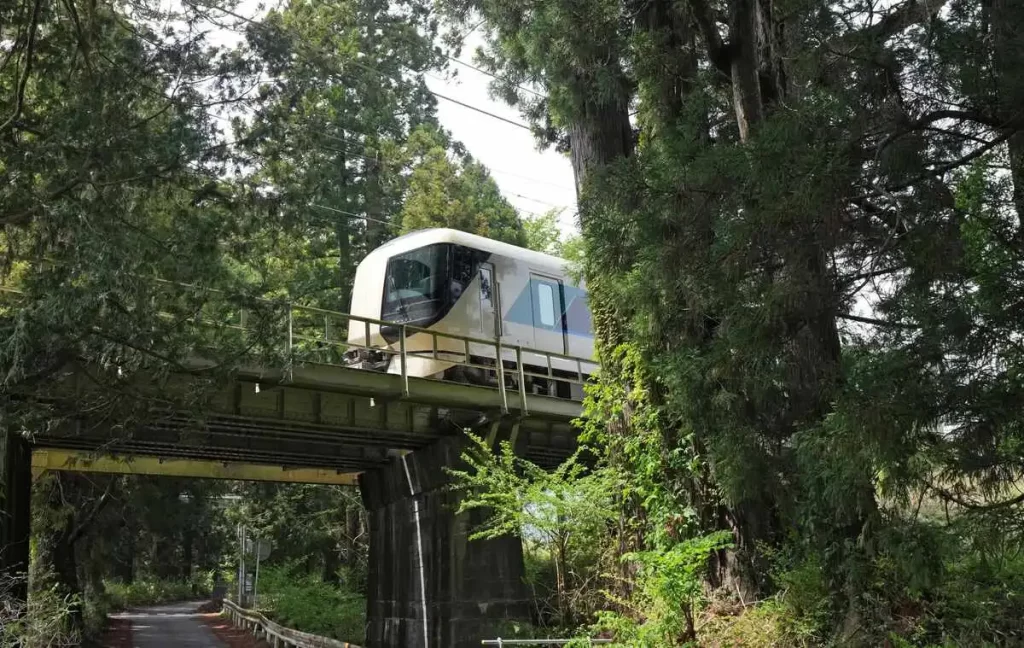 A Tobu Railway limited express train crossing the cedar-lined avenue.
Even as times change, the road remains well loved. Locals stroll along it, while on weekends tourists pass through on runs and cycling trips.
In early May, an event retracing the old Reiheishi route was held along the cedar avenue. A participant from Fukushima Prefecture reflected: “Even in today’s car-centered society, it’s wonderful that this place still remains. I wonder if travelers in the Edo period walked this same road.”
 The avenue is also popular among cyclists.
The towering cedars arch overhead, forming a gentle canopy that shields passersby from harsh sunlight and strong winds. From the Edo period to the present, and onward still, the cedar avenue has witnessed history and continues to watch over those who travel beneath it.
RELATED:
(Read the article in Japanese.)
Author: Kazuya Kamogawa, The Sankei Shimbun
Continue Reading