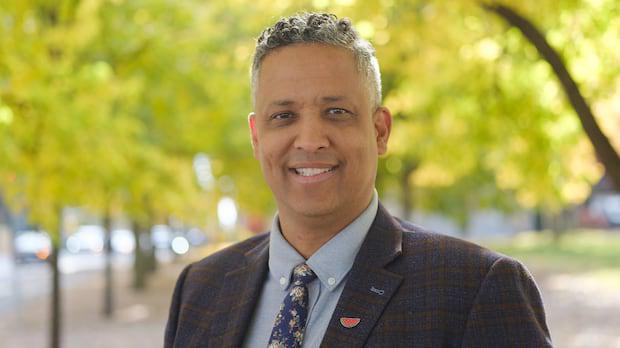
Hamilton’s Matthew Green appointed NDP’s new interim director, here’s how he wants to rebuild the party
https://www.cbc.ca/news/canada/hamilton/matthew-green-appointed-to-ndp-interim-director-9.7208830

Hamilton’s Matthew Green appointed NDP’s new interim director, here’s how he wants to rebuild the party
https://www.cbc.ca/news/canada/hamilton/matthew-green-appointed-to-ndp-interim-director-9.7208830
2 Comments
>For one, Green said he’d like to see the party become more decentralized, empowering riding associations and rank-and-file members to build engagement.
Why is it a accepted without question that this is a good thing? Is there any empirical evidence that decentralized political parties are more successful or produce better policies or govern better?
I have been to a few NDP party events and it is usually hard to get people move through agendas and get things done.
I also suspect because only few individuals are usually active in NDP riding associations, and those individuals are not necessarily representative or engaged with the local community as you may expect, the party may end up being more disconnected from the voters.
>Mamdani’s runaway success has shown “there’s no need to shy away from left-wing populism,” Green said.
>Like Mamdani, he said, Lewis is a strong communicator, who can identify people’s challenges and talk to them about solutions in a straight-up way.
These guys are really riding on the hope that Mamdani’s popularity is portable to federal politics in Canada and was not a product of a number of different factors, including a grossly unpopular opponent who was endorsed by Trump and had numerous sex scandals in the family. Most people don’t even know who he is. I really don’t see a strategy other than blind hope.
The federal NDP went from seeing people embrace a public option in a municipality and figured that Canadians would have no issue imagining a subsidized public option at the scale of the federal government without any evidence a non-subsidized option even worked at the municipal level. It’s not a straight-up solution, either. This is literally living on a prayer, lol. I guess they haven’t been proven wrong yet, but Lewis and his public option for grocery have been in the media enough for us to have an idea of whether it has become a salient policy idea: it hasn’t.