
I was working on my #SecretBookProject this week and something both unexpected and eerily resonant just happened in a weird moment of synchronicity.
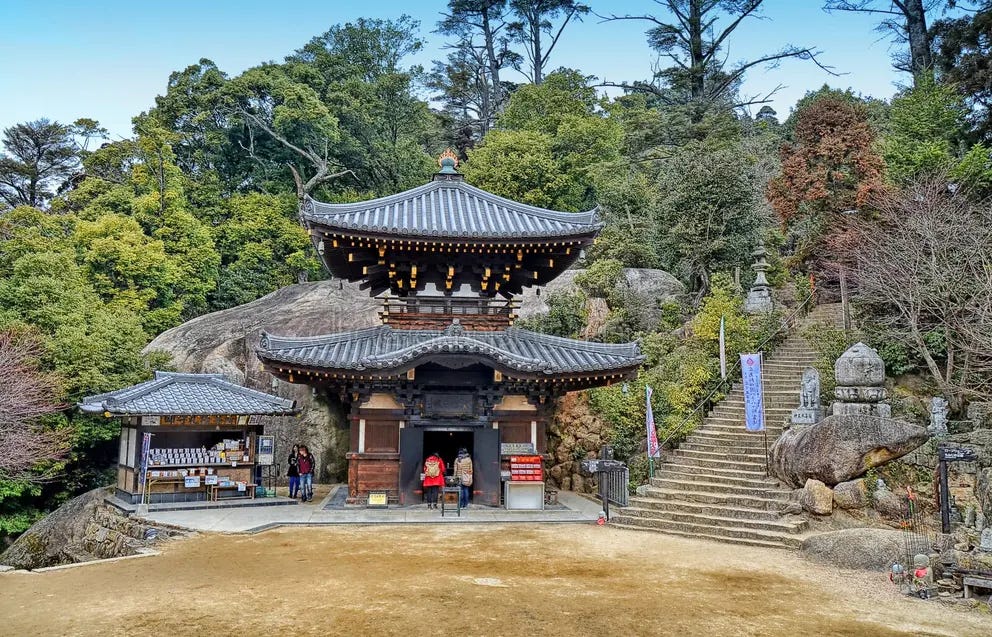
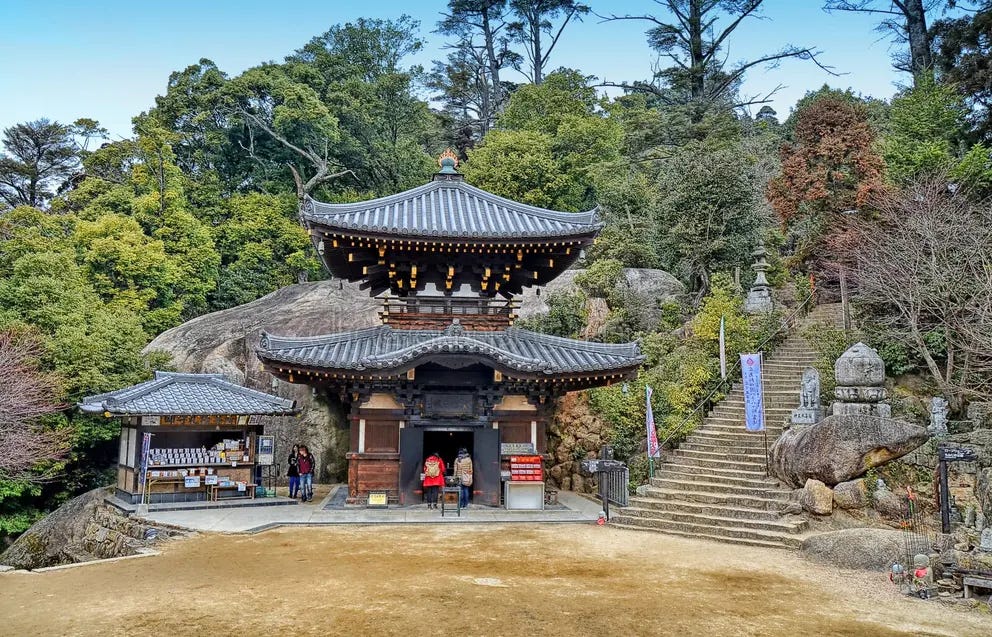
News broke from Itsukishima Island, usually known as Miyajima, in Hiroshima that a particular building, called Reikadō had burned down. Fortunately, no one was hurt but it was a sudden event that, initial reports suggest, might have been caused by the very reason for the hall’s existence: the Sacred Flame itself.
And this isn’t even the first time it’s happened…
The island is close to the city, a short ferry ride from there or the ferryport at Miyajimaguchi. Most people think of the great Otorii that floats in the bay at high tide, or Itsukushima Shrine, a floating jinja right on the sea, and the deer who roam around it.
I last went three years ago and, if you don’t follow the crowds, it’s possible to go deeper into the island and, after climbing a relatively ‘small’ mountain (as Japan reckons such things)—Misen-san, you can visit Daishō-in Temple. Miyajima has a number of sacred sites, as well as the world’s biggest rice paddle and a Starbucks, but most people visit the shrine and the deer.
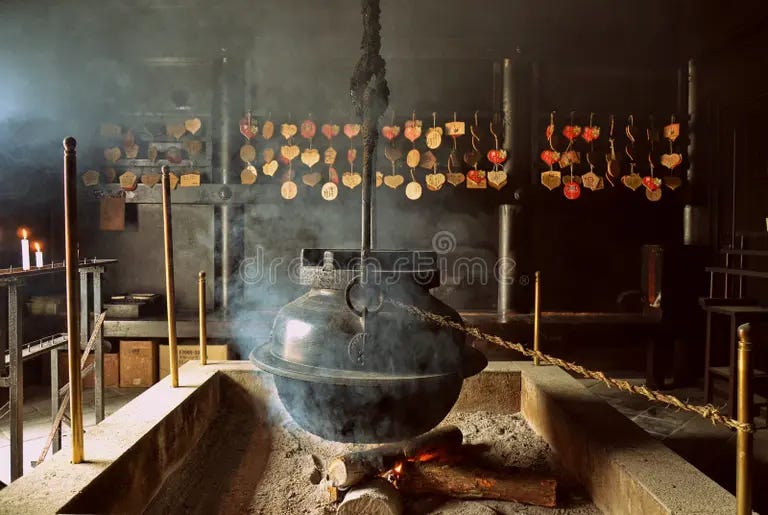
Well this week, Reikadō (the Hall of the Eternal Flame) burned down. Yep, it’s a wooden building where a sacred fire has been burning since 608 C.E, when Kōbō Daishi (the death name of the monk Kūkai, the founder of the Shingon sect of Buddhism) lit the flame. So, give or take, the kiezu-no-hi (不消霊火) has been burning for 1200 years. The flame was also used to light the Flame of Peace at the Hiroshima Peace Memorial, which will stay lit until every nuclear weapon has been disarmed.
Kūkai, for those of you who don’t know or isn’t religious studies nerd like me, is believed to be in eternal meditation in his mausoleum at Okuno-in Cemetery on Kōya-san, in present-day Wakayama. As well as founding Kōngobu-ji, the temple which serves as the head of the sect, as well as the starting and ending point for the Ohenrō Shikoku pilgrimage (which I also want to do). This is somewhere I’ve also visited, it’s both beautiful and atmospheric.
Shingon, as an esoteric sect, focused on the idea that you can become enlightened in a single lifetime but the primary focus is on Dainichi Nyōrai, a celestial Buddha associated with the sun. However, Shingon also reveres other figures like Kannon, my favourite Buddhist deity and the Wisdom Kings.
Japan is normally known for natural disasters but we often think earthquakes and tsunami over fire. But because so many religious sites were made of wood, they are naturally predisposed to have a bad time of it when it comes to fire.
Fire has decimated temples and towns, religious sites and homes around the world (just look at Notre Dame in Paris). Thanks to neon cities like Osaka and Tokyo, we think of very safe places, cities that can withstand anything earth throws at Japan. But it’s only in incidents like this that we’re reminded that fire wins against wood, especially in more remote areas and on drier days as we go into summer.
Reports are suggesting that while the Sacred Flame might have caused the fire, the flame itself was saved and moved elsewhere. This exact same thing happened in 2005, when the same building burned down.
While horrific, no one was hurt, the flame was preserved and the building will likely be rebuilt again. Indeed, this fire echoes the impermanence spoken of in Buddhist teachings, that nothing is forever. So, out of a horrific event, that the entire world got to watch live, another sacred housing for the flame will be constructed in the coming months.