
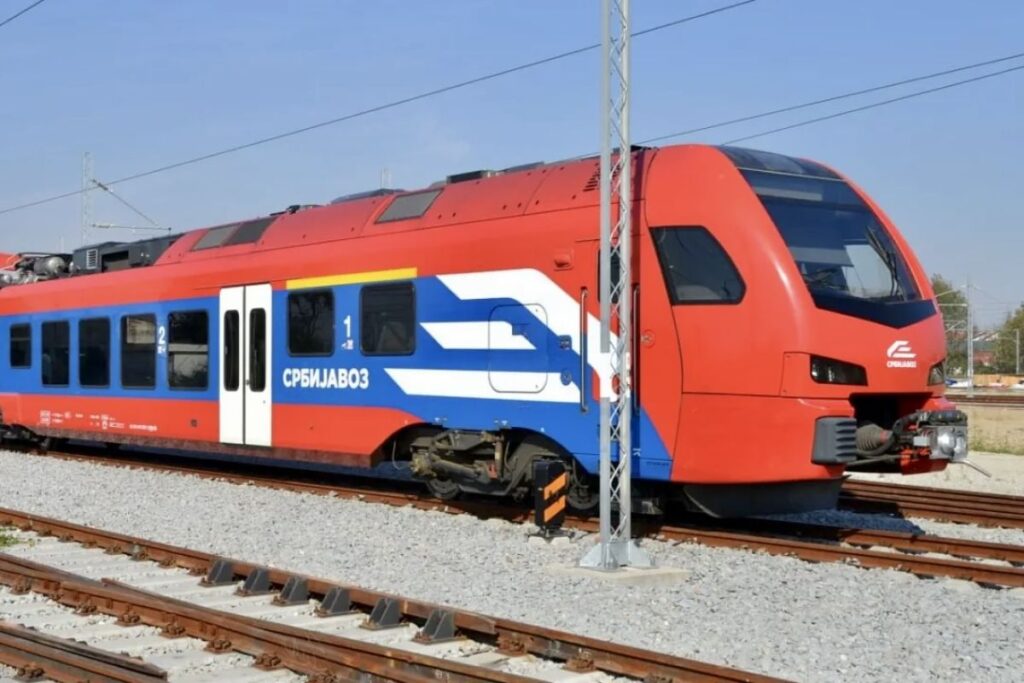
Serbia suspended rail services nationwide ahead of a major anti-government protest in Belgrade, affecting domestic traffic and cross-border services with Hungary.
Serbia’s state railway operator Srbijavoz suspended all train operations across the country early on Saturday, in a move that also affected rail services at the Hungarian–Serbian border.
According to dailynewshungary.com, the nationwide shutdown began at 4:15 AM on 23 May 2026, with Srbijavoz announcing that traffic would remain suspended for an unspecified period. The operator did not provide a detailed explanation for the measure.
The suspension also disrupted international and cross-border movements. Serbian media cited by Daily News Hungary reported that a train travelling from the Montenegrin coastal city of Bar to Belgrade was stopped in Požega, with passengers reportedly transferred to buses for the rest of the journey.
Hungarian railway information service Mávinform said passenger trains were also suspended between Röszke and Subotica because Serbian railways had halted passenger traffic indefinitely. Train services continued to operate normally on the Hungarian section between Szeged and Röszke.
The available reports focused mainly on passenger services, but a nationwide suspension of rail operations would also raise questions for freight flows through Serbia, including international corridors linking the Balkans with Central Europe.
The shutdown came only hours before a major anti-government demonstration in central Belgrade. France24, citing AFP, reported that tens of thousands of demonstrators gathered at Slavija Square to renew calls for early elections. The protest was led by the student movement that has become the central force behind Serbia’s anti-corruption demonstrations.
The protest movement began after the collapse of a recently renovated canopy at Novi Sad railway station on 1 November 2024, which killed 16 people and left another person permanently paralysed. The disaster triggered public anger over alleged corruption and negligence in state infrastructure projects.
According to France24, calls for a transparent investigation into the Novi Sad tragedy have since grown into broader demands for early elections. One of the protesters quoted by AFP, 24-year-old architecture student Andjela, said the aim was to show that the movement had not stopped. Pensioner Zoran Savic told AFP that Serbia must become a democratic state with the rule of law applied equally to everyone.
Daily News Hungary noted that rail services in Serbia had been suspended several times over the past year and a half ahead of opposition protests in the capital. In some earlier cases, including incidents in March and October 2025, authorities cited bomb threats as the reason for closures.
President Aleksandar Vučić has recently suggested that early elections could take place between September and November 2026, although regular parliamentary and presidential elections are officially scheduled for 2027.
The situation has also drawn wider European attention. France24 reported that the Council of Europe’s human rights commissioner warned on Friday that Serbia’s rights situation had worsened, citing attacks on activists and journalists, shrinking civic space and alleged police abuses at protests.
For rail users, the immediate impact was practical: disrupted domestic services, interrupted international journeys and a suspended passenger link at the Hungarian border. Politically, the timing of the shutdown placed Serbia’s railway system directly inside a wider confrontation over public accountability, infrastructure safety and the future of the country’s government.
Join Our Circle of Insiders: Receive the Weekly Digest That Keeps You Ahead!