
Our journalism is only possible thanks to the trust of our paying members. Not a member yet? Sign up now
Welcome back to Bureau Brussels – your weekly deep dive into the power plays, backroom deals, and investigations shaping life for millions of people across the bloc.
What’s in store this week?
- Europe’s anti-emissions-cheating rules face a test drive
- EU leader’s exclusive group chat remains under wraps
- The future could mean trusting AI with your money
STORY OF THE WEEKFormer EU official: we have a right to know if car companies cheat
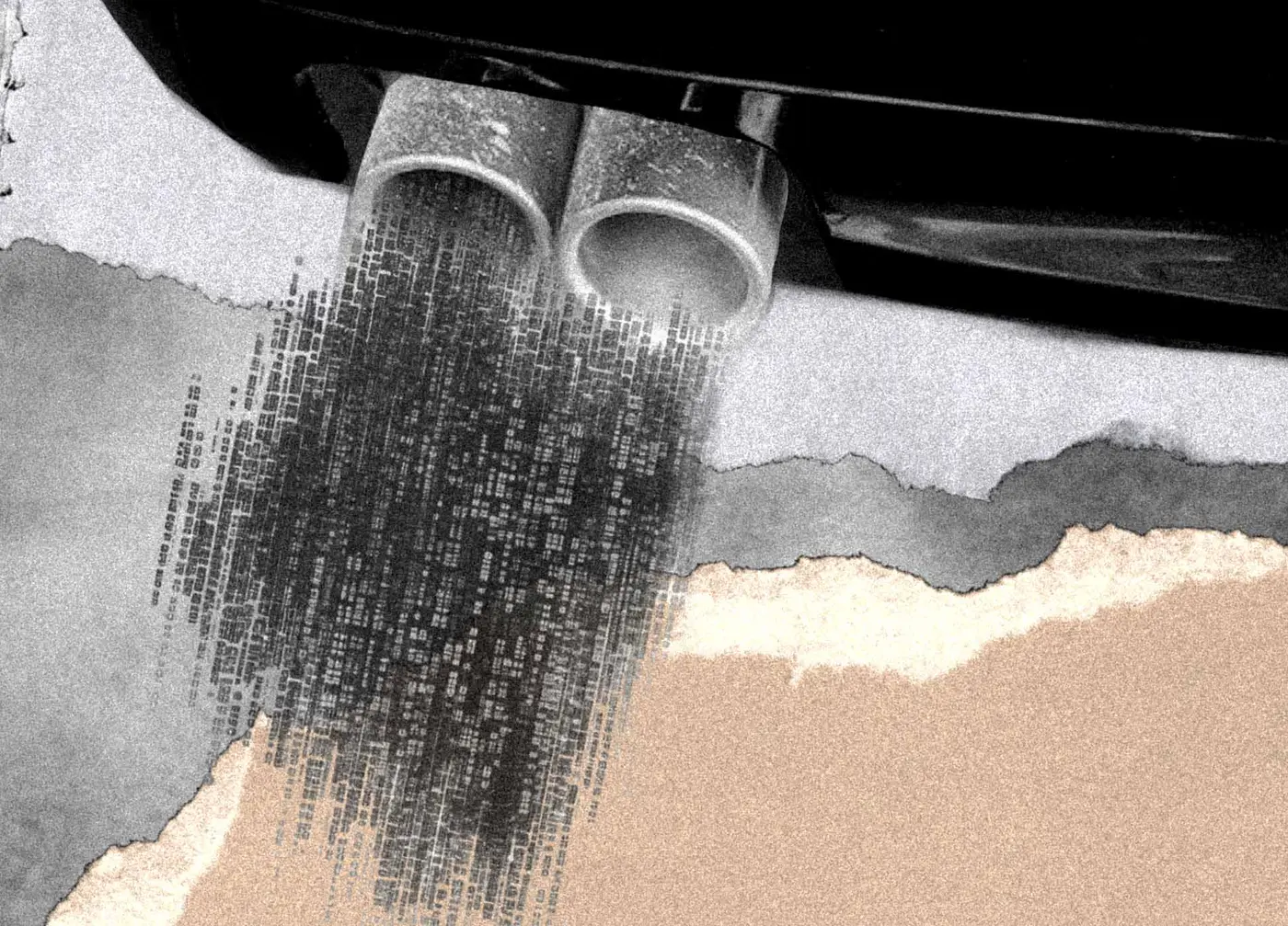
When the EU introduces new rules, there is often a delay between the proposal and the first test case to see if they work in practice.
Ten years have passed since the European Commission unveiled reforms aimed at preventing manipulation of the EU’s car emissions tests following the Volkswagen Dieselgate scandal. “We have to make sure it never happens again,” said then-Commission Vice-President Jyrki Katainen.
Their solution: give the EU the power to fine car companies if national authorities failed to act. Katainen’s colleague, European Commissioner Elżbieta Bieńkowska, argued that “after Volkswagen[‘s] fraud, it was very obvious that the European Commission must have some supervisory power”.
Last week, we published an article examining a case that eventually put those 2016 powers to the test.
Germany’s motor transport authority, the KBA, decided in 2023 to not give Nissan a fine, despite having told the Japanese car giant it had violated the EU’s ban on defeat devices – software used to cheat emissions tests. This could have led to the Commission using its new powers, and slapping Nissan with a fine of a maximum of €30,000 per car.
But because the KBA seemingly never told either the Commission or member states about its findings, no one challenged the German decision within the one-month deadline.
-
 Secrecy Tracker EU
Waar we graven in wat de EU liever verborgen houdt. Deze nieuwsbrief is in het Engels.
In response to the news, former Commissioner Bieńkowska – now a senior advisor at law firm Covington – told us this wasn’t what the EU had intended when drafting the new legislation.
“The situation when the national surveillance authority doesn’t reveal the full information on the defeat devices to the other Member States authorities and to the society is definitely not in line with the intentions of the legislators.”
She added: “All of us have a right to know whether the cars we buy are equipped with the devices that comply with the legislation and don’t pollute our environment.”
Bieńkowska said the case should be analysed and potentially lead to changes in the legislation. Her comments come as the Commission is set to prepare an evaluation of how the regulation is functioning, for delivery to member states and the European Parliament by 1 September.
Katainen couldn’t be reached for comment. A pity, because we would have asked him to reflect on his response in 2016 to the question: what if some still cheat under the new rules – as Nissan now has.
Back then, Katainen had replied: “If there is a person who is still capable … to cheat [under] the new proposal, the person must be really [a] pathological case.”
Peter Teffer
OTHER NEWS FROM THE EU BUBBLE
The Parliament on Tuesday voted against lifting the immunity of MEP Angelika Niebler of the German centre-right CSU party. European prosecutors want to investigate Niebler for allegedly misusing EU funds for private trips. It’s the umpteenth time European institutions block the work of European prosecutors, which is increasingly noticed in Brussels and beyond. The vote has been slammed by critics as an obstruction of justice, while others have argued it was an act of MEPs shielding their own from prosecution.
Simon Van Dorpe
European leader’s group chat to remain a secret
European leaders, including Ursula von der Leyen, Emmanuel Macron, and Volodymyr Zelenskyy, use a secret group chat to exchange texts – and vent about Donald Trump. The informal ‘Washington Group’, first reported by Politico in January, includes top-level representatives from around 35 countries.
After the Commission’s Pfizergate court defeat last year, Brussels was supposed to be more transparent about von der Leyen’s texting. But last week, the Commission rejected our request for access to the leader’s group chat, arguing the messages were meant for “informal and preliminary exchange”, and that releasing them could “undermine the international relations of the EU”.
The Commission also avoided saying whether the messages count as official documents under EU transparency rules, despite acknowledging they exist. The EU’s transparency over texts is back to square one, it seems.
Alexander Fanta
Hasta la visa, baby
Would you trust artificial intelligence with your money? This question came up at last week’s Stablecon, a conference focused on stablecoins. Stablecoins are cryptocurrencies attached to a real-world currency, such as the euro. In reality, however, dollar-backed stablecoins dominate 99% of the market. At the event, a panel of men discussed the emerging technological possibilities of using AI to programme stablecoins. One scenario would be a consumer instructing an AI agent to buy a pair of shoes once the price drops below a certain threshold. The technique has only been around for a year, said Keith Grose, CEO of cryptoplatform Coinbase UK. But he envisions that “it will be on a scale we can’t imagine today”.
Peter Teffer
Mining Europe’s future
At the EIT RawMaterials Summit last week, the CEO of the networking organisation for Europe’s raw materials sector, Bernd Schäfer, warned that “Europe’s defence autonomy is conditional”. According to him, this is due to Europe’s supply chain depending on countries outside of the bloc. Other panellists – representing European industry, the EU Commission, and investors – also pushed for a faster response to ending the EU’s dependence on foreign raw materials. One key voice was missing from the discussions – that of any stakeholders wary of EU deregulation.
Anna Milovanovic
Our latest investigationsInside the Portuguese scam that exposed Europe’s largest VAT fraud
In a quiet town in Portugal, investigators uncovered a VAT fraud scheme of staggering scale. The trail led to shell companies, an alleged insider at Deutsche Bank, and a network stretching across Europe.
In the Portuguese case alone, nearly €80 million in tax money disappeared through fake invoices and the clever exploitation of Amazon’s infrastructure. The investigation is still ongoing – and authorities believe the network may just be the tip of the iceberg.
Nissan cheated diesel emissions tests even after Volkswagen scandal rocked the industry
Dieselgate was supposed to change the car industry forever. After Volkswagen admitted using illegal software to cheat emissions tests, Europe promised tougher oversight and stricter enforcement. But documents obtained by Follow the Money reveal Nissan continued selling diesel cars with similar emissions-control systems years later.
German authorities eventually concluded the systems were illegal. Yet despite the findings, Nissan never received a fine. So what actually changed after Dieselgate – and how did this stay out of public view for so long?
Podcast: The billion-euro battle over workers’ wages

The Dutch economy runs on low-paid temporary workers, including large numbers of migrants from countries such as Bulgaria, Poland, and Ukraine. But Follow the Money journalist Lise Witteman found that employment agencies may have underpaid them in breach of EU law. The sector could now face a bill worth billions of euros as a mass lawsuit looms.