
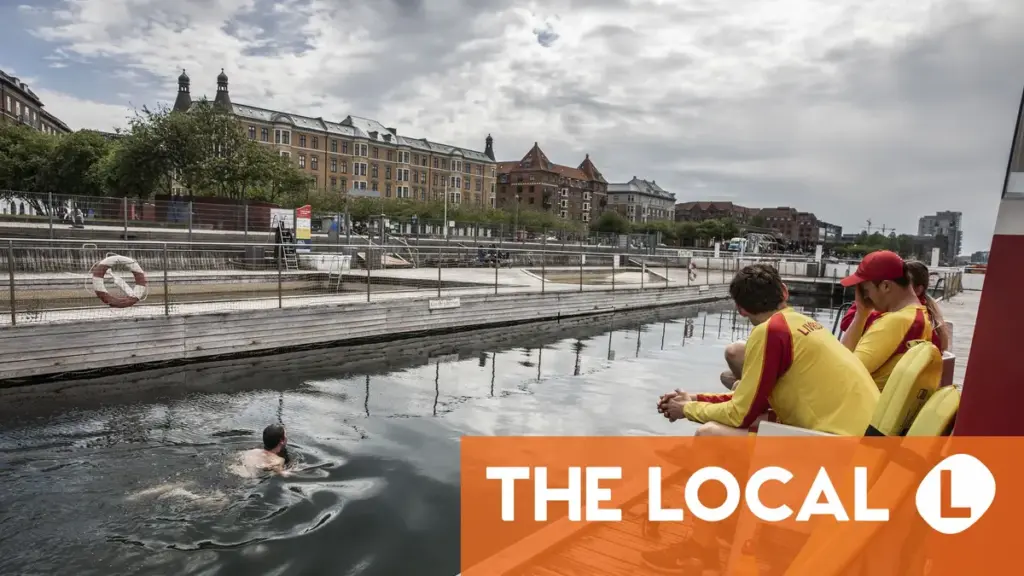
Want to take a dip in a Danish harbour bath, but you never learned to swim? Here’s where you can get lessons as an adult.
Danes take swimming lessons in school, so most adults who grew up in Denmark learned how to swim as children. However, this isn’t the case in all countries, and it’s not too late for you to learn once you’ve reached adulthood.
According to Danish swimming guidelines, adults should be able to do the following:
- Get in and out of deep water safely
- Float, turn and tread water for three minutes in deep water, and signal for help. Can put on a rescue vest while in the water.
- Swim at least 200 metres without assistance, including 25 metres backstroke
- Move horizontally in water for at least five metres underwater, as well as collecting an object two metres deep
- Save an unconscious person in water with the use of a floatation device
- Recognise whether someone is unconscious, call 112 and assess whether they are breathing normally, perform CPR and put them in the recovery position if needed
This means that even if you’re able to keep yourself above water, you might need some lessons to get up to this level.
Most municipalities have access to somewhere you can learn to swim, whether that’s an indoor or outdoor pool, or some kind of lake or other body of water. These facilities are often used by schools during term-time, so many classes for adults take place on weekends, during the summer holidays, or after school hours.
The word for swimming lessons in Danish is svømmeundervisning. For adult classes, you can search for svømmeundervisning voksne, plus the name of your city or municipality.
The goals of these swim schools vary – some of them aim to get you up to the above definition of being able to swim, while others will essentially just teach you the basics so you can stay afloat if you do end up in deep water.
There are courses for complete beginners (begynder or even vandtilvænning, which literally means “getting used to water”), as well as for people who can already swim a bit but want to get better (let øvet or øvet).
In Copenhagen, your main option is Hovedstadens Svømmeklub, which teaches in 20 different pools in the city (including some harbour baths during the summer).
In Aarhus, AGF Svømning offer adult classes at Aarhus Svømmestadion or at Gellerupbadet, while Aarhus 1900 offers classes at Svømmestadion and Søndervangskolen.
What if I don’t speak Danish?
It’s obviously important that you understand what your instructor is saying so you’re not in any danger.
Most courses are advertised in Danish, but if you’re interested in a particular course and don’t understand Danish, it’s worth contacting the organisers beforehand to ask whether they can hold all or part of it in English.
Hovedstadens Svømmeklub offers swimming classes in English at Rymarksvej Svømmehal, near Hellerup, while Aarhus 1900 also states that its classes are suitable for English-speakers.
As mentioned above, a lot of people who went to school in Denmark already know how to swim by the time they reach adulthood, so it’s likely on the beginner courses at least that you won’t be the only non-Dane in attendance.
You can also book one-on-one lessons with some private providers where you may be able to ask them to speak English, too.