
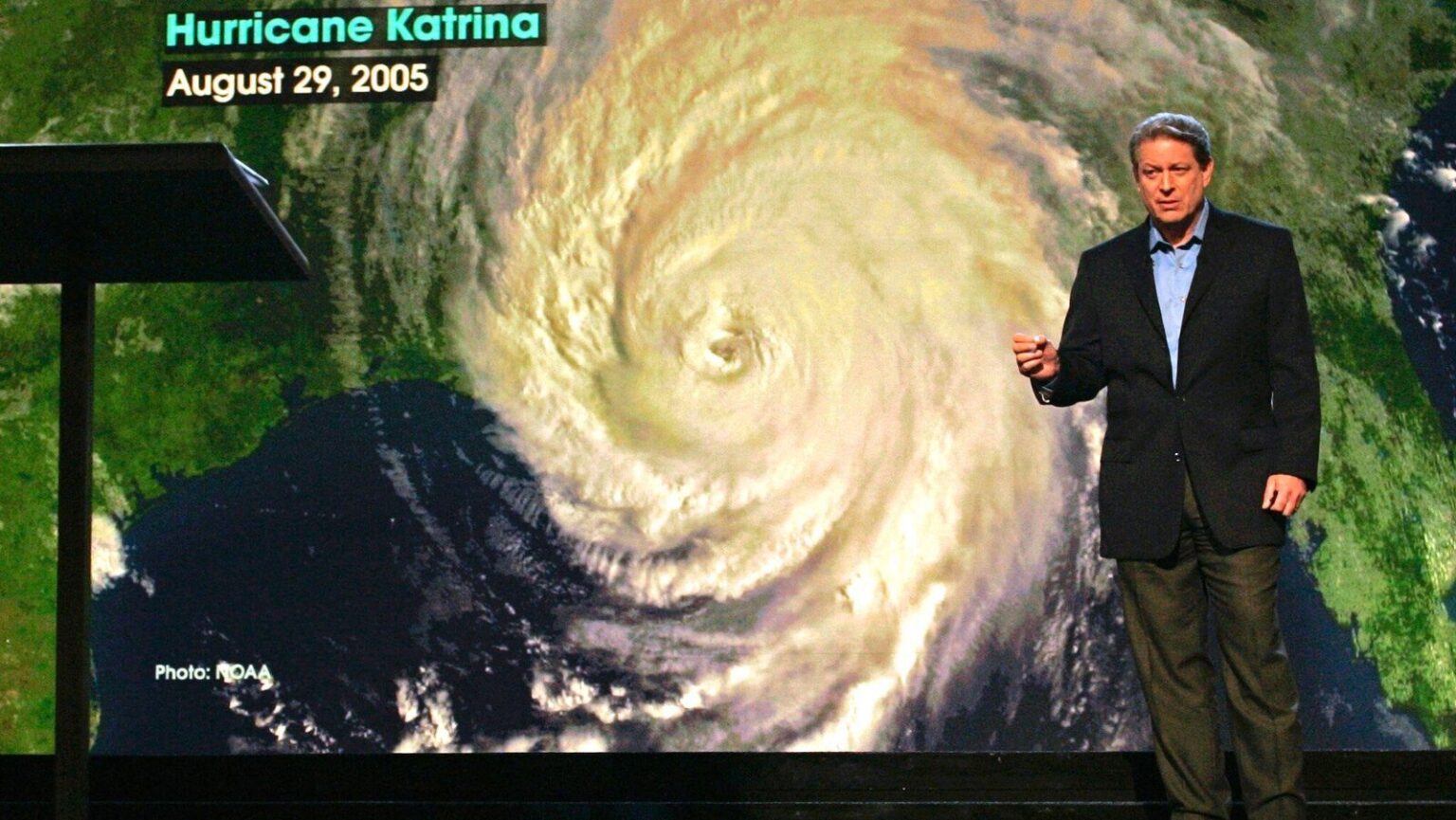
Two decades after the premiere of the Academy Award-winning documentary “An Inconvenient Truth” shocked the global conscience, former Vice President Al Gore has fundamentally rewritten his climate playbook. Standing before audiences in 2026, the famous slide show remains, but the underlying narrative has shifted dramatically: ecological moralizing has been unceremoniously replaced by the ruthless, undeniable calculus of global economics.
When the film debuted in May 2006, global warming was an abstract concept for the general public, and Gore framed the crisis strictly as a moral imperative. Today, as the severe impacts of climate change are felt daily, Gore recognizes that moral pleas rarely move global markets. Instead, his updated presentation weaponsizes a spectacular technological revolution, proving that saving the planet is no longer an ethical burden, but the most lucrative financial opportunity of the century.
The Triumph of Market Forces
During a recent sweeping presentation in Nashville, Gore made a central argument that would have been entirely inconceivable twenty years ago: the fossil fuel industry is no longer just environmentally destructive; it is economically obsolete. The cost curves for renewable energy infrastructure have collapsed at a rate that has stunned even the most optimistic forecasters.
Gore meticulously detailed how solar power and wind turbines have crossed a critical threshold, becoming demonstrably cheaper to deploy and maintain than coal or natural gas plants in almost every global market. He has pivoted from warning about melting glaciers to aggressively championing the deployment of high-capacity battery storage and smart grid technology. By framing the transition as an inevitable triumph of market forces, Gore is directly attacking the economic arguments that fossil fuel lobbyists have relied upon for decades.
The Shifting Political Discourse
The evolution of Gore’s message reflects a broader maturation within the environmental movement. For years, progressive politicians struggled to sell climate action to working-class voters who feared job losses and higher energy bills. The new economic reality provides a powerful counter-narrative.
However, the shift has exposed deep ideological fractures. Many progressive climate activists push back against relying entirely on capitalist market forces, arguing that true climate justice requires systemic economic reform, not just green technology. Conversely, pragmatic policymakers argue that leading with economics is the only viable strategy to secure bipartisan legislative support. In 2026, the renewable energy transition is indeed an increasingly convenient truth, but the battle over who controls and profits from this new infrastructure is just beginning.
The Metrics of a Revolution
Gore’s updated presentation is anchored by verified economic data rather than predictive climate models:
- Cost Parity: The levelized cost of energy (LCOE) for utility-scale solar photovoltaics has plummeted by over 90 percent since 2006, completely undercutting legacy fossil fuels.
- Capital Investment: Global capital flows have irrevocably shifted. In 2025, investments in clean energy infrastructure vastly outpaced investments in fossil fuel extraction by a ratio of nearly three to one.
- Job Creation: The green energy sector now employs significantly more domestic workers than the coal and oil industries combined, transforming the political dynamics in traditional manufacturing hubs.
- Market Disruption: Geopolitical volatility, including the 2026 Middle East conflicts, has driven petrochemical and polymer prices to record highs, further accelerating the economic demand for stable, domestic renewable alternatives.
The Global-Local Bridge: Kenya’s Geothermal Ascendancy
Gore’s new economic thesis is currently being proven on the ground in East Africa. Kenya has quietly positioned itself as a global leader in the exact type of renewable infrastructure Gore is championing. With over 90 percent of its national grid powered by renewable sources—primarily driven by massive investments in geothermal energy in the Rift Valley—Kenya is reaping the economic benefits of early adoption.
By untethering its economy from the volatile global oil market, Kenya provides a working blueprint for developing nations. Foreign direct investment is flowing into Nairobi specifically to capitalize on the cheap, reliable, and green energy matrix. Gore’s assertion that environmental sustainability guarantees economic supremacy is not a theoretical projection; it is the current operational reality for East Africa’s largest economy.
The Next Twenty Years
While “An Inconvenient Truth” succeeded in sounding the alarm, the crisis has undeniably worsened since 2006. Greenhouse gas emissions continue to rise globally, and extreme weather events are devastating communities with alarming frequency. Awareness is no longer the objective; aggressive, scaled implementation is.
Al Gore’s pivot from moral philosopher to economic pragmatist is a necessary evolution. By speaking the language of boardrooms, hedge funds, and labor unions, he is acknowledging that the battle against climate change will not be won by appealing to the better angels of our nature. It will be won on balance sheets. The technology is ready, the economics are undeniable, and the slide show has finally found its most compelling argument.