
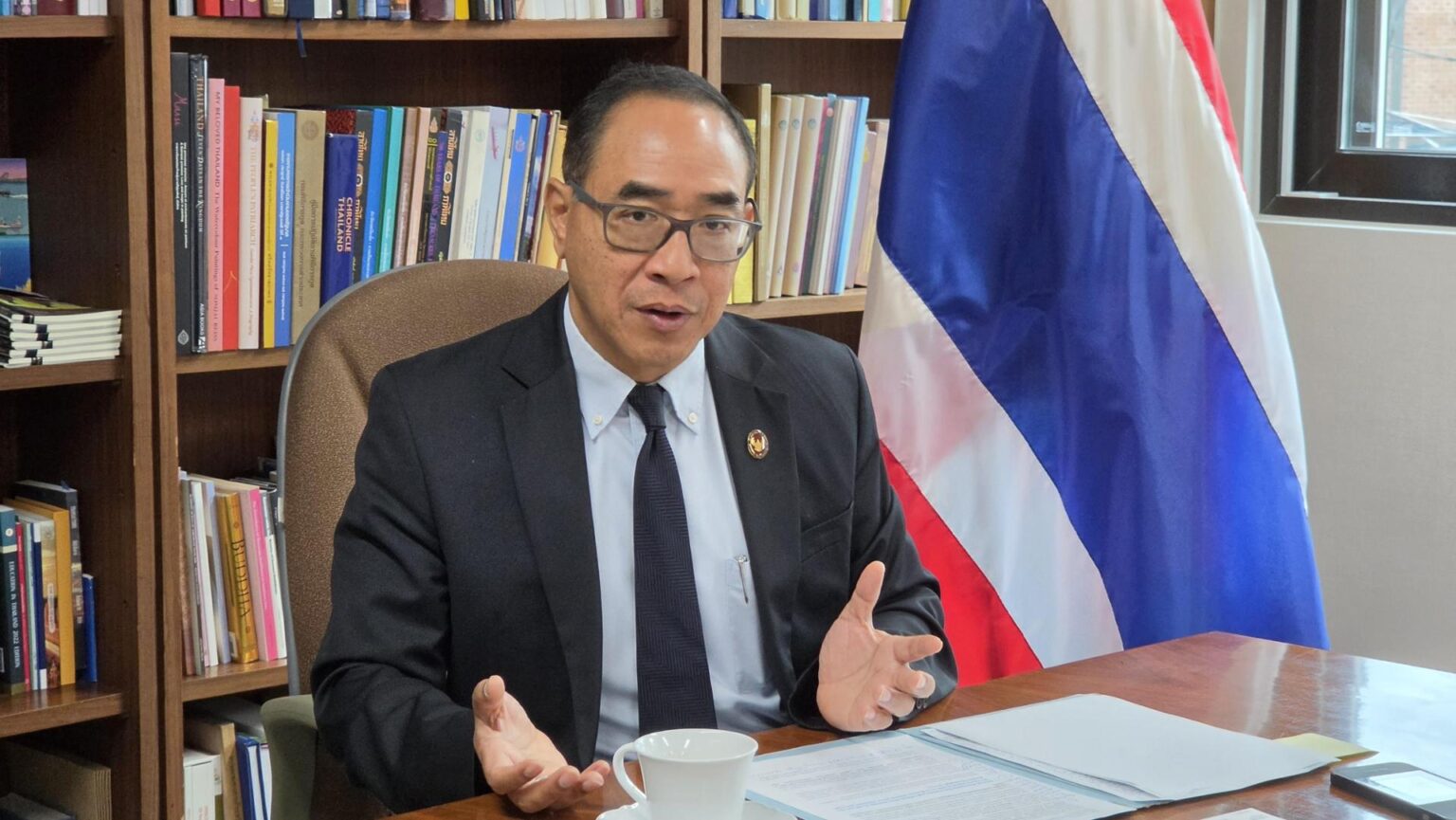
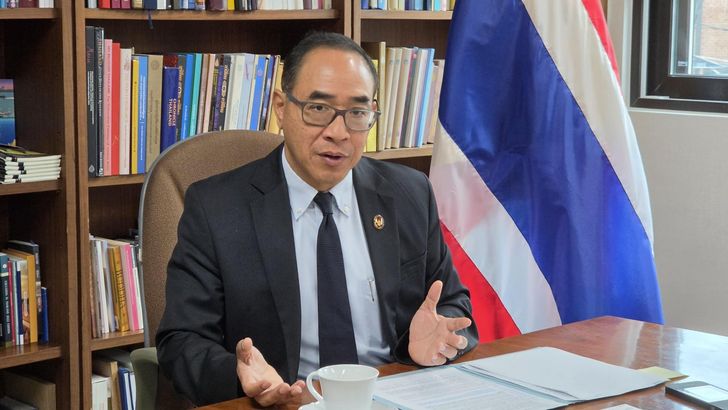
Thai Ambassador to Korea Tanee Sangrat speaks during a one-on-one interview with The Korea Times at the Embassy of Thailand in Seoul, May 19. Courtesy of Embassy of Thailand in Korea
Thailand and Korea are seeking to redefine bilateral relations long associated with tourism, food and cultural exchanges by building a deeper partnership centered on investment, industrial cooperation and innovation, Thailand’s ambassador to Korea Tanee Sangrat said.
In a recent one-on-one interview with The Korea Times, Sangrat said he has sought to expand the scope of Thailand-Korea relations since assuming his post in Seoul in April 2024, emphasizing that the two countries should increasingly be viewed not only through the lens of people-to-people exchanges, but also as economic and strategic partners capable of shaping future growth together.
“Our relationship is broad-based. It is not only about culture and food. … Those areas remain important because they form a strong foundation of our relationship, but we also want to highlight future-oriented activities and economic cooperation,” Sangrat said. “Thailand today is also about technology, innovation and future industries.”
Thailand remains one of the most popular destinations for Korean travelers, with Thai cuisine, films and lifestyle content increasingly popular among Korean audiences. However, Sangrat said the relationship is entering a different stage.
“Thailand is promoting investment in sectors such as electric vehicles, digital technology, smart electronics and renewable energy, where Korean companies possess world-class expertise. We already see successful Korean investments in Thailand, and I believe there is room to further expand cooperation in innovation-driven industries,” he said.
According to the ambassador, among the most significant developments currently underway is the negotiation of a Comprehensive Economic Partnership Agreement (CEPA) between Korea and Thailand. Negotiations have continued for around two years, and Thai and Korean officials have expressed expectations for the agreement to create a stronger framework for expanding trade and investment cooperation. Sangrat said the agreement is expected to serve not only as a trade mechanism but also as a platform for broader industrial collaboration.
“We are working on CEPA between Thailand and Korea, and hopefully we will sign the agreement this year,” he said, adding that Thailand’s prime minister has expressed hopes of doubling bilateral trade volume from approximately $15 billion to $30 billion in the coming years.
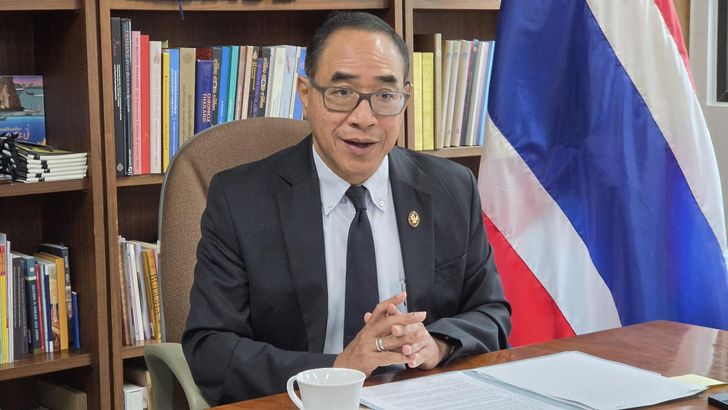
Thai Ambassador to Korea Tanee Sangrat speaks during a one-on-one interview with The Korea Times at the Embassy of Thailand in Seoul, May 19. Courtesy of Embassy of Thailand in Korea
The bilateral relationship is slated to expand beyond trade agreements this year. Sangrat said Thailand and Korea are preparing a memorandum of understanding that will pave the way for Korea’s first industrial park in Thailand’s eastern seaboard region. The initiative is expected to create new opportunities for Korean companies seeking manufacturing and investment expansion while strengthening industrial connectivity and the supply chain between the two countries.
Startup cooperation has also emerged as a key component of Thailand’s efforts to broaden bilateral ties beyond traditional sectors. As part of that push, the Thai Embassy plans to launch the Seoul Thailand Startup and Innovation Space (STSIS), an initiative aimed at connecting startups from both countries with investors, venture capital firms, accelerators and broader business networks. The initiative is targeting to support Thai startups seeking opportunities in Korea while also helping Korean companies use Thailand as a gateway to the wider ASEAN market.
Sangrat said startup cooperation reflects a broader shift in how Thailand views future economic engagement with Korea.
“We know that many Korean startups would like to expand into Thailand and use Thailand as a springboard to the wider ASEAN region,” he said. “STSIS will help facilitate two-way collaboration, investment opportunities and technology partnerships between startups in both countries.”
He added that the platform will support Thai startups participating in major Korean events such as NextRise and COMEUP, creating additional opportunities for business matching and long-term partnerships. NextRise is one of Korea’s largest startup and innovation events, bringing together startups, investors and global corporations, while COMEUP serves as Korea’s flagship startup festival for entrepreneurs and innovators from around the world.
Thailand is also preparing for the annual Korea-Thailand Business Forum later this year, focusing on sectors including biohealth, medical technology, wellness and future food industries. The event is expected to bring together major companies, health care institutions, startups and related agencies from both countries for investment, business-matching opportunities and networking.
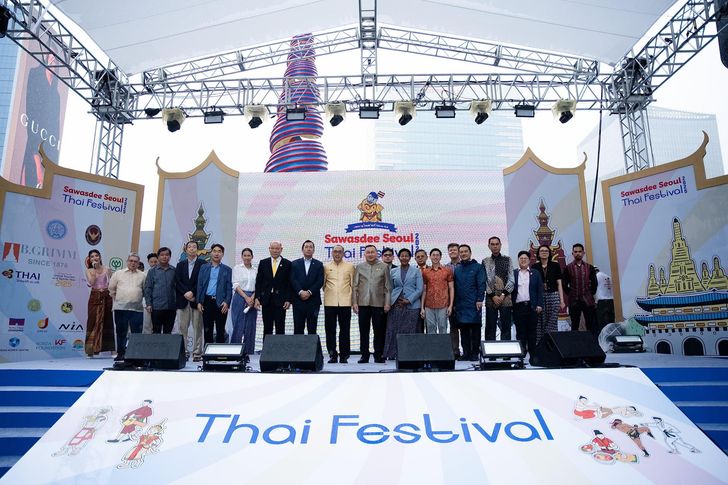
Thailand’s Ambassador to Korea Tanee Sangrat and key guests pose during the opening ceremony of the Sawasdee Festival held at Cheonggye Plaza in central Seoul, Sept. 6, 2025. Courtesy of Embassy of Thailand
The annual Sawasdee Seoul Thai Festival, scheduled for June 20 and 21 this year at Cheonggye Plaza, also reflects Thailand’s broader efforts to reshape Korean perceptions of the country. While the event has traditionally been known for showcasing Thai food, performances and cultural experiences, this year’s festival will place greater emphasis on innovation and entrepreneurship.
Alongside cultural programs, the festival will feature an expanded innovation zone and startup participation, including companies supported by Thailand’s National Innovation Agency. Sangrat said the event is intended not only to celebrate Thai culture but also to present a more contemporary image of Thailand.
“We want Korean and international audiences to also see Thailand as a country of creativity, technology and innovation,” he emphasized.
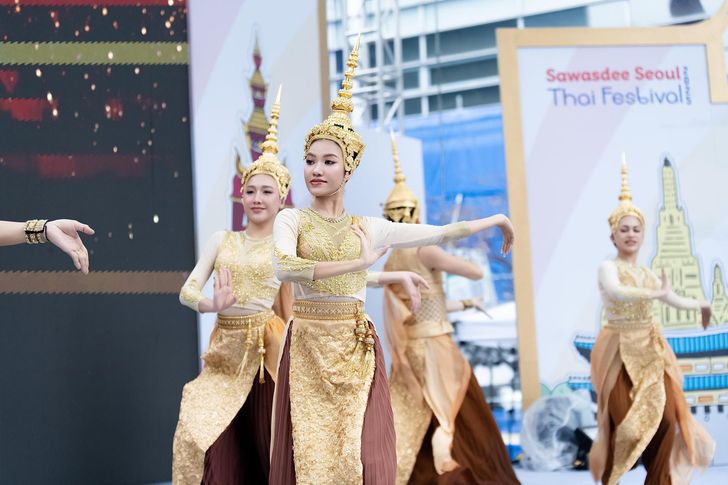
Thai dancers perform during the opening ceremony of the Sawasdee Festival held at Cheonggye Plaza in central Seoul, Sept. 6, 2025. Courtesy of Embassy of Thailand
Beyond his role as Thailand’s top envoy to Korea, Sangrat has taken on another responsibility as the current chair of the ASEAN Committee in Seoul, a position that places him at the center of broader efforts to deepen cooperation between Korea and Southeast Asia.
As ASEAN and Korea elevated their relationship to a comprehensive strategic partnership in 2024, opening broader avenues for cooperation in various areas, Sangrat said his role as ASEAN chair has involved strengthening practical engagement with Korean institutions and businesses. ASEAN ambassadors have expanded meetings with government ministries, immigration authorities and major corporations, while also addressing issues affecting ASEAN communities in Korea.
“Last year, under Malaysia’s chairmanship, we visited AmorePacific and Hyundai Motor Group, to name a few. Later this month we will visit Lotte R&D center as part of our public diplomacy activities,” he said. “We have been engaging together and separately with many organizations and groups in Korea.”
For Sangrat, strengthening Thailand-Korea relations and ASEAN-Korea cooperation are increasingly interconnected goals — an effort to move beyond traditional people-to-people exchanges and build partnerships centered on investment, innovation and long-term growth.