
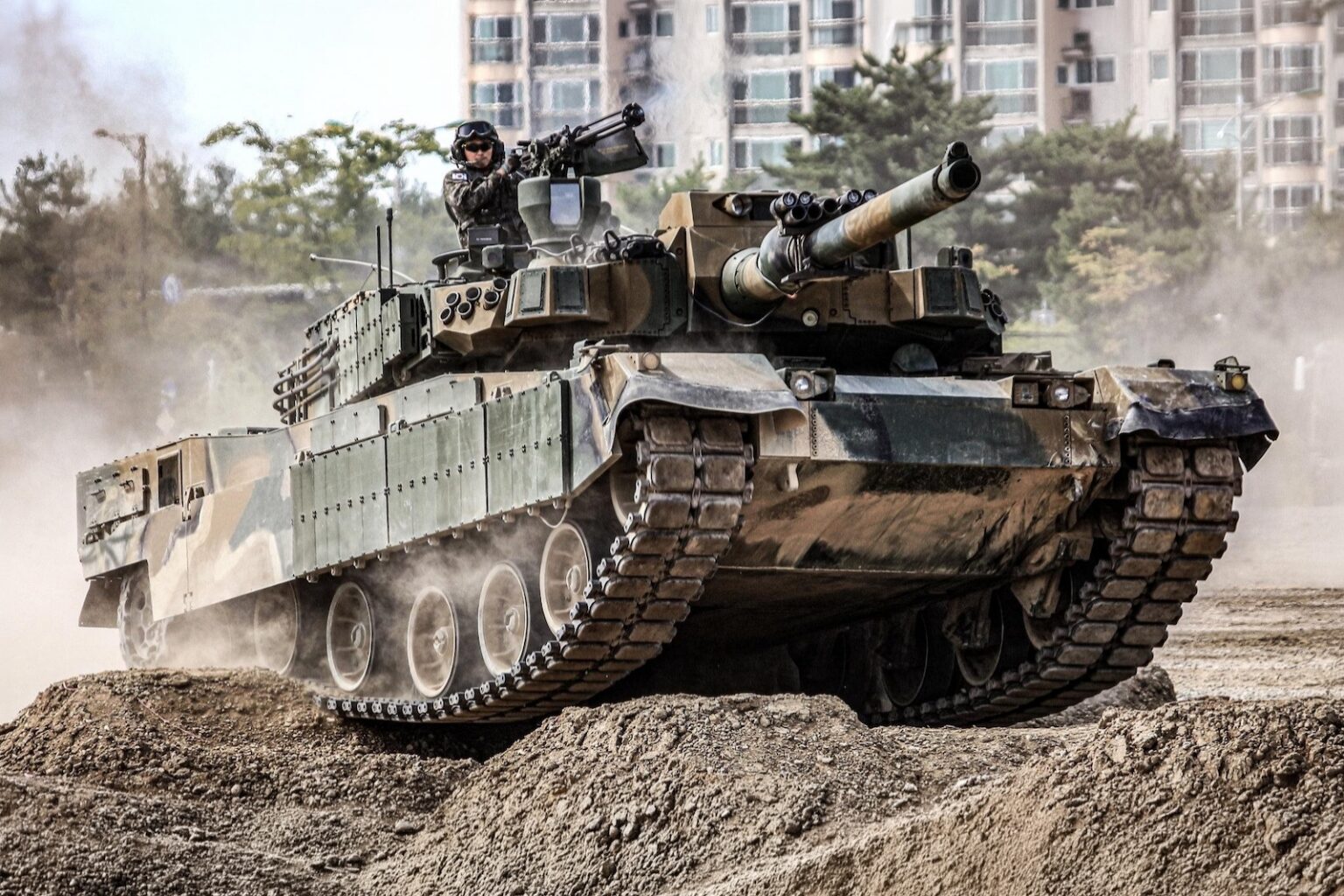
Romania is no longer a peripheral European defense market. In the wake of Russia’s full-scale invasion of Ukraine, it has emerged as one of NATO’s most consequential frontline states. Bordering Ukraine, facing the Black Sea, hosting allied infrastructure, and sitting astride the Danube corridor—a logistical artery repeatedly threatened by Russian strikes—Romania now occupies a central place in Europe’s evolving security map. Recent attacks on Odesa, Dnipro, and Izmail underscore a persistent reality: the Black Sea theater remains volatile, active, and deeply intertwined with Romania’s security environment.
For South Korea, this presents an opportunity that goes beyond commerce. Romania should not be treated merely as an export destination, but as a strategic partner in reinforcing NATO’s eastern flank. Seoul can offer what Bucharest urgently requires: rapid delivery timelines, NATO-compatible systems, competitive pricing, industrial cooperation, and long-term sustainment.
Romania’s modernization agenda is not ambiguous. Its armed forces must retire Soviet-era platforms, strengthen mechanized brigades, expand artillery and air defense capabilities, secure Black Sea infrastructure, and integrate more deeply into NATO’s command architecture. Bucharest has already begun pivoting toward Western systems, fielding Patriot batteries, HIMARS, and F-16s, with plans to acquire Naval Strike Missiles and eventually F-35 fighters. Yet ambition continues to outpace execution. Budgetary constraints and procurement inefficiencies remain persistent obstacles, even as defense spending has increased.
This is where South Korea can move decisively—but carefully. Seoul should not position itself as a substitute for the United States, Germany, or France. Such framing risks unnecessary friction within the alliance and among defense industries. Instead, it should present itself as a complementary partner, filling urgent capability gaps with speed and flexibility that many Western suppliers struggle to match.
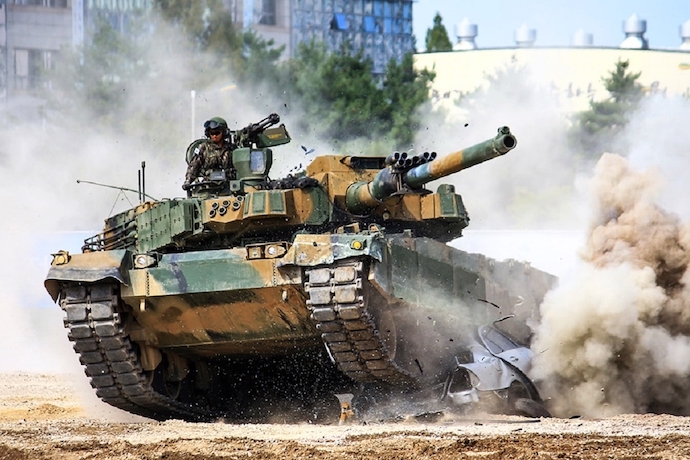 The first pillar of this approach is land power. Romania’s armored and mechanized forces require rapid modernization. Systems such as the K2 main battle tank, K9 self-propelled artillery, Redback infantry fighting vehicle, and Chunmoo multiple launch rocket system could be delivered as part of a cohesive package for brigade-level transformation. Notably, Hanwha Aerospace has already secured a contract to supply 54 K9 artillery units and 36 K10 ammunition resupply vehicles, with deliveries beginning in 2027. That deal offers a foothold—but also a blueprint.
From there, the ambition should expand into something larger: a Romanian “Eastern Flank Hub.” Seoul could propose phased local assembly, maintenance, and ammunition production in partnership with Romanian firms such as Romarm. Over time, this would localize components and build a regional sustainment ecosystem. The objective is not merely to sell weapons, but to transform Romania into a logistical and training anchor for the Black Sea region, Moldova, and the Balkans.
The second pillar centers on Black Sea protection. Romania’s ports, naval bases, energy infrastructure, and Danube-linked facilities are exposed to a spectrum of threats, from drones and cruise missiles to sabotage and cyber operations. South Korea could offer an integrated coastal defense package combining radar systems, electro-optical sensors, AIS integration, unmanned platforms (UAVs, USVs, UUVs), and command software, potentially complemented by anti-ship missiles. This would allow Romania to evolve from basic coastal surveillance toward comprehensive maritime domain awareness.
The third pillar is layered air defense. While existing Patriot and NASAMS systems provide coverage, Romania must strengthen its short-range and point-defense capabilities against drones, loitering munitions, helicopters, and low-flying cruise missiles. South Korean systems such as Shingung (KP-SAM) and Cheongung-II (M-SAM) should be positioned not as replacements for U.S. platforms, but as additional layers within NATO’s integrated air and missile defense architecture.
The fourth pillar addresses airpower transition. Romania’s shift from MiG-21 aircraft to F-16s—and eventually to F-35s—creates an inevitable gap in training and readiness. South Korea’s TA-50 could fill this space, serving as both a training platform and a light combat aircraft. Positioned correctly, it becomes a bridge into the U.S.-led fighter ecosystem rather than a competitor to it.
The fifth pillar is finance and transparency. Romania faces a daunting procurement burden, from advanced fighter acquisitions to naval modernization. Seoul can differentiate itself by pairing hardware with financing solutions: transparent government-to-government contracts, support from the Export-Import Bank of Korea, lifecycle service agreements, and long repayment timelines aligned with EU investment frameworks. Given Romania’s history of procurement controversies, emphasizing accountability—through auditing, phased implementation, and public transparency—will be essential.
The underlying logic is straightforward: speed itself is a form of deterrence. As Russia adapts its tactics—refining missile strikes, drone warfare, and naval pressure in the Black Sea—Romania cannot afford a decade-long modernization timeline. South Korea has already demonstrated in Poland that it can deliver large-scale systems quickly, localize production, and integrate with NATO standards. Romania could become a southern counterpart to Poland along the alliance’s eastern frontier.
For NATO, the implications are significant. First, Romania would strengthen its own defensive capacity, reducing reliance on rapid allied reinforcement. Second, the Black Sea would become a less permissive environment for Russian coercion. Third, Eastern Europe would benefit from a more distributed defense-industrial base stretching from Poland to Romania.
For South Korea, the benefits extend beyond economics. A successful partnership with Romania would reinforce Seoul’s identity as more than a capable arms exporter. It would position the country as a security enabler—a state capable of contributing meaningfully to Europe’s defense architecture without displacing existing alliances.
Romania’s security challenges are immediate, not theoretical. They are shaped by the realities of NATO’s eastern flank, the war in Ukraine, and Russia’s evolving long-range strike capabilities. The response must therefore be equally concrete: tanks, artillery, missile systems, air defense layers, coastal surveillance, training aircraft, localized production, and sustainable financing.
If executed properly, South Korea’s engagement with Romania will not simply strengthen one nation’s military. It will reinforce NATO’s eastern defenses, stabilize the Black Sea region, and complicate Russia’s strategic calculus across Eastern Europe. That is why Romania should be viewed not as a market, but as one of the continent’s most consequential defense partners.
If you’re interested in writing for International Policy Digest – please send us an email via submissions@intpolicydigest.org