
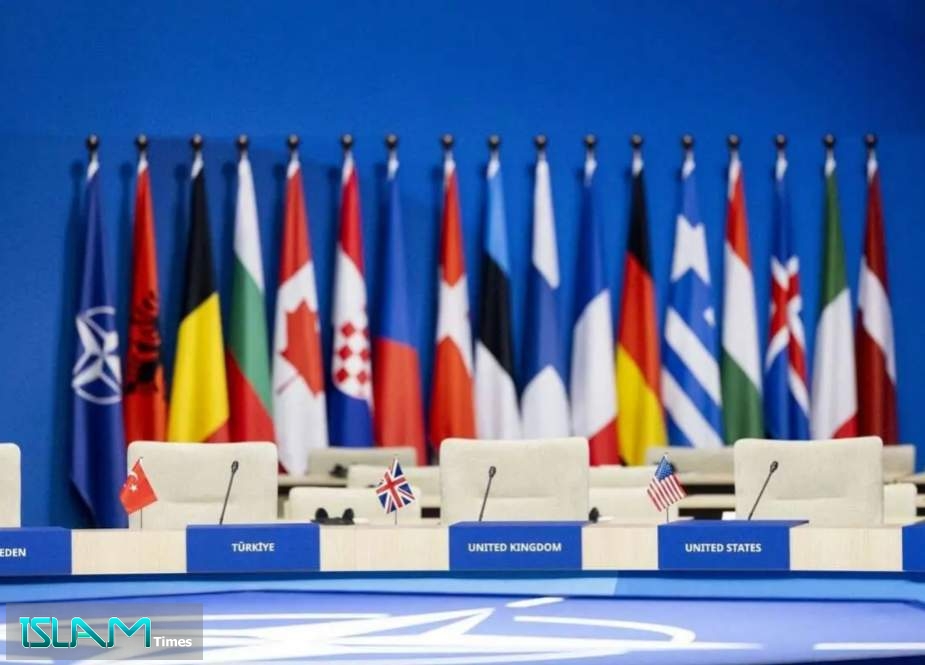
Islam Times – The presence of Arab countries in the NATO meeting is less a sign of security-building and more a reproduction of dependency on a Western crisis-producing structure—a path that distances the region from indigenous security and increases the scope of tensions.According to published reports, Qatar, Kuwait, the UAE, and Bahrain will attend the upcoming meeting of the North Atlantic Treaty Organization (NATO), scheduled for July 7–8 (June 17–18) in Ankara. Although this participation is presented as a symbol of a shift in Arab countries’ security equations—from US-centered approaches toward new components such as NATO—the behavior of NATO, its structural dependence on the United States, and the outcomes of the Ramadan War indicate a repeated pursuit of security through an incorrect path. This is a path that not only will not contribute to regional security, but will further complicate crises. The only real solution ahead, as Iran has repeatedly emphasized, is an approach to indigenous security based on regional neighborly convergence.
NATO: From claims of security-building to a record of crisis generation
NATO’s relationship with Arab countries in the region entered a new phase with the “Istanbul Cooperation Initiative” in 2004, under which NATO deployed forces in some of these countries in the form of training and rapid reaction units. This initiative focused on areas such as counterterrorism, border and port security, protection of critical infrastructure, cybersecurity, military training, intelligence sharing, and crisis management. However, the two-decade record of NATO’s presence in these countries has effectively produced no meaningful results in these areas and has merely turned them into arms depots and selective targets for NATO.
At the same time, in global arenas—from the Balkans to Afghanistan—NATO has shown that it is not a producer of security but rather part of the root cause of crises; the Srebrenica massacre and humanitarian disasters in Afghanistan are only a small part of this record.
While NATO seeks, through inviting Arab countries, to expand its influence in West Asia and also to align with South Korea and Japan in extending its reach in East Asia, its past experience suggests that it will bring nothing but crisis creation and cost imposition on these countries and on regional security as a whole.
NATO: Independent alliance or a new cover for US bases?
Arab countries describe their turn toward NATO as a new security-building measure, while in reality NATO is not an independent institution but rather a subset of US strategy. Recently, NATO Secretary General Mark Rutte stated that the alliance is prepared to provide bases for military operations against other countries, including Iran.
Meanwhile, after the Ukraine war and then the Ramadan War, Europe has faced a severe economic crisis, particularly in the energy sector, resulting in increased dependence on the United States. In such conditions, NATO appears not as an independent actor but as part of the US-designed puzzle, seeking to redefine American bases in the region.
In other words, the United States is attempting, under the name of NATO, to finance the costs incurred by its bases, interests, and objectives in the region during the Ramadan War from the pockets of Europe and Arab countries. This process, in addition to imposing heavy costs on regional states, will also bring new dimensions of insecurity.
The hidden link between NATO and the Israeli regime: security-building or deepening normalization?
Another important point is that although this participation is claimed to serve regional security, a decisive issue is NATO’s relationship with the Israeli regime. NATO, under security agreements, engages in intelligence sharing and even joint military exercises with Israel.
This means that the participation of Arab countries in NATO could represent a new phase of normalization with Israel in the form of security cooperation and defense pacts, even if publicly only relations between Arab states and NATO are discussed.
This process will not only fail to create security in the region but will pose a broad threat to all parties, as Israel has shown it is not committed to any principle, and NATO has repeatedly demonstrated its alignment and dependence on it.
Indigenous security: the only way out of the cycle of insecurity
Given NATO’s record and the regional conditions, it can be said that the entry of Arab countries into NATO’s framework—regardless of justification—will not contribute to regional security and will instead pave the way for new dimensions of crisis, especially since most NATO members have clear dependence on the United States and the Israeli regime.
Today, the only remaining pillar for regional security is an approach based on indigenous security and regional convergence, a strategy that Iran has consistently emphasized. Iran’s achievements in the Ramadan War, its intelligent management of the Strait of Hormuz, and broader regional consensus on expelling US bases and confronting the Israeli regime are among the key elements of realizing indigenous security.
Western “security selling,” whether in bilateral relations or through NATO, has proven its emptiness and its role in regional insecurity. Therefore, those concerned with regional security must pursue the formation of a new, indigenous order.
Importantly, behaviors such as turning toward NATO—even under the claim of distancing from the United States—represent a continuation of the same mistaken path. This leaves Iran with the option of continuing its intelligent management of the Strait of Hormuz and maintaining military readiness for preemptive action against security threats to its territorial integrity and the region.