
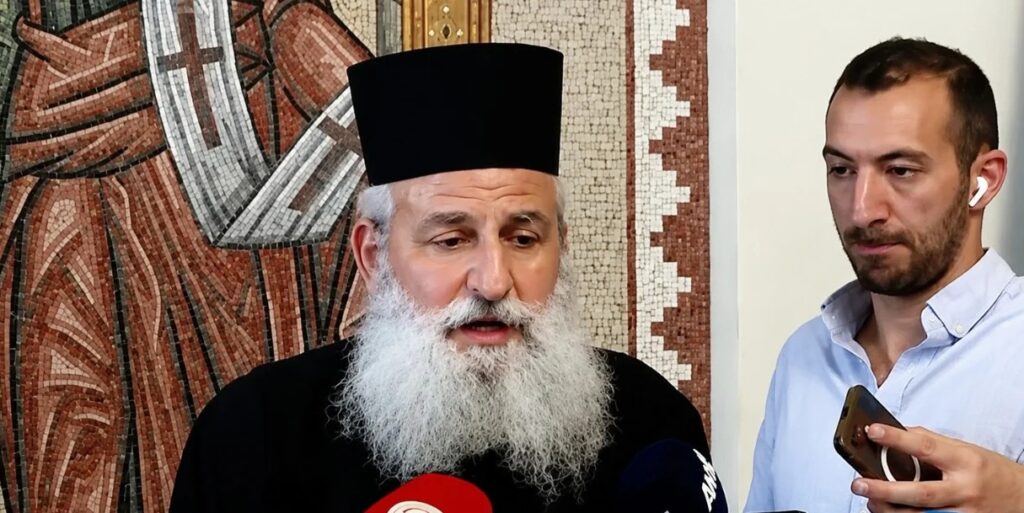
NICOSIA – Archimandrite Gregory Ioannides, Chancellor of the Metropolis of Trimythous and Dean of the Theological School of the Church of Cyprus, is the new Metropolitan of Paphos, following a vote at the Holy Synod to fill the vacant Metropolitan seat, following the dethronement of the former Metropolitan, Tychicos.
The new Metropolitan of Paphos has been elected for the first time directly by the Holy Synod by secret ballot. He received 11 votes. One vote was in favor of the hieromonk Sophronyos, while there were four blank votes.
A total of four candidates were submitted:
Archimandrite Gregory Ioannides; Archimandrite John, Chancellor of the Monastery of Apostolos Barnabas; monk of the Holy Monastery of Trooditissa Sophronyos; and the Chancellor of the Holy Metropolis of Paphos Archimandrite John Theocharous.
It is recalled that the Metropolitan Throne of Paphos has remained vacant since May 22, 2025, when the Holy Synod decided to depose the then-Metropolitan Tychikos, with Archbishop George of Cyprus exercising the duties of Locum Tenens to this day.
According to the Holy Synod’s announcement, the formal announcement of the election of the new Metropolitan of Paphos will take place on June 10 at 6:00 PM at the Cathedral of the Apostle Barnabas in Nicosia.
The ordination to the episcopate will take place on Thursday, June 11, again at the Cathedral of the Apostle Barnabas. In the afternoon of the same day, the enthronement of the Metropolitan of Paphos will take place at the Metropolitan Church of Saint Theodore of Paphos.
Who is the new Metropolitan of Paphos?
Archimandrite Grigorios Ioannidis graduated from the Department of Theology of the Theological School of the National Kapodistrian University of Athens.
He completed his postgraduate studies at the Department of Scienze Ecclesiastiche Orientali of the Pontificio Istituto Orientale (Rome) with a focus on Liturgy (Master’s and Doctoral degrees).
According to his CV, he served as a postdoctoral Summer Fellow at the Dumbarton Oaks Center for Byzantine Studies (Harvard University) on the topic ‘The Byzantine liturgical tradition in the geographical area of Cyprus: Cypriot manuscripts of the liturgy’.
The subject of his research was the history and theology of Christian worship and the history of the liturgical practice of the great liturgical centers and especially of the Church of Cyprus through the study of liturgical sources and manuscripts.
“We will have open doors for everyone”
The new Metropolitan of Paphos stated that he receives his new mission, “with joy, awe and emotion,” noting that the Church of Cyprus has a history of twenty centuries and is a great institution of Orthodoxy. He also emphasized the importance of the Metropolis of Paphos, noting that it is the place where the Apostles Paul and Barnabas preached Christianity.
Asked about his first steps as a new Metropolitan, he said that he has not yet thought about the next steps, emphasizing that “the Lord is the one who illuminates and directs our steps.”
Addressing a message to the residents of Paphos, the new Metropolitan expressed his impatience to get to know the people of the province even better, assuring that he will walk “together with the people” on the basis of the Gospel and the tradition of the Church.
“The door of the Metropolis will be open to all,” he said characteristically, saying that this was one of the most important bequests he received from the late Archbishop Chrysostomos II.
Metropolitan of Paphos Tychikos claims that his removal from the Metropolitan throne of Paphos took place in an environment of “pressure and slander,” and that the decision was “essentially pre-decided.”
In light of the meeting of the Holy Synod, Tychikos states that he was faced with a climate of “continuous pressure,” during which, as he said, he repeatedly heard descriptions such as “liar,” “ungrateful,” and “illiterate.”
Referring to Archbishop Georgios, he said that the most painful thing for him was when he realized that there were actions aimed at “his removal and extermination,” as he claimed.
He also said that the essence of his case was never heard and was not judged in essence. He stated that he feels innocent of the accusations made against him, describing them as “slanderous,” while he spoke of “large financial interests” that, in his opinion, influenced the case.
He has decided to appeal to both the State and the European courts, saying that even “the greatest criminal is tried and not executed in summary proceedings”.