Scuba divers may be beating up coral reefs more than they think | Video analyses of divers show that more than 80 percent of damaging physical contact with the reef is unintended or simply unnoticed

Scuba divers may be beating up coral reefs more than they think | Video analyses of divers show that more than 80 percent of damaging physical contact with the reef is unintended or simply unnoticed
11 Comments
Scuba divers may be beating up coral reefs more than they think.
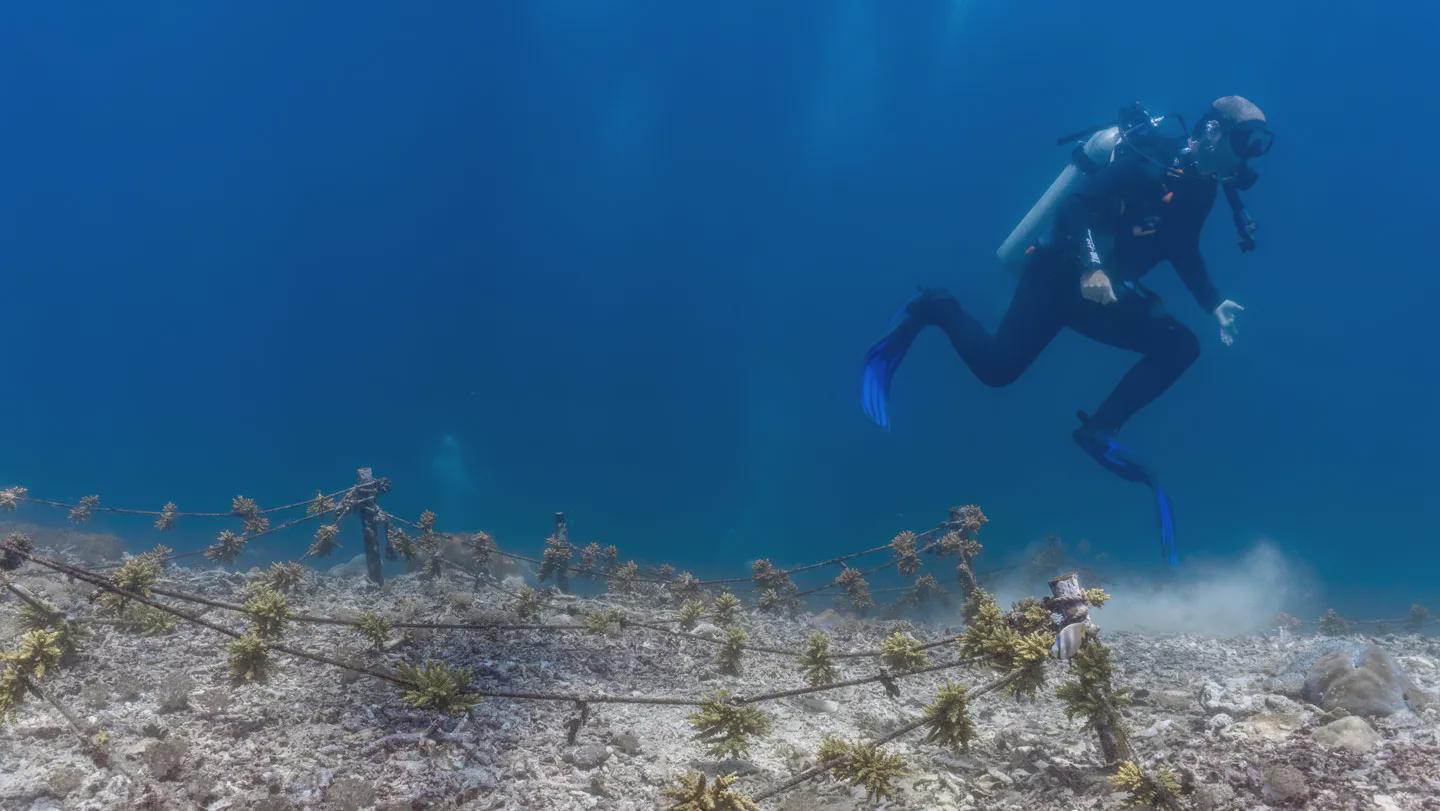
Video analyses of divers show that [more than 80 percent](https://doi.org/10.1111/con4.70055) of damaging physical contact with the reef is unintended or simply unnoticed, researchers report May 26 in *Conservation Letters*. The findings show that routine diving practices aren’t harmless.
Scuba diving is often framed as one of the “good” ways to use reefs because it isn’t extractive, says Bing Lin, a marine conservation scientist at the University of Sydney. The fish remain in the water, and divers get to enjoy seeing them in the wild.
However, divers commonly damage reefs by kicking or grabbing corals or by disturbing wildlife. “What’s less understood is just how invisible much of this damage is to the people causing the harm,” Lin says.
[**Read more here**](https://www.sciencenews.org/article/scuba-diver-damage-coral-reefs?utm_source=Reddit&utm_medium=social&utm_campaign=rmh) **and the** [**research article here**](https://doi.org/10.1111/con4.70055)**.**
Yep. That’s humans for ya
I just came back from a scuba vacation and even though everybody is supposedly trained, including about respecting the Reef and wildlife, some people really just not care.
Touching the reef to stabilize themselves, shining bright flashlights at animals to take pictures. It’s just sad.
However I can assure you that this is minor if barely influential compared to the bleaching of corals due to water temperatures rising. 80% of the reefs are already dead and I feel like this hobby will be too in the next 20 years.
Most corals only grow 1-2cm every 10 years. They won’t move quickly to colder places that are now heating up.
They also probably claim to be the biggest advocators
No compare that damage against the damage that commercial fishing does to reefs.
Despite it being sad that people aren’t careful enough and are damaging the reef while diving, we can still put this into context of broader reef harm.
Divers need to be more careful to not damage reefs. Training should be more strict, and perhaps penalties should be harsher.
That said, we’re cooking the ocean and bleaching the reefs on a scale that would require billions of scuba divers a day to match.
And trained divers are responsible for much of the compelling video footage that makes us care about coral reefs and helps fund our struggles to protect them. So I think it’s important to solve systemic problems and keep them at the forefront, while we *also* encourage individuals to be more responsible.
I’ve watched it and scream silently into the void, “WATCH YOUR BUOYANCY CONTROL FOR THE LOVE OF ALL THAT IS HOLY!!!!”
That said, I’ve also seen MASSIVE differences between fishing-allowed and no-fishing reefs. Guess which ones show more diversity and appear healthier.
This probably doesn’t even get close to 0.1% of the damage caused by bottom trawling. Seeing before and after pics of bottom trawling is so sad. Completely destroys the ecosystem be it a reef, kelp forest, sea mound or whatever it is.
Well when I went snorkeling I was swimming above the water and my knee went straight into corals on a stack of rocks.
I don’t know that the coral looked any different but it definitely got the best of my knee….
You should see what a cruise ship does.
A lot of divers are clueless. They learn online, do a few pool checkouts and a couple of open water dives then go blundering around on some of the most stressed environments on the planet, up and down like bloody yo-yo’s, grabbing things left right and centre and shockingly clueless for their own and others safety. The dive industry has encouraged this to increase sales and throughput.