
When Saša Kranjc was twenty-three years old, she spent three days in a psychiatric hospital where she was told she would have to appear in front of a court if she didn’t take the antipsychotics she was prescribed. “I went to the doctor because my friend said so,” Kranjc recalls. “I didn’t get any idea of what was going to happen there.” Not wanting to deal with a visit to court, Kranjc complied and took the medication. “I want to have my life,” she remembers thinking. “To grow up and have a career and family and everything.”
Kranjc wasn’t told about the harmful effects of antipsychotics, and now, thirteen years later, she’s in the process of tapering off of them. “I think every human being should be informed of what she’s going to get in this treatment,” Kranjc says.
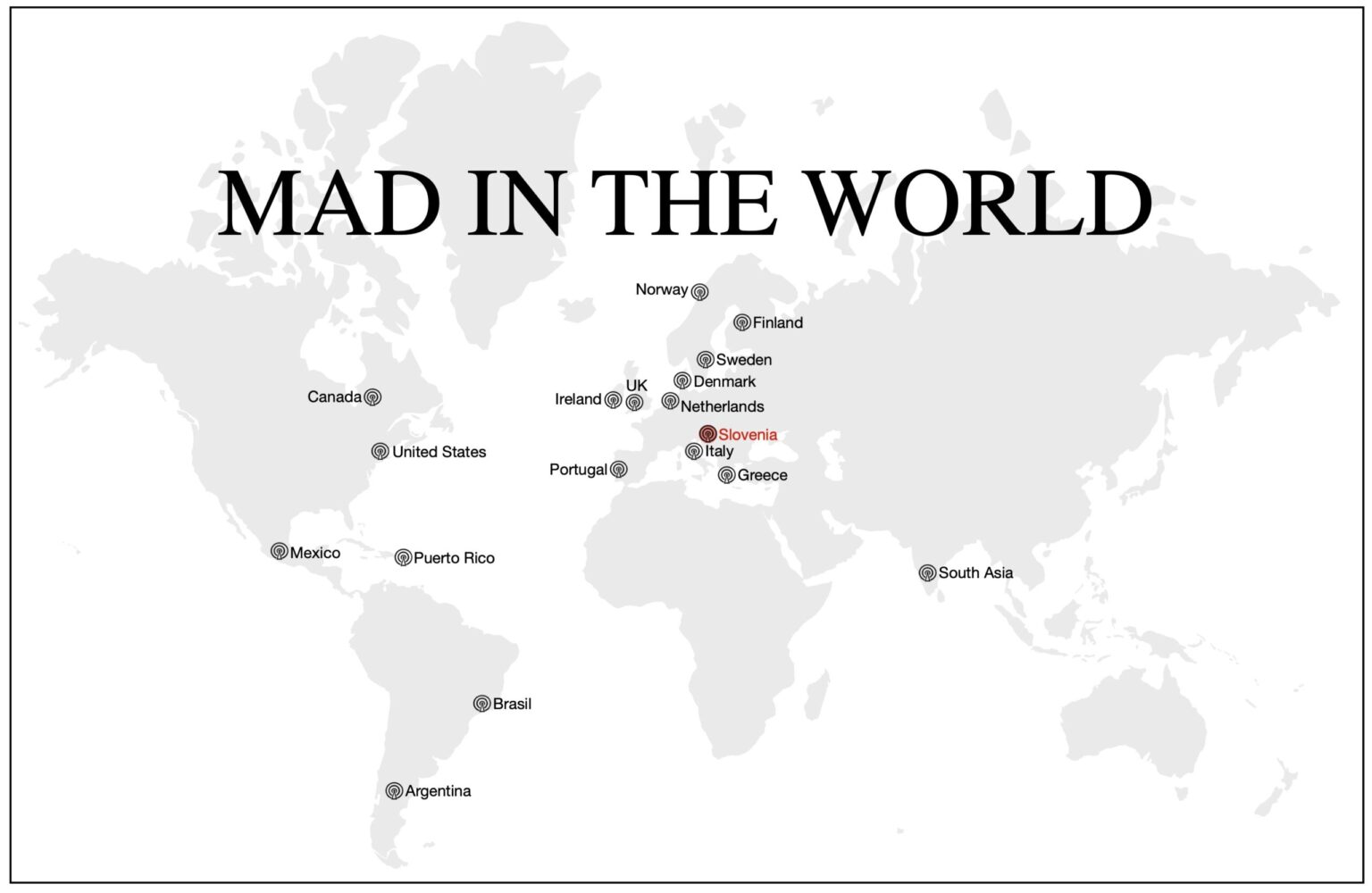
This is what inspired her to join Mad in Slovenia, a mental health network and Mad in the World affiliate site based in her home country of Slovenia. The network, founded by a small group of clinicians and researchers, has expanded primarily through word of mouth and now consists of about seventy mental health experts, psychiatric survivors, and family members. The group aims to make sure that people are given the information they need to make informed decisions about their own or their loved ones’ mental health care, while also pushing for a “rethinking of psychiatric care in Slovenia” that includes approaches other than medication.

With this, Kranjc adds, “We don’t want to be against something. We’d rather be for something.” While the mainstream approach to mental distress is to get rid of symptoms that are believed to be entirely negative in nature, Kranjc notes, “They forget that these are sometimes very important messages from which we could learn.” Instead of viewing people in terms of their deficits, Mad in Slovenia allows members to open up about their experiences without being judged.
Mad in Slovenia’s website is full of articles on topics like how to go off of psychiatric medications or create more optimism in your life, along with psychiatric research news, personal stories, and a podcast that interviews different experts. They also post Slovenian translations of work that was originally published in other languages and provide a “For Relatives” page with guidance for seeking to understand their loved ones’ struggles.
Recently, Mad in Slovenia also started something they call “Compass Club,” where members of the network come together and discuss what direction their lives are going in. As Kranjc explains, this means asking questions like, “Where am I now? How do I like where I am now? And how can I change the things that I don’t like?” The goal of this is to create a supportive environment where people can gain perspective and start believing in their potential again.
Mad in Slovenia’s website doesn’t allow comments because no one in the network is able to commit the time needed to moderate them, which means that most feedback about the network has come indirectly. “I’ve heard about people that are reading us,” says Kranjc.
Mad in Slovenia has also received positive feedback from those who joined later on. “[Kranjc] wanted to help people with mental health problems,” says Nika Goršič, a member of the network. “I’m one of them, who she helped. It’s working.” Before getting involved with the network, Goršič had three different stays in the psychiatric hospital, where she was frustrated by the way psychiatrists didn’t take time to listen to their patients. As she explains, they seemed to “just give you a diagnosis and give you pills and not really focus on what’s your story, what happened to you.”
Goršič also felt that psychiatrists were too quick to prescribe high doses of pills—like Kranjc, she’s now tapering from her medication—and while she finds psychotherapy useful, the service isn’t available through Slovenia’s public healthcare system, meaning she has to pay for this herself. After searching for groups that could provide a more affordable alternative approach, Goršič discovered Mad in Slovenia and quickly found that the network was able to achieve what her earlier psychiatric treatment couldn’t.
“They just put you in some kind of box,” Goršič says of the mainstream mental health system. Her psychiatrists seemed to focus on reminding her of her limitations as someone with a diagnosis rather than helping her heal. In their view, Goric says, “You’re kind of broken as a person because this happened to you.” But Mad in Slovenia is the opposite: a place where Goršič is not only accepted for who she is but actually viewed as “a person with potential.”
Even so, the network has had trouble attracting members with firsthand experience at times. “We don’t want to overwhelm all our lives with mental health issues,” explains Kranjc. Some people, she says, want to avoid focusing too much on their experiences with psychological distress, while others are hesitant to join because many members of the network are experts rather than people who’ve been given a diagnosis themselves. While Kranjc would love to have more non-experts in the network, she also understands that people may not want to be “put on the spot” by opening up about having a diagnosis. “At the moment, there are not a lot of people saying that,” she notes.
In addition, the network is still figuring out the best way to organize itself. Having seventy people involved, with no single leader, sometimes causes disagreement about what the group’s goals are and what projects they should take on next. Mad in Slovenia is also limited by the fact that, because everyone involved is a volunteer and has to fit their work around their existing jobs and responsibilities, the group can only meet for two hours a month and can’t take on projects that require a lot of resources. One possible solution to this, Kranjc says, is becoming a formal institution, which would allow them to obtain official funding. “If we get that funding, we’ll be more active,” she explains.
Overall, Kranjc and Goršič both feel optimistic about the future of the network. “It’s a really good thing that it’s in Slovenia,” says Goršič. “We need more hope.”
“I really believe we could make a difference,” adds Kranjc.