
There is something almost counterintuitive in the current Israeli economic situation.
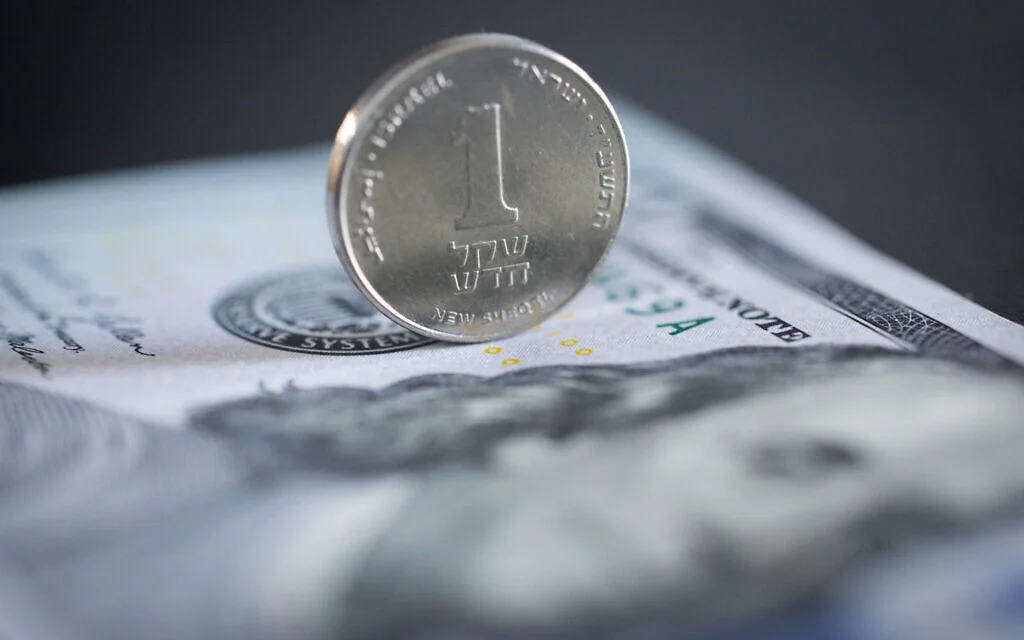
Israel is facing war with Iran, permanent tension on the Lebanese front, uncertainty in Gaza, regional instability, and political pressure from abroad — and yet the shekel is extremely strong against the dollar. Around 2.90 shekels for one dollar, even lower at certain moments, this rate is one of the strongest levels seen in decades. At first sight, it looks almost impossible to understand.
How can a country at war have such a strong currency?
How can investors continue to trust an economy exposed to missiles, mobilisation, diplomatic pressure and regional escalation?
Is this an economic miracle? It is not a miracle. It is a signal.
The markets are not saying that Israel has no problems. They are not saying that war is good for the economy. They are not saying that the situation is normal. They are saying something more precise: despite the war, Israel still looks financially solid.
This is the key point.
Israel is not only a military power. It is also a technological economy, a financial economy, a cyber economy, and an innovation economy. Its strength does not come only from tanks, aircraft and intelligence services. It also comes from start-ups, exports, foreign investment, software, defence technology, private capital and a very strong connection with global markets. That is why the shekel does not behave like the currency of a fragile country. It behaves like the currency of a state under pressure, but still trusted.
The second reason is institutional confidence. The Bank of Israel remains one of the most credible institutions in the country. In moments of war, markets look less at political speeches and more at central banks, reserves, inflation, interest rates and the ability to control panic. On that front, Israel has not lost credibility.
This is crucial. A strong central bank is not just a “detail”. It is part of national security. In modern geopolitics, confidence in the currency is also confidence in the state.
The third reason is anticipation. Markets do not only price what is happening today. They price what they believe may happen tomorrow. If investors think that the worst scenario — a regional war without limits, a total explosion on the Lebanese front, or a long disruption of energy flows — may be avoided, they start buying the currency before the situation is fully stabilised.
In other words, the shekel may be rising not because the war is over but because the markets believe Israel will survive the war without economic collapse.
The fourth reason is the weakness of the dollar itself. We should not look only at Israel. The dollar has also been under pressure globally because of American debt concerns, expectations of lower interest rates, and uncertainty around US economic policy. So part of the move is not only a strong shekel. It is also a weaker dollar. But the most interesting part is geopolitical.
The strong shekel tells us that Israel has entered a very unusual category: a country at war that still attracts confidence. This does not mean that the war has no cost. On the contrary, the cost is huge: military spending, displaced families, pressure on growth, uncertainty for business, and deep political fatigue inside society. But the market is making a distinction between pain and collapse.
-Israel is suffering, but it is not collapsing.
-Israel is under attack, but its institutions are still working.
-Israel is diplomatically criticised, but financially it remains connected.
-Israel is in a dangerous region, but its economy still produces value.
The real explanation is resilience, yes, but it is organised resilience. Institutional resilience. Technological resilience. Monetary resilience. Strategic resilience.
BUT the shekel at 2.90 is not a declaration of victory. It is not proof that Israel has solved its strategic problems. It does not prove that the Iranian threat has disappeared, that Lebanon is stabilised, or that the internal political fractures have healed. It is simply a message from the markets.
Israel is under pressure but still credible.
today, this barometer tells us something very important: the world may doubt Israel politically, but the markets have not yet stopped trusting its economic power.
Gilles Touboul is passionate geopolitical analyst and former trader specializing in Asian and Middle Eastern markets. An observer of international upheavals, he regularly speaks on topics related to conflicts, international relations, and the impact of geopolitics on the global economy. A graduate in oriental languages and international relations, Gilles lives in Israel