Canada Strikes Landmark Deal to Export Liquefied Natural Gas to Germany
https://www.nytimes.com/2026/05/26/world/canada/canada-germany-natural-gas-lng.html?smid=tw-nytimes&smtyp=cur
Posted by BkkGrl

Canada Strikes Landmark Deal to Export Liquefied Natural Gas to Germany
https://www.nytimes.com/2026/05/26/world/canada/canada-germany-natural-gas-lng.html?smid=tw-nytimes&smtyp=cur
Posted by BkkGrl
8 Comments
Up yours Trump
> **The agreement is important for both nations, as Canada seeks new markets away from the United States and Germany tries to diversify its energy supply.**
>
> Canada has struck an important agreement to export liquefied natural gas to Germany, two senior officials with direct knowledge of the agreement said Tuesday, a breakthrough for both nations trying to diversify their strategic trade alliances away from the United States.
>
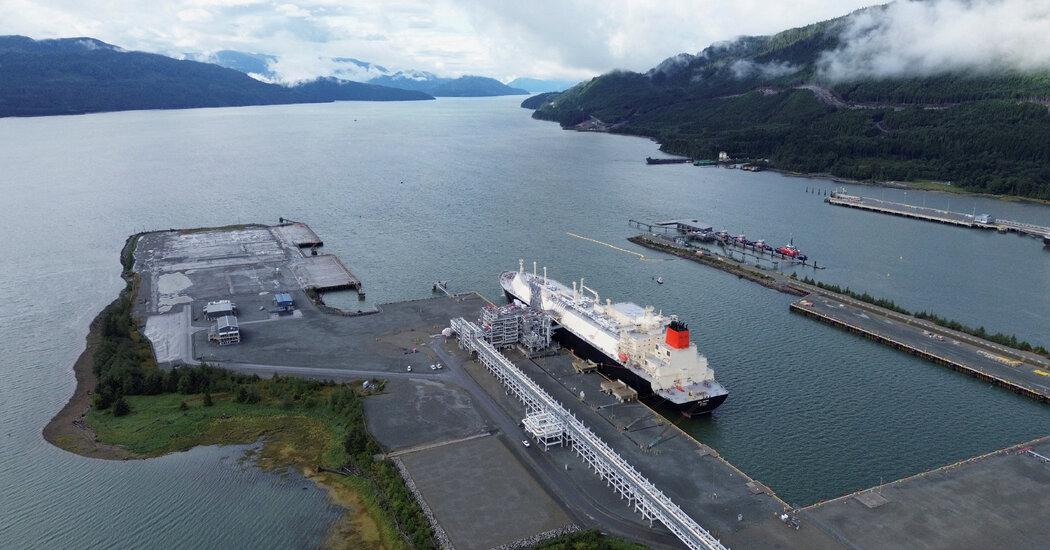
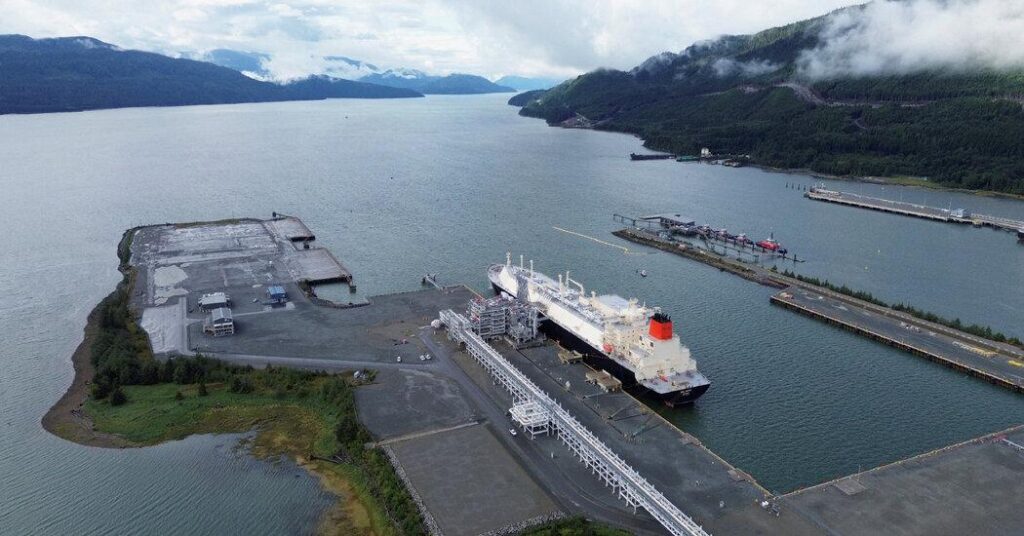
> Under the agreement, Canada will commit to exporting up to one million metric tons of liquefied natural gas a year from a terminal on its Pacific Coast in British Columbia to Germany, starting in the early 2030s, for a two-decade horizon.
>
> The deal will be announced on Wednesday and is scheduled to be signed at the Canadian Embassy in Berlin, the officials said, speaking on condition of anonymity because they were not authorized to speak on the matter before the public announcement.
>
> Global energy alliances have been upended because of wars in Ukraine and the Middle East, and the Canada-Germany agreement highlights how the two important industrialized economies — often referred to as middle powers — are seeking to come closer to withstand the geopolitical turmoil.
>
> The deal had long been in the works, with Prime Minister Mark Carney of Canada looking for new markets for Canada’s important energy resources, and the German government seeking new sources of energy supplies.
>
> Mr. Carney had suggested talks on this agreement were afoot during an August visit to Berlin together with a delegation of representatives from Canada’s energy industry.
>
> The German economy, a voracious energy consumer, has had to seek new suppliers since cutting itself off from Russia after the full-scale invasion of Ukraine in 2022, and is now hurting further because of the disruption caused by the conflict in the Middle East.
>
> Publicly and privately, German officials have said they need to find a diverse set of suppliers for imported gas, to avoid overreliance on a single country, like the United States.
>
> “It makes us more competitive and more secure on the world stage,” Friedrich Merz, the chancellor, said this winter before traveling to the Persian Gulf, partly in search of oil and gas supply agreements.
> Editors’ Picks
> ‘Star City,’ and 5 More Things to Watch on TV This Week
> ‘I Was Prepared for a Long Wait and Surly Interactions’
> To A.I. Executives, We’re All Just ‘Meat Computers’
>
> Canada, an oil and gas powerhouse, exports an overwhelming majority of its resources to the United States.
>
> The agreement is an important win for Mr. Carney, who has spent his first year as prime minister trying to line up buyers for Canadian goods that will help the country break its deep dependence on the United States.
>
> The task has become urgent as relations between the allies and neighbors have deteriorated since the election of President Trump, who has imposed tariffs on Canada and threatened further economic pain. Mr. Carney has set a goal of doubling Canadian exports to non-U.S. markets by 2035.
>
> Canada’s first liquefied natural gas export port, the Shell-backed LNG Canada, only began operating about a year ago.
>
> The Ksi Lisims LNG project, which is set to be used for the Germany exports, has been approved for operation by the government but not yet fully financed. Its proposed daily capacity would make it the second largest of the eight Canadian L.N.G. projects that have been proposed or are now under construction.
>
> The main competitor for Canadian liquefied gas are terminals in the United States on the Gulf of Mexico.
>
> The Germany-bound gas could follow a number of different routes or combination of routes, depending on market conditions at any given time, the officials familiar with the deal said.
>
> It could go through the Panama Canal or the Suez Canal, or it could be indirectly sold to Germany through a liquefied natural gas swap. That approach is a complex global system that is meant to allow buyers of gas optimize their trade routes to lower every party’s costs.
>
> For example, Canadian gas could be exported to a country in Asia, the cheapest and fastest route from British Columbia. That Asian country could then swap its own supply of gas from a European seller such as Norway to Germany, which would also bring down the cost for the Germans.
>
> For the German buyer, the state-owned Securing Energy for Europe, or SEFE — previously owned by Russia’s Gazprom and nationalized after the full-scale invasion of Ukraine — the higher cost for Canadian gas long-term makes sense because a stable and secure supply is paramount, officials said.
>
> Some details of the agreement were first reported Tuesday by Bloomberg News.
🇩🇪🤝🇨🇦 friends forever!
Would have been great if we had negotiated that in 2022, or even earlier. Better late than never I guess.
Can’t wait for Canadian Conservatives to come out against this because the Liberal government landed the deal…
But but but the Conservatives are the energy party. What do you mean Justin Trudeau literally bought a pipeline and paid to have it finished?!?
Sorry, just a cynical Canadian here. I’m tired boss.
1 million tonnes of LNG can provide electricity to 2 million German homes. How do Germans heat their homes is it electric heaters or natural gas?
I think the US could derail these plans. The US is trying every possible way to dismantle Canada, and they’ve had some success- for example, Alberta will soon have a referendum on leaving Canada.
https://www.bbc.com/news/articles/cvgze8n5dxko
It sure would be nice to return to work around FSJ