
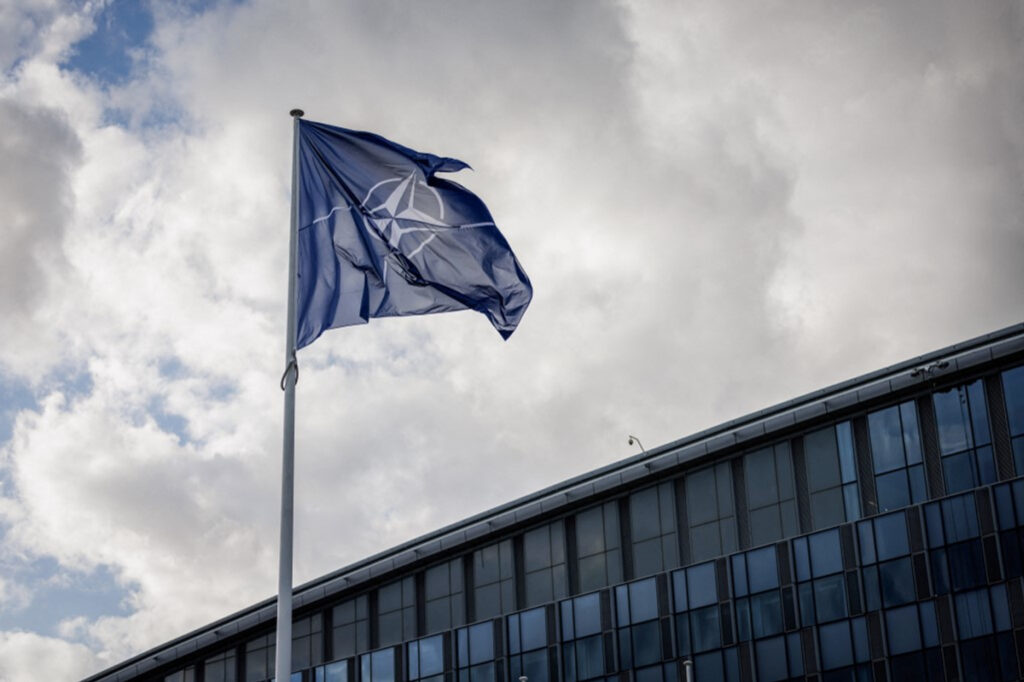
NATO countries are preparing a plan to speed up the deployment of forces to defend the Baltic states in the event of a war with Russia.
According to sources cited by Reuters on Tuesday, an additional army corps is expected to be assigned to protect Latvia and Estonia. Such a corps typically consists of three divisions, with a total strength of around 40,000 to 60,000 troops.
Follow our coverage of the war on the @Kyivpost_official.
In addition to a corps headquartered in Poland, NATO would also activate a German–Dutch corps based in Münster, the sources said.
This would allow the alliance to rapidly deploy “massive forces” to the region, addressing what officials describe as the Baltic region’s limited strategic depth and vulnerability.
Germany and the Netherlands, together with partners, are currently working on forming the new forces, according to Reuters sources.
The reported NATO planning emerged a day after Kremlin leader Vladimir Putin signed a law on allowing Russia to deploy its armed forces abroad “to protect Russian citizens” arrested or prosecuted by foreign courts whose jurisdiction Moscow does not recognize.
On the same day, Russia’s Foreign Ministry announced plans to appeal to the International Court of Justice to “protect” the rights of Russians in the Baltic states, accusing Estonia, Latvia and Lithuania of banning the Russian language, rewriting history, and pursuing “repressive policies of intimidation.”
Other Topics of Interest
US to Pull 50% of Deep-Strike Capability from Europe, Sources Tell TVP World
The US plans to cut by half the deep strike forces allocated to Europe, including aircraft carriers and warplanes, shifting more defense responsibility to NATO allies. European countries are expected to present plans by July to fill the gap. The move reflects growing US pressure on Europe to strengthen its own military capabilities amid rising tensions over NATO commitments and deterrence against Russia.
Analysts at the US-based Institute for the Study of War (ISW) said it remains unclear how the law will be used in practice, noting its deliberately vague wording could allow the Kremlin flexibility to justify overseas military operations as legally framed interventions.