
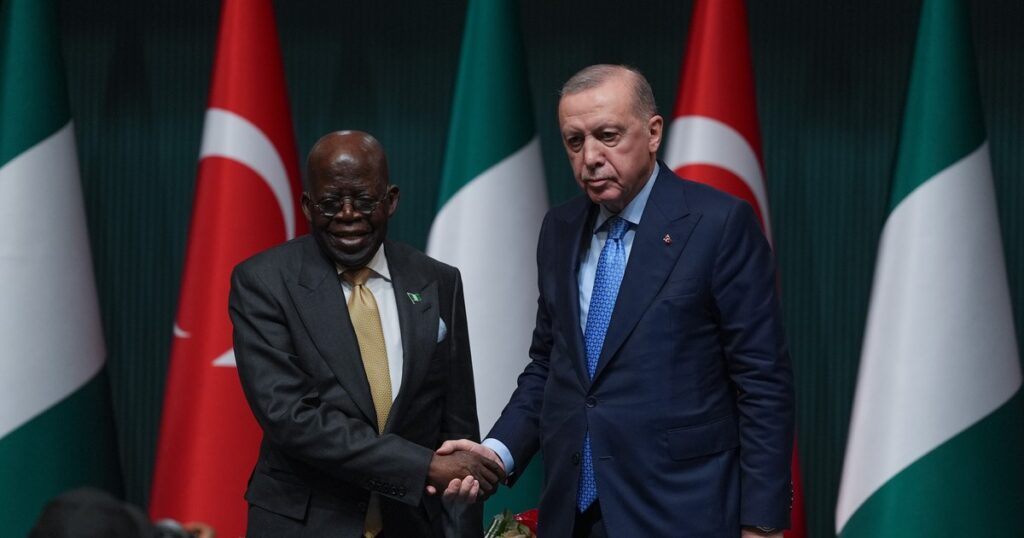
Both countries signed a Memorandum of Understanding (MoU) on solid mineral development during the Istanbul Natural Resources Summit (INRES) in Turkey, which officials described as a strategic move to strengthen economic and energy ties between Africa’s largest economy and one of Europe’s fastest-growing industrial powers.
For Nigeria, the agreement comes at a critical time as the government has spent the past three years trying to reposition the solid minerals sector as a major alternative revenue source amid pressure on oil earnings, rising debt concerns, and growing demands for economic diversification.
Speaking at the signing ceremony, Nigeria’s Minister of Solid Minerals Development, Dele Alake, said the partnership would allow Nigeria to tap into Turkey’s mining technology, exploration expertise, digitised licensing systems, and technical training capabilities.
“Nigeria is open to working with the Turkish government to strengthen governance structures, improve technical capacity, and advance sustainable mining development in our country,” Alake said.
He added that President Bola Tinubu had given full backing to efforts to expand bilateral cooperation with Turkey in both the mining and energy sectors.
The Nigerian government has increasingly presented the mining sector as one of the country’s next major investment frontiers, particularly as global demand for critical minerals used in clean energy technologies, electric vehicles, and industrial manufacturing rises.
Over 300 illegal miners arrested in nationwide crackdown
But authorities say one of the biggest threats to investor confidence remains illegal mining. Alake disclosed that the government’s specially created Mining Marshals have intensified nationwide enforcement operations targeting illegal operators and unauthorised mining activities.
According to the minister, more than 300 illegal mining operators, including foreign nationals, have been arrested so far, while over 150 prosecutions are ongoing.
He also revealed that more than 100 illegal mining sites had been recovered and returned to legitimate licence holders.
The minister argued that the tougher enforcement measures, alongside reforms aimed at improving the ease of doing business, were already attracting increased foreign direct investment into the sector.
“We have significantly improved the ease of doing business and strengthened institutional support for investors,” he said, noting that foreign investors can now repatriate profits after due process.
Turkey’s Minister of Energy and Natural Resources, Alparslan Bayraktar, described the partnership as “strategic and timely,” arguing that growing global energy uncertainty now requires stronger international cooperation.
Bayraktar said Turkish companies were increasingly interested in expanding into Nigeria, not only in mining but also in energy and hydrocarbons.
“Nigeria is a major player in the hydrocarbon industry. We look forward to cooperation, support and guidance that will enable both countries achieve meaningful results,” he said.
He added that Turkey sees Nigeria as a critical gateway for expanding broader economic and energy partnerships across Africa.