
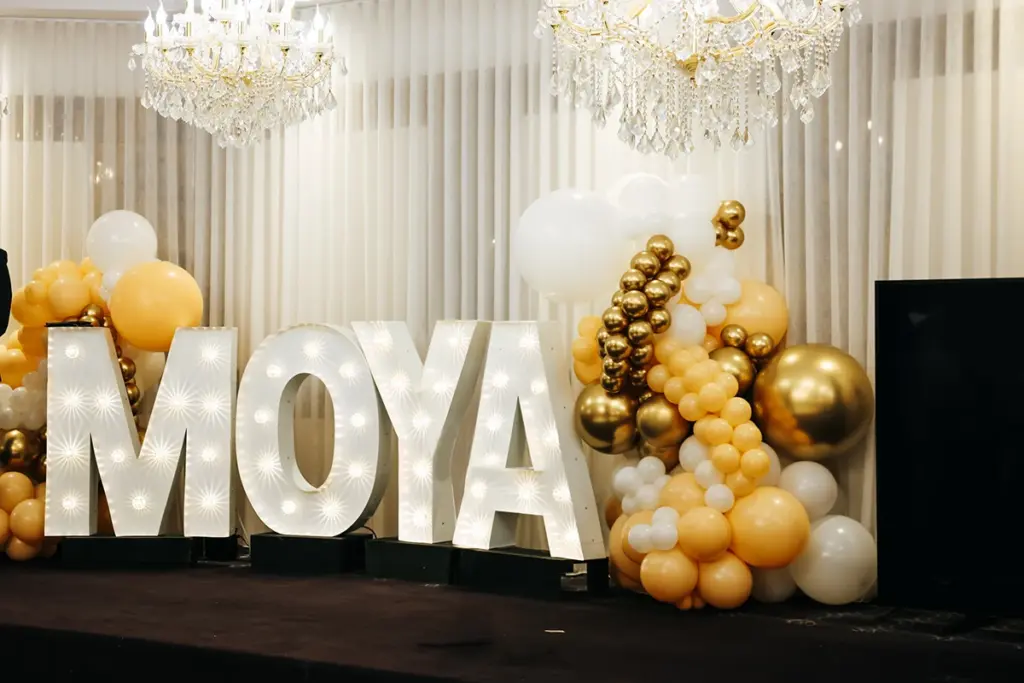
The letter refers to a recent event organised by the “Macedonian Orthodox Youth of Australia (MOYA),” attended, among others, by Greek Orthodox clergy, as well as Alija Alievski, Deputy Consul General, and Silvana Ivanovski, Vice-Consul of the “Republic of North Macedonia” — as officially recognised by the Australian government — who, according to the complaint, were presented as representatives of the “Republic of Macedonia.”
Also participating in the event were political figures from Australia’s two major parties: Natalie Suleyman MP and Uros Rasic MP from the Labor Party, as well as Matthew Guy and Moira Deeming MLC from the Liberal Party. Their presence, and the implied acceptance of the event’s narrative concerning the “Macedonian Orthodox Church” and the “Republic of Macedonia” by elected representatives, stands in contrast to Australia’s official foreign policy, as well as the longstanding positions of both the Labor and Liberal parties, which recognise the country as the “Republic of North Macedonia.”
The participation of political figures under these circumstances creates the impression of indirect legitimisation of narratives that challenge the historical and Greek dimension of Macedonia, intensifying concerns within the Greek community.
It is worth noting that a large number of community members have expressed strong concern to our media group regarding the participation of Greek priests and politicians in the event.
Association of Saint George, Ammochori Florina, “Macedonian Hellenism”
With feelings of sincere sadness and inner turmoil, I followed the reports and material from the recent event organised by the so-called “Macedonian Orthodox Youth of Australia,” at which representatives of the Greek Orthodox Archdiocese were also present, alongside clergy from other Orthodox communities.
I neither write nor speak out of hostility towards any people or towards our Orthodox brethren. Orthodoxy has always been a meeting place for people, a space of love and spiritual communion. Especially within the multicultural reality of Australia, our communities are called daily to coexist with mutual respect, dignity and a spirit of peace. No Greek Orthodox Christian disputes this.
However, ecclesiastical courtesy is one thing, and uncritical participation in events where a specific national narrative regarding a “Macedonian nation,” “Macedonian identity,” and “Macedonian homeland” is promoted without any reservation whatsoever is another — particularly when this inevitably creates impressions of legitimisation.
This is because the event’s announcements made no reference to citizens of the state or to Slavic-speaking Orthodox Christians of the Balkans. On the contrary, the term “Macedonian” was used exclusively and continuously as an ethnic self-identification, detached from any geographical or historical clarification. The speakers referred to “Macedonians everywhere,” “Macedonian heritage,” “Macedonian identity,” and even to national revolutionaries portrayed as founders of a distinct “Macedonian” national consciousness.
Within this context, the presence of representatives of the Greek Orthodox Archdiocese, even if motivated by goodwill, is understandably experienced by many Greeks as something deeply painful. The Greek Orthodox Church is not a neutral institution without historical memory regarding the issue of Macedonia. On the contrary, it played a leading role in the struggles to preserve the Greek character of the region.
The history of the Macedonian Struggle is filled with priests, monks and bishops who were tortured, hanged or massacred because they refused to surrender their communities to the Bulgarian Exarchate and to separation from the Greek world.
Pavlos Melas did not fight alone. Beside him stood priests who secretly conducted liturgy in Greek, teachers who taught at the risk of their lives, and villagers who preserved the church as the last bastion of Greek consciousness. How many clergymen were murdered by komitadjis because they refused to commemorate the Exarchate? How many churches became fields of blood?
For Hellenism, Macedonia is not an abstract political idea. It is land watered with sacrifice. It is a place where faith and Greek identity became historically and inseparably linked.
For this very reason, it causes sorrow to see the goodwill of our Church being used, even indirectly, as a public relations element at events dominated by rhetoric of national appropriation of Macedonia. The organisers are already presenting the presence of Greek clergy as evidence of “Pan-Orthodox” recognition and acceptance.
This was clearly not the intention of the representatives of the Archdiocese. Yet in public life, intentions alone do not matter. The impressions that are created matter as well.
And this sorrow becomes even deeper when one considers that the Ecumenical Patriarchate itself, demonstrating a spirit of reconciliation and ecclesiastical economy, opened the way for the return of the Church of Skopje into canonical communion with Orthodoxy under the name “Archbishopric of Ohrid.” This act was an exceptionally generous ecclesiastical gesture, aimed at overcoming decades of isolation and schism.
One might have expected that this act of goodwill would be accompanied by greater sensitivity and restraint regarding terminology and historical symbolism. Instead, we continue to witness the uninterrupted public use of the term “Macedonian Church,” together with a national rhetoric that presents the word “Macedonia” as an exclusive ethnic possession.
This is even more painful because it creates the impression that good faith and ecclesiastical magnanimity are being treated not as an opportunity for mutual respect, but as a platform for further symbolic claims.
And herein lies the pain felt by many Greeks of the diaspora. For decades we have struggled within Australian society to explain that Greek Macedonia, its history and its symbols cannot be detached from their centuries-old Greek continuity.
We fought battles in schools, councils, media outlets and public institutions against extreme forms of propaganda and historical distortion. For many older Macedonian Greek migrants, this struggle was not theoretical — it was personal. They carried memories of family persecutions, civil conflicts, violent pressures and an entire lifetime devoted to preserving their identity.
No one is asking for hostility towards other Orthodox peoples. There is, however, a difference between respect and naivety. There is a difference between Christian love and the silent acceptance of narratives that offend the historical memory of another people.
The unity of Orthodoxy cannot be built upon ambiguity or upon demands that we silence what we know, historically and experientially, to be true.
Particular impression was also caused by the fact that, at the same event, the speakers repeatedly linked Orthodoxy with an exclusive “Macedonian” national identity, presenting this youth movement not merely as an expression of religious life, but also as a vehicle of national continuity.
Therefore, when Greek clergy attend without any clarification, the impression left is that the Greek side silently accepts this use of history and terminology. This is precisely what causes pain.
I say this with sorrow, not anger. With respect towards the Archdiocese and towards the clergy, who undoubtedly acted in a spirit of goodwill. However, I believe that the Hellenism of Australia also has the right to express its deep emotional and historical sensitivity when it comes to Macedonia.
For there are certain issues in which symbolism carries far greater weight than we may realise at the moment events occur.
Our Church has always been a vessel of historical memory. May the desire for Pan-Orthodox communication therefore always be accompanied by the necessary historical vigilance, so that our goodwill is not mistaken for abandonment of the truth of our own historical experience.
With respect,
Giannis Papadimitriou
(President)
Birthplace – Florina, Greece