
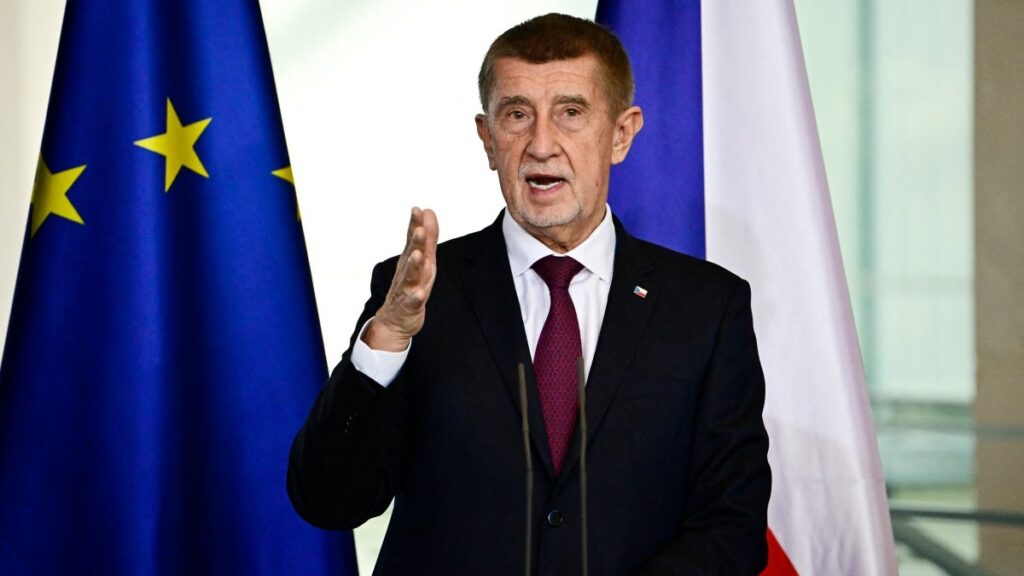
The Czech government has approved a bill that would significantly tighten the conditions for Ukrainian refugees staying in the country, reflecting a broader European trend in which governments are gradually reducing benefits and tightening support systems that were introduced after the outbreak of the Russian-Ukrainian war in 2022.
The amendments, which must still be approved by the Czech Parliament, would introduce stricter rules on temporary protection, humanitarian aid payments, and the registration of vehicles with Ukrainian license plates.
The Czech move comes at a time when support for Ukrainian refugees is increasingly being scaled back across the European Union. After four years of war and mounting financial pressure, governments across Europe have started reducing subsidies and shifting refugees toward work-based integration systems.
In Germany, newly arriving Ukrainians have since 2025 been excluded from the higher-value Bürgergeld system and transferred to a lower refugee assistance scheme worth roughly 100 euros less per month. Poland has progressively dismantled special benefits for Ukrainians, making assistance conditional on employment and gradually integrating refugees into the standard immigration system. Ireland has announced plans to phase out free accommodation and eventually abolish its broader support framework by 2027, while also offering financial incentives for voluntary return to Ukraine.
Under the Czech proposal, temporary protection could be revoked if a refugee stays outside the Czech Republic or the Schengen Area for more than 30 days. The new rules would also target individuals who commit serious offenses.
“The amendments will in no way affect foreigners who work in the Czech Republic and comply with the laws. They are primarily aimed at combating system abuse, illegal migration, and people who do not respect the laws of the Czech Republic,” stated Czech Interior Minister Lubomír Metnar.
The bill would also tighten conditions for receiving humanitarian payments. Refugees would need to reside in the Czech Republic for at least 16 days each month to remain eligible for aid. According to the government, the aim is to prevent people who do not genuinely live in the country from receiving Czech welfare benefits.
The Czech Republic remains one of the EU countries most heavily affected by the refugee influx relative to its population. According to available figures, the country had the highest rate of people under temporary protection in the EU, with 36.4 protected persons per 1,000 inhabitants. As of March 2026, there were 385,040 Ukrainian refugees in the Czech Republic.
Across Europe, governments have begun to acknowledge that the original emergency support systems introduced after Russia invaded Ukraine are financially unsustainable in the long term. Between 2022 and mid-2025, total refugee-related expenditures reportedly reached 155 billion euros. Rising housing costs, pressure on social systems, inflation, and labor market concerns have all contributed to the shift in policy.