
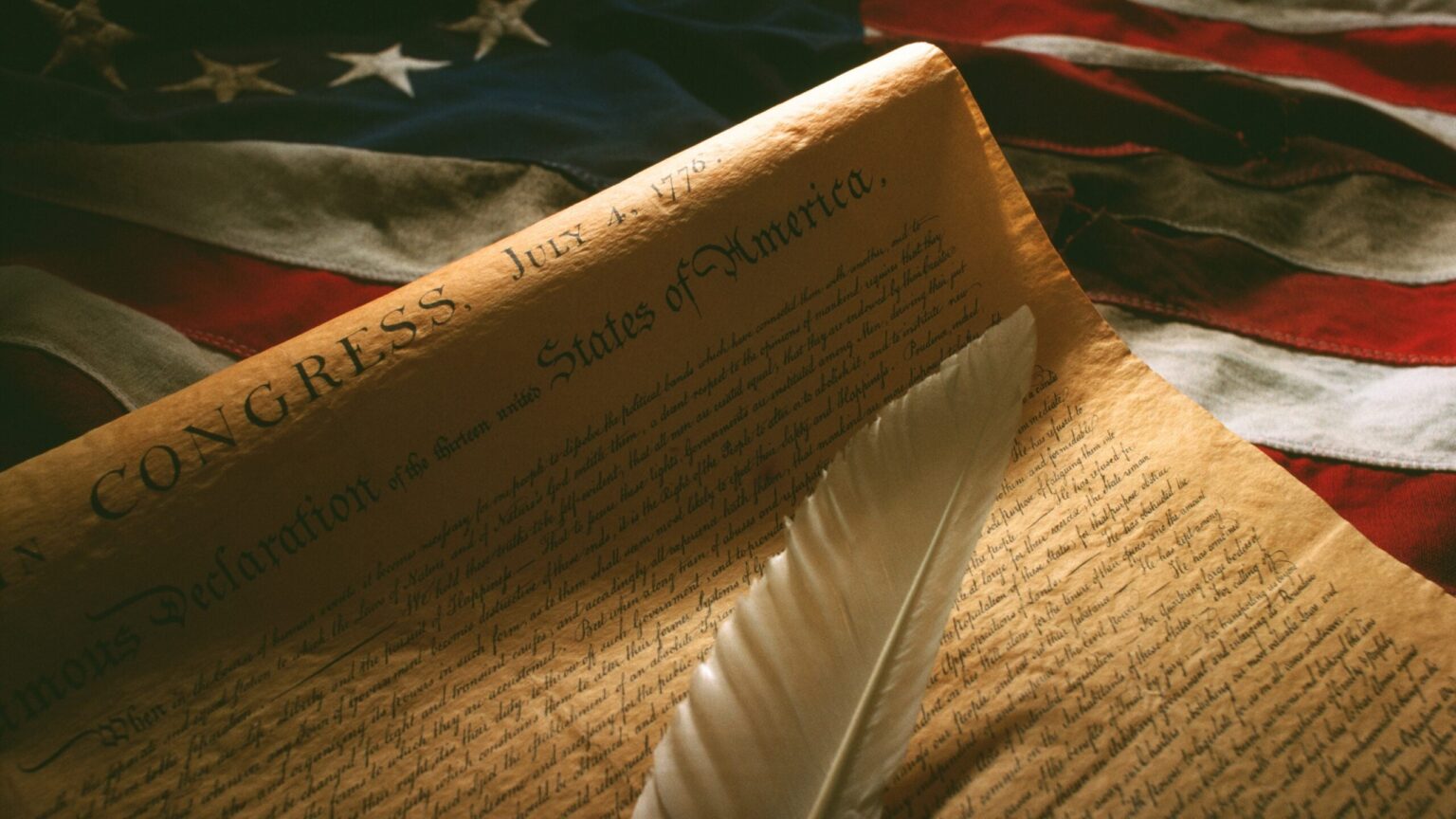
Independence appeared not as rebellion but as the necessary step to preserve self‑government, constitutional order, and the rights colonists believed were theirs by birth and by law.
Grievances 20 through 23 reveal a central theme in the Declaration of Independence: the colonists’ belief that Great Britain had systematically dismantled their political, legal, and constitutional foundations. Each grievance highlights a different facet of this erosion—from the imposition of foreign legal systems in neighboring territories and the revocation of colonial charters to the suspension of representative legislatures, as well as the King’s decision to wage open war against his own subjects.
Together, these actions convinced the colonists that the British government no longer viewed them as partners in a shared constitutional order but as a population to be controlled, coerced, or cast aside.
Grievance 20 reads “For abolishing the free System of English Laws in a neighboring Province, establishing therein an Arbitrary government, and enlarging its Boundaries to render it at once an example and fit instrument for introducing the same absolute rule into these Colonies.”
Grievance 20 refers to the Quebec Act of 1774, which the colonists viewed as an assault on their governing structures and future westward expansion. After France’s defeat and subsequent loss of Quebec in the Seven Years’ War, England issued the “Royal Proclamation of 1763,” meant to Anglicize Quebec’s French-Canadian population and encourage more British to settle there. The Proclamation failed to meet either of these objectives, leading to the Quebec Act, which allowed French-Canadians to maintain a French civilian government and cultural practices, including Catholicism.
The potential replacement of British with French institutional norms is what the Founding Fathers meant by “establishing therein an Arbitrary government”. A distrust of the Catholic Church fueled some of these concerns; indeed, only one of the signers, Charles Carroll of Maryland, was Catholic. And while the Thirteen Colonies were not directly subject to the Quebec Act, they worried that it was only a matter of time before they would be. America’s Founders were also worried about the parts of the Act that expanded the boundaries of Quebec westward, which could inhibit colonial settlement.
Grievance 21 reads “For taking away our Charters, abolishing our most valuable Laws and altering fundamentally the Forms of our Governments.”
Grievance 21 is yet another British outrage spawned by the aptly named Intolerable Acts – a series of four Acts invoked by Parliament that transferred power from the colonies to Great Britain, mainly to punish Massachusetts for the Boston Tea Party, although the fourth Act applied to all the colonies. This grievance references the second “Intolerable,” the Massachusetts Government Act, which revoked the Massachusetts Bay colony’s charter, ceding power to appoint colonial government officials such as judges, attorneys general, justices of the peace, and sheriffs to the royal governor. Previously, the colony’s council, representatives elected annually, made these selections. With the adoption of the Massachusetts Government Act, both the council and the officials would be appointed by the British and owe allegiance to the Crown rather than to the colonists.
To make matters worse, General Thomas Gage held the position of governor, effectively placing Massachusetts Bay under martial law. The stated purpose of the Massachusetts Act was “…the maintenance and just subordination to and conformity with, the laws of Great Britain…” because Massachusetts Bay “…hath, by repeated experience, been found to be extremely ill adapted to the plan of government…”
This is a curious accusation considering that just a few years later, many of the signers of the Declaration of Independence would help to draft the U.S. Constitution, a document that is still emulated and regarded by many as the gold standard of good governance. Undoubtedly, Great Britain’s government overreach informed the Constitutional Framers’ inclusion of so many safeguards to preserve individual freedom, as well as their incorporation of federalism to prevent the centralization of power at the national level.
Grievance 22 reads “For suspending our Legislatures and declaring themselves invested with power to legislate for us in all cases whatsoever.”
Grievance 22 refers to the authority royal governors had to suspend colonial legislatures and replace colonial law with royal proclamations. The Declaratory Act of 1766 empowered the Parliament to pass laws to which the colonists would be subject, and the British had suspended colonial assemblies, most notably in New York, when the legislature refused to support the Quartering Act of 1765.
The colonists viewed the Quebec Act of 1774 as establishing a system of government in French Canada that did not include provisions for legislatures, with mounting concern, fearing that a similar measure would be in their future. America’s Founders understood the importance of laws promulgated by legislative assemblies whose representatives were elected by the people governed.
Undoubtedly, Great Britain’s assault on colonial legislatures spurred the Constitutional Framers to ensure that the prominence of the legislative branch – Article 1 – would be unassailable when drafting the U.S. Constitution.
Grievance 23 reads “He has abdicated Government here, by declaring us out of his Protection and waging War against us.”
Grievance 23 reflects the moment when many colonists concluded that King George III had forfeited his role as their lawful ruler. When the King informed Parliament in early 1775 that the colonies were in a state of “open and avowed rebellion,” many colonists interpreted this as meaning they were no longer entitled to the traditional protections owed to British subjects.
This shift was soon codified in the Prohibitory Act, which blockaded American ports, authorized the seizure of colonial ships, and was widely understood by colonists as placing the colonies outside the normal protections of the British constitutional order. To American readers, this was not an ordinary punishment—it was a declaration that the Crown no longer recognized them as part of the political community.
The grievance also highlights the King’s decision to wage war by deploying British troops, hiring Hessian mercenaries, and sanctioning royal governors’ efforts to enlist Native nations against the colonists. These actions convinced many Americans that the King had not merely misruled but had abandoned governance altogether, replacing civil authority with military force.
By sending armies to America and treating the colonists as foreign enemies, George III had, in their view, “abdicated government” by renouncing the obligations of a lawful sovereign. In the logic of the Declaration, once the King dissolved this bond, the colonists were released from their allegiance, making independence not only justified but necessary.
Conclusion
Grievances 20 through 23 illustrate why the Founders believed the imperial relationship had become irreparably broken. The Quebec Act threatened to replace English legal traditions with arbitrary rule; the Intolerable Acts stripped colonies of their charters and self‑governing institutions; royal governors suspended legislatures at will; and King George III ultimately renounced his obligations by declaring the colonists outside his protection and making war upon them. These escalating abuses persuaded Americans that the Crown had abandoned lawful governance and violated the very principles on which British liberty rested. In this way, independence appeared not as rebellion but as the necessary step to preserve self‑government, constitutional order, and the rights colonists believed were theirs by birth and by law.