
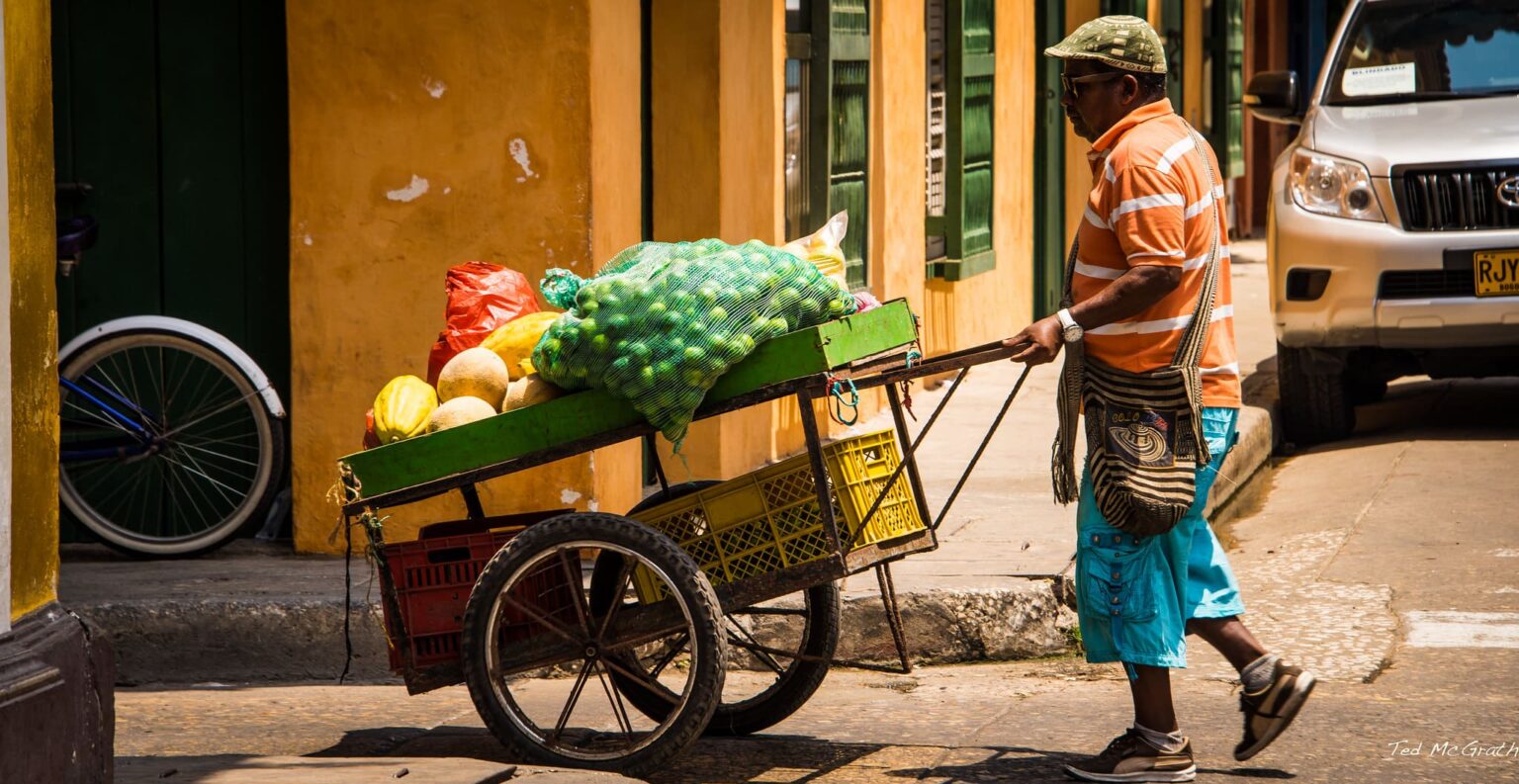
Business leaders and ordinary citizens are closely watching what may happen to the country’s economy depending on who wins the Casa de Nariño. Credit: Ted McGrath cc by nc sa 2.0.
As Colombia approaches one of the most consequential presidential elections in recent history, investors, business leaders, and ordinary citizens are closely watching what may happen to the country’s economy depending on who wins the Casa de Narino. What will happen to the Colombian economy after the elections? That’s what many Colombians are asking.
The contrast between left-wing candidate Ivan Cepeda and conservative contender Abelardo de la Espriella, the two candidates leading the polls, could hardly be sharper. Their economic visions represent two radically different paths for Colombia at a time when inflation concerns, fiscal pressures, unemployment, and foreign investment remain central national issues.
With markets already reacting to election uncertainty, economists warn that the outcome could shape Colombia’s economic future for years.
What will happen to the Colombian economy after the elections, with two opposing economic models at stake?
Ivan Cepeda, the political heir to President Gustavo Petro’s progressive coalition, has defended a stronger role for the state in the economy, expanded social spending, labor protections, and deeper reforms to Colombia’s pension, health, and energy systems.
Cepeda has argued that Colombia must reduce inequality through redistribution and greater government intervention. Supporters say his proposals could strengthen social safety nets and improve access to public services for millions of Colombians.
However, critics warn that a continuation of Petro-style policies could increase investor uncertainty, weaken business confidence, and generate additional fiscal strain.
On the opposite side stands Abelardo De la Espriella, whose campaign, around a “miracle homeland,” as outlet Portafolio columnist Andres Barreto recalls, has embraced a pro-business platform focused on private investment, deregulation, tax incentives, and economic growth through market expansion.
One of the key elements strengthening De la Espriella’s economic credibility is his vice presidential running mate, Jose Manuel Restrepo, one of Colombia’s best-known economists and former finance minister. Restrepo is widely respected in financial and academic circles for his experience managing Colombia’s economy during difficult post-pandemic conditions.
For many business leaders, Restrepo’s presence on the ticket serves as a signal of economic moderation and technical expertise inside an otherwise highly combative campaign.
Markets are watching closely
Financial markets tend to react strongly to political uncertainty, and Colombia is no exception.
Analysts say a Cepeda victory could initially generate nervousness among investors concerned about potential tax increases, tighter regulation, and state intervention in strategic industries such as oil, gas, banking, and energy.
Foreign direct investment, particularly in extractive industries, may slow if companies fear regulatory instability or reduced profitability. Colombia remains heavily dependent on oil and mining revenues, meaning any abrupt shift away from fossil fuels could create short-term fiscal challenges.
International credit agencies would also closely monitor a Cepeda administration’s fiscal discipline. If spending expands significantly without sustainable revenue sources, Colombia could face additional pressure on its sovereign debt ratings.
Still, Cepeda supporters argue that stronger social spending could stimulate domestic consumption and reduce long-term inequality, especially in historically marginalized regions.
Under this scenario, sectors tied to infrastructure, public health, renewable energy, and social housing could benefit from greater government investment.
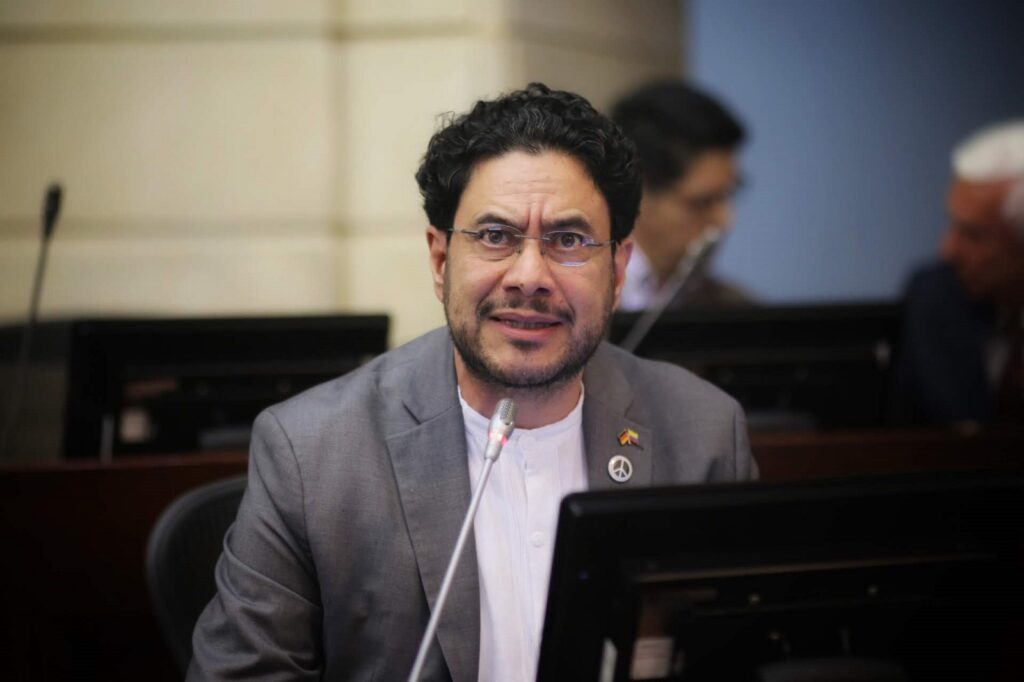
Analysts say a Cepeda victory could initially generate nervousness among investors concerned about potential tax increases. Credit: Colombian Senate.
Business optimism around De la Espriella
A De la Espriella presidency would likely be received positively by many sectors of the private market, especially banking, energy, real estate, and foreign investors seeking greater regulatory predictability.
His campaign has emphasized restoring investor confidence, strengthening relations with the United States, and accelerating economic growth through lower taxes and business-friendly reforms.
The inclusion of Jose Manuel Restrepo reinforces that message. Restrepo previously served as Colombia’s finance minister and minister of commerce, earning recognition for maintaining macroeconomic stability during periods of economic turbulence. His reputation could reassure both international lenders and domestic markets worried about fiscal management.
Economists believe a De la Espriella administration would likely prioritize:
- Tax incentives for companies.
- Expansion of oil and gas exploration.
- Reduced regulatory burdens.
- Stronger support for entrepreneurship.
- Policies aimed at attracting foreign capital.
Supporters argue that those measures could stimulate job creation and accelerate gross domestic product, or GDP, growth.
However, critics warn that an aggressive free-market approach could deepen inequality if social protections are weakened or if economic gains fail to reach lower-income sectors.

Candidate Abelardo De la Espriella is in favor of giving companies tax incentives. Credit: @DELAESPRIELLAE-X.
The Colombian peso, inflation, and employment
One of the clearest immediate indicators after the election will likely be the behavior of the Colombian peso.
Currency markets traditionally favor political predictability and investor-friendly policies. Analysts suggest the peso could strengthen under a De la Espriella victory, particularly if markets interpret his administration as fiscally conservative and business-oriented.
Conversely, a Cepeda win could trigger short-term volatility if investors fear policy uncertainty or major structural reforms.
Inflation will also remain a critical challenge regardless of who wins. Colombia continues to face pressure from food prices, public spending demands, and global economic instability.
Cepeda would likely prioritize wage increases and stronger labor protections, measures that supporters say would improve purchasing power but critics argue could pressure inflation further.
De la Espriella, meanwhile, is expected to focus on private-sector growth and fiscal restraint as mechanisms to stabilize prices and encourage employment.
Colombia’s economic future
The 2026 election has evolved beyond a traditional political contest. It is increasingly viewed as a referendum on two competing economic philosophies. What will happen to the Colombian economy after the elections?
For supporters of Ivan Cepeda, the election represents an opportunity to deepen social reforms and reshape Colombia’s economic model around greater equality and state participation.
For supporters of Abelardo De la Espriella, it is a chance to restore market confidence, attract investment, and return to a more business-oriented economic framework backed by experienced figures such as Jose Manuel Restrepo.
Whichever candidate prevails, the next president will inherit a deeply polarized nation facing major economic pressures and growing demands for both stability and opportunity.
The decisions made in the first months of the next administration may define Colombia’s economic trajectory for the rest of the decade.