
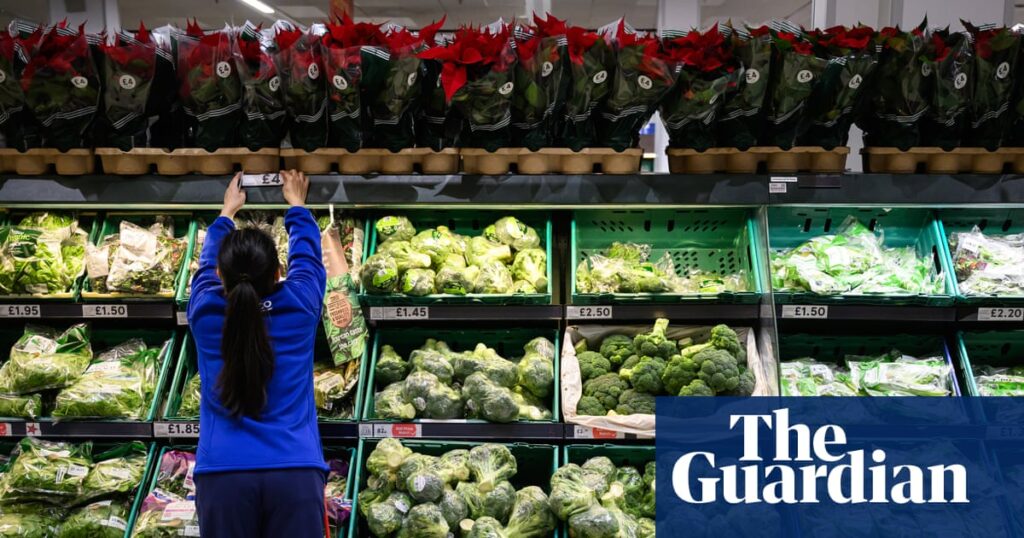
Britain is “sleepwalking into a food crisis” caused by extreme weather, inflation and the impacts of the Iran war – and the government is failing to take the threat seriously, food experts have said.
Farmers are facing severe strain from the current heatwave following a dry spring, with many crops likely to yield less as temperatures rise beyond their tolerance. Livestock are also suffering heat stress and there is a rising risk of wildfires. Economic losses are likely to be measured in the hundreds of millions of pounds.
Food prices were already on track to be 50% higher this November than they were five years ago, and the current weather – with more heatwaves likely to follow in the summer, when temperatures could top 40C – is adding to the inflationary pressure.
Even if the Iran war is resolved soon, fuel and fertiliser prices will stay high until the supply crunch through the strait of Hormuz can be eased. Last week, Rachel Reeves, the chancellor, floated the idea of voluntary price caps on staple foods, but was knocked back by supermarkets and opposition parties.
A group of food experts have written to ministers this week calling for the national food strategy to be updated to take account of the risks and prepare the UK for a future of higher temperatures and more severe weather.
The nine signatories to the letter include Mike Barry, the former director of sustainable business at Marks & Spencer, Anna Taylor, the executive director of the Food Foundation, and Lee Stiles, the secretary of the Lea Valley Growers’ Association. They highlighted three priorities on which they said ministers should concentrate: resilient domestic production of healthier food; greater preparedness for supply chain shocks; and access for all to safe, affordable and healthy food.
Tim Lang, a professor emeritus of food policy at City St George’s, University of London, said the government’s current strategy amounted to little more than “business as usual” and that warnings were not being heeded.
“This government has received serious scientific, intelligence and policy advice that it should take significant action on food security, but it keeps signalling all is OK. It’s not,” Lang told the Guardian. “Whether we see food security as an issue of escalating food poverty and deepening cost of living squeeze or as the ‘hard’ version of security as defence, there are no grounds for complacency.”
Ministers have failed to make the connections and are behind the public in awareness and readiness to act, according to Lang. “Volatility is the new normal. We are in escalating trouble from climate heating, geopolitics, [the cost of] living squeeze and more,” he said. “I find the public ready and willing but need leadership and support. What’s more important a state responsibility than ensuring the population can and will be fed in all circumstances?”
Richard Nugee, a retired general, who also signed the letter, told the Guardian that food security should be a top-level national security concern. “There’s the potential for food to be reduced in quantity through heat domes over grain baskets [in Europe and around the world]. The food chain is also being more damaged by war and the inability of people to export to us and us to import food. Farmers in the UK are also struggling really hard,” he said.
Nugee said civil unrest was still unlikely, but people would start to blame the government for problems with food supplies. There is potential for people “being extremely stressed by not being able to afford food and therefore taking matters into their own hands”, he said, adding: “There is the potential for disruption, of supply chains and of supply, and [the UK may not be able] to provide the sufficient food at the right price for its people. That is a national security issue.”
A report by the UK’s spy chiefs – revealed by the Guardian last year and so far only published in part – told ministers that the collapse of key ecosystems overseas was a national security risk for the UK that could lead to conflict, migration and competition for resources.
The Climate Change Committee advised government last week not to allow domestic food production to drop below 60% of the UK’s food needs, and said the damages inflicted by climate change on food production could reach more than £2bn a year in the 2030s, from about £200m today.
Jez Fredenburgh, a senior analyst for food and climate at the Energy and Climate Intelligence Unit thinktank, who was not a signatory to the letter, said: “Farmers and consumers cannot afford this pressure.”
The Department for Environment, Food and Rural Affairs was approached for comment.