

The tombs at Hala Sultan Tekke, also known as Dromolaxia-Vyzakia, are oddly shaped—they look roughly like the number eight, with two connected circular chambers each about 6-10 feet in diameter. Some graves contain dozens of people—one has more than 60 individuals buried inside. Fischer’s team has examined DNA from the remains and their unpublished results reveal that the individuals were siblings, mothers, fathers and grandparents, with several generations of people buried on top of each other. “These were family tombs,” Fischer says.
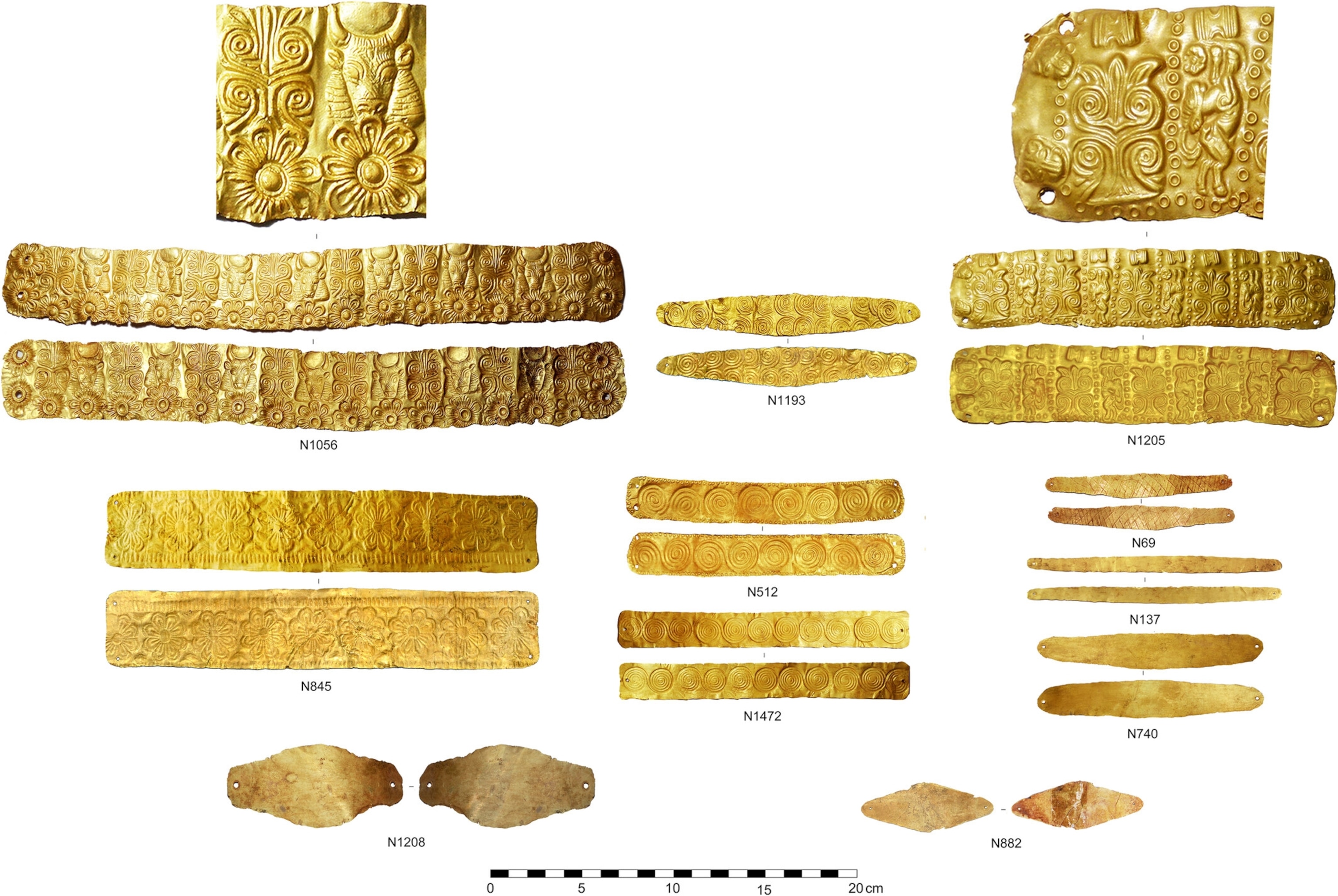
Diadems and mouth-pieces from Hala Sultan Tekke excavated between 2016 and 2024.
Rainer Feldbacher and Peter M. Fischer
Golden cemetery “crowns” and “grills”
In a recent study published in the Oxford Journal of Archaeology, Fischer describes the grave goods found in some of these family tombs. The most luxurious include nine golden diadems or crowns covered in patterns with spirals, flowers, ibexes, wild cats and bulls. Two individuals were buried with golden mouthpieces—essentially mouth grills that resemble the dental jewelry popularized by hip-hop artists. Graves also contained precious stones, ivory, rings, earrings and toe rings of gold and silver, as well as some silver figurines, deity pendants, and beautiful pottery made with a tin glaze called faeince.
You May Also Like
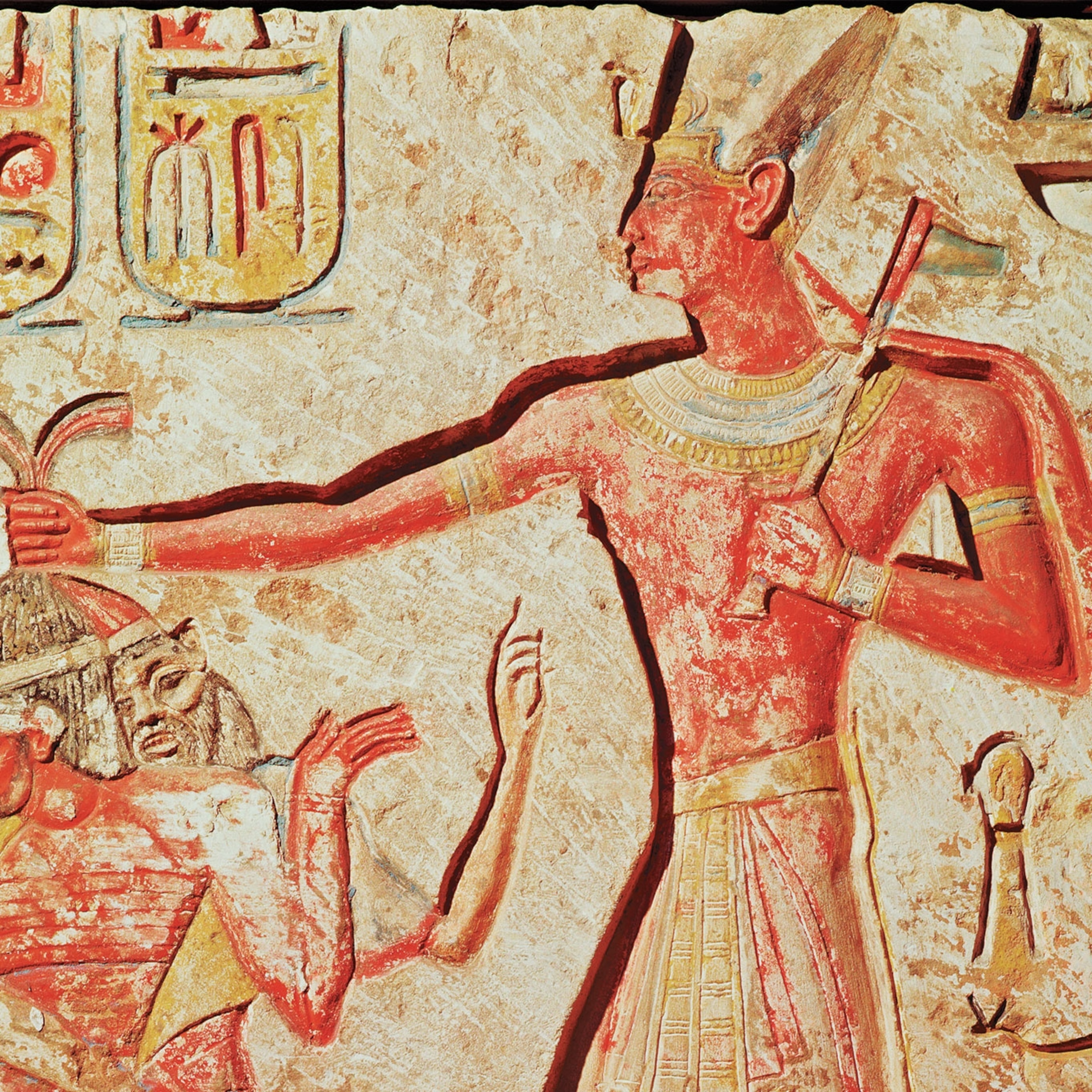
The diadems were status symbols and show evidence of wear, indicating they were likely used in life as well as laid to rest with the dead, Fischer says. The mouthpieces, in contrast, show little sign of wear. They were also quite thin—less valuable—leading Fischer to conclude they were only placed on the dead.
Marian Feldman, an art historian in Near Eastern studies at Johns Hopkins University in Maryland who was not involved in Fischer’s study, says that the mouthpieces are common across many cultures. “It almost feels like a quasi-universal need to show the deceased is no longer breathing and no longer speaking and no longer eating,” she says.
The diadems and mouthpieces sometimes carry motifs from other cultures, such as bull figures common in Egypt. The gold used to make them likely came from Egyptian controlled Nubia, but like many other locally-adapted versions of motifs that originated abroad, Fischer suspects that they were likely produced locally. Feldman agrees with this assessment: Bull motifs in Late Bronze Age Cyprus had become “entrenched,” she says, speaking to a local character.