
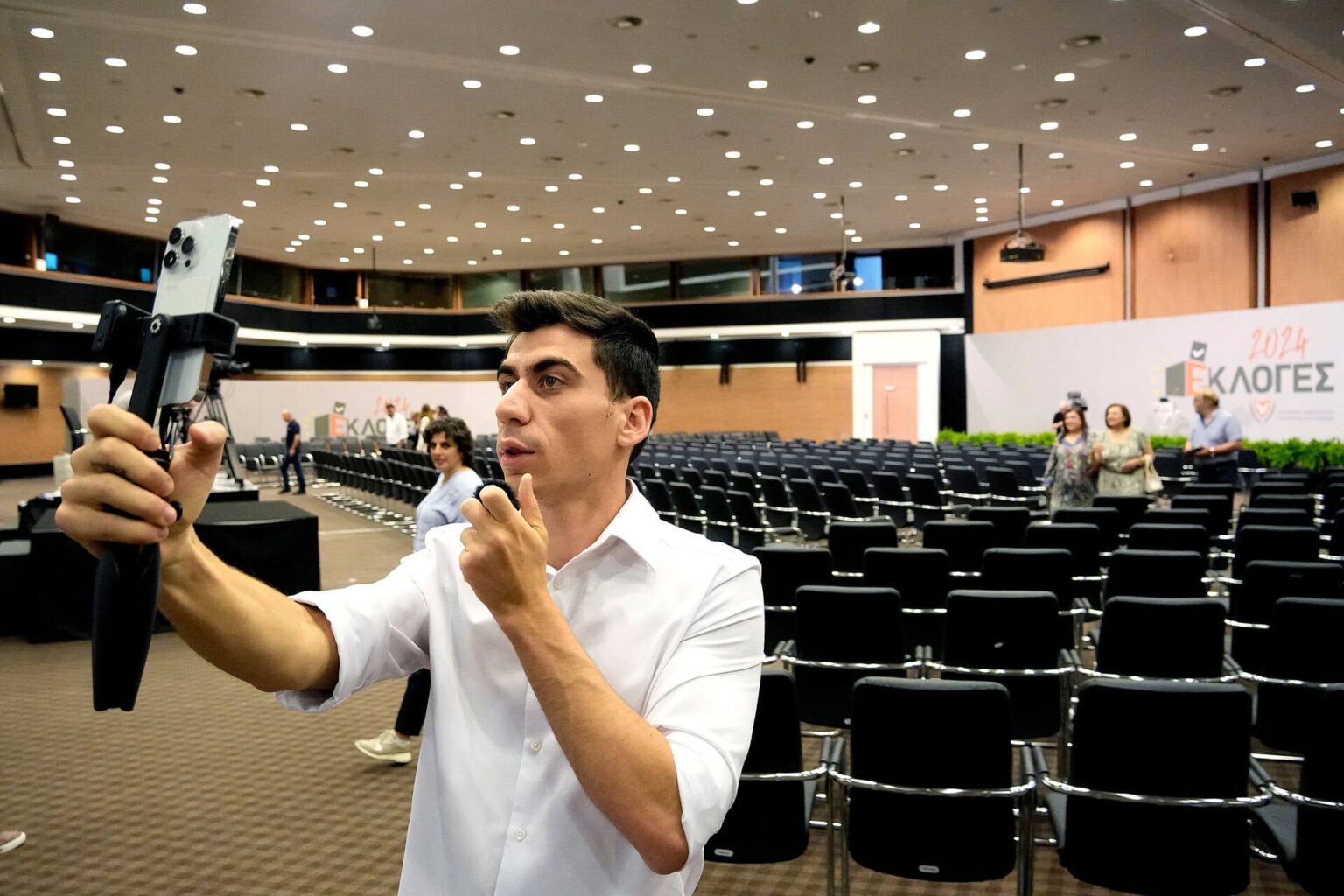
The recent Parliamentary elections in Cyprus have presented challenges from the rise of the far-right but also opportunities from the solid vote for the two major parties. To understand both the challenges and opportunities, it is necessary to understand the history and nature of the Cypriot political system.
When Cyprus was granted independence in 1960 after the bloody uprising against British rule in the 1950s, it was left with a dysfunctional political system. Parliamentary seats were allocated with 15 to Turkish Cypriots and 35 to Greek Cypriots. The President was to be a Greek Cypriot and the vice president a Turkish Cypriot. The Vice President had veto powers over the president on virtually all matters.
A brief history of the unwraveling
By 1964, the system collapsed amidst communal violence. Turkish Cypriots walked away from parliamentary representation and the position of vice president of the republic. The seeds were sown back then for the division of Cyprus.
The British left a Westminster parliamentary system in almost every country that they colonised like Australia, Canada, Pakistan, and India. Yet, in Cyprus they left a hybrid presidential system that has proven to be a barrier to communal harmony and the settlement of the Cyprus issue.
The number of seats in the Cypriot Parliament was increased in 1985 to 80, but only 56 are actually elected by Greek Cypriots, with the remainder left in some kind of surreal limbo for Turkish Cypriots.
Under its hybrid presidential system, Cyprus elects a President with almost unrestrained powers. The President appoints senior bureaucrats and all of the ministers, and runs the government. There is no process of scrutinising these appointments as in the United States, where appointments are only approved after exhaustive questioning and a vote of the United States Senate.
The Cypriot system does not allow for an official opposition and a recognised governing party. It differs from the United States system, where through its primary selection process the system delivers a two-party congress and senate of Democrats and Republicans. By contrast, in Cyprus the system facilitates the election of disparate minor parties in its Parliament.
The worst of all worlds
Ministers and senior bureaucrats are appointed at the discretion of the President without parliament’s endorsement like the US. They are not subject to the scrutiny of the Westminster system, although they do appear before
parliamentary committees to answer questions on occasion. As a minister in Victoria, I was appointed by a vote of my party’s political peers. I had to front up at every Question Time when parliament sat to answer questions without notice. The Cypriot parliamentary election system does not deliver the stability of a two-party system in the parliament.
In the recent parliamentary elections in Cyprus, the centrist parties, DISY (Democratic Rally) won 27.1 per cent, which gave it 17 seats; DIKO (Democratic Party) won 10.0 per cent to gain eight seats; and ALMA (Citizens for Cyprus) with 5.8 per cent won four seats. The major left party, AKEL (Progressive Party of Working People) won 23.9 per cent to gain 15 seats.
The real challenge was gains made by the ultra-nationalist, anti-immigration ELAM (National Popular Front), whose share rose to 10.9 per cent to give it eight seats. Influencer-born Direct Democracy Cyprus, with 5.4 per cent, ended up with four seats.
Despite all predictions, the two main political parties held their ground as the key political players. But neither has a majority, and with 24 members that are not part of the big two, the minor parties are collectively the biggest block.
A number of minor parties including EDEK (Socialist Party), DIPA (Democratic Alignment), and the Movement of Ecologists (Greens) failed to get the required 3.6 per cent minimum vote to allow them to get any seats in the parliament.
This threshold was increased in 2015 from a disastrous threshold of 1.8 per cent, which led to even more minor parties being elected. It should have been raised to the original 8 per cent that was designed to encourage a two-party system.
So convoluted it unravels
The electoral system in Cyprus is evidently too convoluted. It is based on seats allocated to six regions of Cyprus based on voting populations. There is no such thing as a local member of Parliament. Members of Parliament have
offices in the capital of Nicosia, but no electoral offices. They are physically removed even from the district that they are supposed to represent.
And unlike Great Britain or the United States’ House of Representatives, they have no discrete district associated with their seat. This delivers a system where there is never an actual majority party elected that can be said to be the government. There is little direct local representation from members of Parliament, and the President runs the government that he appoints, with no oversight by Parliament on appointments and scant parliamentary accountability.
The reason I delved into Cyprus’s political system and its history is to highlight how it has failed to serve Cypriots well, or helped materially when it comes to finding solutions to the Cyprus issue, the invasion and occupation of the north of the island republic by Turkey in 1975. The President may have full control over his government, but he has no choice but to try and bring the whole parliament with him in any decision of major significance, from resolving
the Cyprus issue to enacting laws. Everyone, major and minor, across the parliament needs to be involved in major decisions, and this makes for comedic and unworkable situations. For example, negotiations such as those that took place in Crans-Montana were conducted with representation from all the political parties being present at the actual negotiations.
I cannot imagine a circumstance where the US president or the prime ,ministers of Australia would take with them in such negotiations their opposition, let alone every minor party. No wonder no agreement was reached.
More concerning in the recent election is that the system facilitated the election into Parliament of eight members from the Far-Right ELAM party, which is connected to Golden Dawn, the Greek neo-Nazi political party banned and declared a criminal organisation by Greek courts in 2020.
Within Cyprus, the rise of ELAM has been condemned by the major parties. It has caused deep anxiety in the Turkish Cypriot community in the north, where it has been met with distress by those who want a settlement. ELAM aggressively campaigned for the closure of UN buffer-zone checkpoints and completely rejects a federal solution to the Cyprus problem. The Right Wing in Turkey would be applauding them.
In Greece, mainstream Greek politicians have expressed profound unease that the criminal organisation Golden Dawn has seen a party in its image sanitised and gain legitimacy by being elected to the Cypriot legislature. The Cypriot and Greek diaspora are also deeply concerned that such a party has now achieved this foothold in Cyprus.
All of this is not surprising. The failures of so many governments to understand and act on the concerns and aspirations of ordinary people, including the failure to achieve a just solution to the Cyprus issue, has led many to be prepared to vote for extremist parties even if they promote the permanent division of the island and a hard border with Turkey.
Cyprus is truly at a crossroads
The two major parties are faced with the prospect of providing succour and cooperating with the minor parties, including the emergent Far Right, in order to gain advantage over each other. This would not serve Cyprus well.
Yet these two major parties of the Centre Left and Centre Right have done well in the elections. They should look to taking an alternative route by acting together to counter the rise of Far-Right extremism and to bring hope to the hundreds of thousands of Cypriots in Cyprus and around the world in the diaspora who have patiently waited for more than 51 years for a just solution in Cyprus. There is wisdom, expertise and political power in the diaspora that they can tap into in forging the future of Cyprus.
What I am suggesting is that the two major parties should recognise the historic opportunity for cooperation arising from the elections and form a national pact to counter the Far Right, and to move Cyprus towards a settlement.
But this pact cannot be a two-way pact. It must include the president of the republic.
It needs to be a three-way pact in the national interest to solve the Cyprus issue free of the distractions of minor parties and the special interests that they support.
There is a historic opportunity following the wake-up call of the electoral success of the far right for the two main parties and the President to form a solid pact to reach a solution and potentially even modify the political system towards increased accountability and better representation for ordinary Cypriots.
*Theo Theophanous is a Commentator, a Former Government Minister and President of the Cyprus Community of Melbourne and Victoria (The views expressed here are his own).