
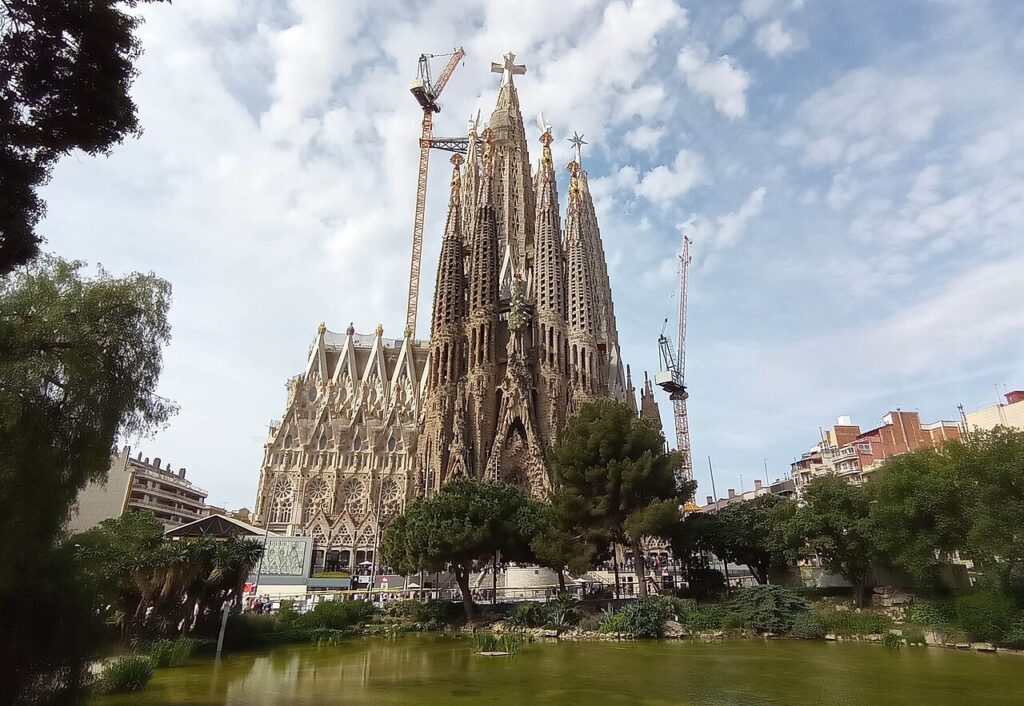
Pope Leo XIV is set to visit Spain in early June this year. Yet, long gone are the days of Spain being a bastion of Catholicism.
Last April, Archbishop Luis Argüello of Valladolid, the president of the Spanish Episcopal Conference, said at the opening of the bishops’ plenary meeting: “The time has passed, settled for centuries, when we said: I’m Catholic because I was born in Spain.”
For a country that for centuries has been seen as a Catholic heartland, one that evangelized South America and produced saints such as Sts. Ignatius Loyola, Teresa of Avila, and Dominic, this was a significant admission.
According to the 2025 Barometer on Religion and Beliefs in Spain, published by the Pluralism and Coexistence Foundation, only 46 percent of the population consider themselves Catholic and 37 percent believe in God.
At the same time, 64 percent of those surveyed believe in “energies” while 42 percent believe in astrology and 37 percent in reincarnation.
So: what happened?
Rafael Ruiz Andrés, assistant professor of sociology at the Faculty of Political Science and Sociology of the Complutense University of Madrid, and an expert in secularization, told Crux Now that the reasons for this are multi-faceted.
He said the modernization process can be traced back to the 19th Century, when the “two Spains” began to emerge, one “attached to Catholicism”, and the other “in which a different vision of what Spain should be started to appear.”
Although Francoism attempted to halt this, he said, “From the 1960s onward Spain modernized very rapidly.”
“As in other Western European countries, that modernization brought about a very radical change in culture, morality, sexual and emotional relationships, and also religion. Since the 1960s — at first slowly until the end of the 20th century, and then very quickly — Spain has, in a way, seen large sectors of the population lose that attachment to Catholicism,” he said.
He also said there was a “major breakdown in generational transmission” meaning that “parents increasingly stopped passing on the faith to their children.”
Every cloud has a silver lining
Ironically, according to Ruiz Andrés, because the secularization of Spain has been so thorough, this means Pope Leo is likely to get a better welcome than Pope Benedict XVI did when he visited Spain in 2006, 2010, and 2011.
Because he believes Spain is now post-secular, “religion stops being seen as a threat or something negative,” he said.
“When Benedict XVI visited, I remember all the controversy around his visit. Paradoxically, it was a more Catholic society, but there was much more conflict. There were strong anti-clerical movements and strong opposition every time a pope came,” he added.
“Society may react with indifference or some curiosity, but there is no major opposition to a pope visiting,” he told Crux Now.
This was echoed when Crux Now recently spoke to a 65-year-old volunteer, Santi Canela, at the homeless shelter Pope Leo is due to visit in Barcelona. He said the Catalan city will greet the pope’s visit “more with curiosity than devotion.”
Signs of hope?
Like in other Western countries such as England, France and the United States, there has been much made of a so-called revival of Catholicism amongst Spain’s youth.
This movement prompted Argüello to say last November: “There are signs that Catholicism is in vogue, or, if you prefer, that there is a return to spiritual principles that seemed to be outlawed.”
The evidence for this is mainly anecdotal.
There was the success of Lux by Rosalía, that features the singer dressed as a nun on the cover and has many religiously inspired lyrics; the award-winning film Los Domingos about a young girl who joins a convent; and the awarding of the Princess of Asturias Award to Catholic philosopher Byung-Chul Han.
Further, recently well-known young writer and intellectual Ernesto Castro converted to Catholicism.
There is tentative data for this, too. The Spanish Youth Report 2026 by the SM Foundation and based on data from 2025, said that 45 percent of young people aged between 15 and 29 identify as Catholic. In 2020, this figure was 31.6 percent.
According to the Survey on Social Trends of the Sociological Research Center, 34 percent of young people aged 18 to 24 and 38 percent of those aged 25 to 34 call themselves Catholic.
“I think these developments are important quantitatively, but even more important qualitatively,” Ruiz Andrés said as “it suggests that the religious and spiritual question is returning.”
“Because despite secularization, religions remain important actors in society. Also because we live in a world that is much more fragile, vulnerable, uncertain, and insecure than twenty years ago. That often leads people to ask existential questions and can lead toward spiritual or religious reflection,” he added.
In a recent interview with Ecclesia, Argüello admitted that the Church in Spain “is currently experiencing the tension between how to administer the extraordinary heritage received from Catholic tradition and how to evangelize many people who have minimal knowledge of what the Gospel means.”
Ruiz Andrés went a step further and said the church in Spain was “caught off guard” by the rapid secularization of the last few decades, and that “the Catholic Church was perhaps too trapped by its memory of having once been the central actor in Spanish society.”
“The Church had enormous dominance and hegemony in Spanish society until recently. So many people within the Church kept expecting people to return, or kept proposing forms of religious life designed for a society that was still Catholic even though it increasingly wasn’t,” he said.
The professor highlighted the strength of lay movements within Spain, such as Hakuna, Effetá, and Opus Dei, as evidence of a changing church, and also said the increase in generally more religious Latin American immigration may also influence the future of Spanish Catholicism.
“We’re seeing that Catholicism in Spain is not only growing somewhat, but also becoming more vibrant, more energetic,” he said.
Whether Pope Leo’s visit is a catalyst for a growth in Catholicism in Spain, only time will tell. What seems certain is that his trip will make a significant impact. And perhaps some of those curious, post-secular Spaniards will discover something in the pope that leaves a lasting impression on their lives.
Follow Fionn Shiner on X: @shiner83604