
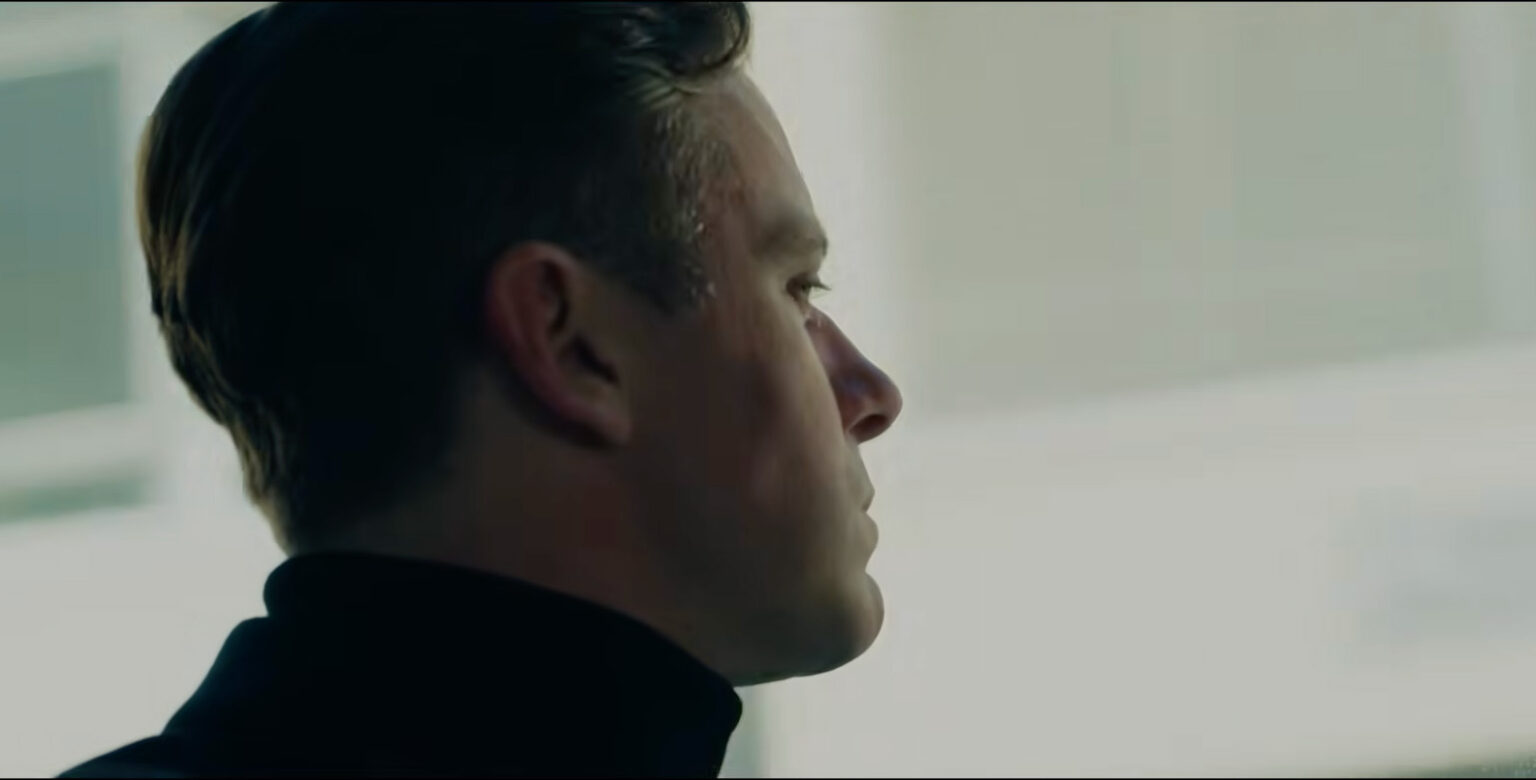
Uwe Boll’s new film, Citizen Vigilante, has been banned in Germany for promoting vigilantism. Germany has the strictest free speech laws in Europe and has decided to ban this film, which stars Armie Hammer:
There is no better time than now for a movie like this as we wade through safe and inoffensive films for like what, years by now? I grew up with hard-hitting thrillers like this so I’m excited to see it. Also great to see Armie Hammer back and on the big screen. They done him dirty and he always deserved better.
Here is Boll’s statement:
My Film *CITIZEN VIGILANTE* Has Been Banned in Germany
For any readers who don’t feel like slogging through a lengthy article about the FSK (Voluntary Self-Regulation of the Film Industry), here is the short summary up front: I shot an English-language action thriller in Croatia starring the US star Armie Hammer—a film that is set to be screened in every other country in the world and will, as a rule, even be accessible to audiences aged 16 and up. In the USA, it premieres on June 19th!
But not in Germany. In the FSK’s view, the film promotes vigilantism; consequently, a review jury—assembled like a broadcasting council, a lay-judge court, or the board of a bowling club—decided *not* to grant the film an “18+” release rating or label it “KJ” (No Youth Clearance). Instead, they slapped it with the label “KK” (which doesn’t stand for *Klu Klux*, but rather *KEIN KENNZEICHEN*—”No Classification”). This means that it isn’t just young people under 18 who are barred from seeing the film—absolutely *no one* will be able to see it, regardless of age. Which, in turn, means that five people in an office in Wiesbaden get to decide what adult citizens in Germany are allowed to watch and what they are not. The “great” thing—from the perspective of these Stasi-esque FSK censors—is that every outlet in Germany that screens or sells films will dutifully comply.
From Amazon to retailers like Müller and MediaMarkt (which sell DVDs), plus all cinemas, streaming services, and TV broadcasters—every single one of them will, as obediently as if it were Stalin’s era, neither screen nor sell the film. The real irony is that the film is neither pornographic nor excessively brutal. Its level of violence is on par with films like *John Wick* (starring Keanu Reeves) or *The Equalizer* (starring Denzel Washington). So, what is the *real* reason for the ban? Our protagonist becomes a social media hero by tracking down criminals and taking action against gang rapists. Specifically, I based the story on a real-life case from Hamburg—though I fictionalized it slightly and relocated the setting to Croatia. Here is some information regarding the actual “Stadtpark” trial: The verdict in the so-called “Stadtpark trial” in Hamburg has been legally binding since May 2025. Of the nine young men convicted, only one was actually required to serve time in prison at the time the verdict was handed down.
• **Sentencing:** In November 2023, the Hamburg Regional Court imposed juvenile sentences ranging from one year to two years and nine months on nine men—aged between 19 and 23—for the rape of a 15-year-old girl.
• **Probation:** For eight of the nine convicted individuals, the sentence was either suspended on probation immediately, or the decision regarding suspension was initially left open within the framework of a so-called “pre-probation” period.
• **Reasons for the Lenient Verdict:** Since the perpetrators were between 17 and 20 years old at the time of the crime, juvenile criminal law was applied—a legal framework in which the rehabilitative aspect takes precedence over punishment. The court justified the suspended sentences by citing, among other factors, the significant passage of time since the crime (2020) and the perpetrators’ positive social development in the interim.
• **Acquittals:** Two additional defendants were acquitted, as their involvement in the crime could not be proven beyond a reasonable doubt.
At the time, both the presiding judge and the press referred to the perpetrators as “poor, traumatized offenders.” This is, of course, a travesty—for rape is a grave criminal offense. Furthermore, the court appears indifferent to victim protection, given that the “poor girl” in question must continue to live in the very same city as the perpetrators who are not serving prison time.
My film is a work of fiction—and is therefore subject to entirely different criteria than a documentary. I believe It was banned for one reason because, in Germany, there is a desperate, convulsive effort to whitewash reality through self-deception. I believe If I had chosen to depict eight neo-Nazis gang-raping a vulnerable 15-year-old migrant girl, not only would the film have been given a fair classification by the review jury, but would likely receive accolades and praise. However, since I chose to make a film that held up a mirror to reflecting the injustice of a real life scenario and given that, according to crime statistics, gang rapes are disproportionately committed by perpetrators with a migrant background (https://www.bka.de/DE/AktuelleInformationen/StatistikenLagebilder/Lagebilder/KriminalitaetImKontextVonZuwanderung/KriminalitaetImKontextVonZuwanderung_node.htm).I believe my film has now been canceled, banned, and prohibited for shedding light on an uncomfortable truth. Thus, with this ruling, the FSK has clearly violated in my opinion the Constitution. The freedom of art is enshrined in Article 5, Paragraph 3, Sentence 1 of the Basic Law (GG). It states simply: “Art and science, research and teaching shall be free.”
This fundamental right ranks among the most strongly protected freedoms within the German Constitution. Here are the key details:
• No Legislative Reservation: Unlike freedom of expression (Art. 5, Para. 2 GG), the freedom of art is not subject to explicit limitations imposed by “general laws.” The state is prohibited from censoring art based on its content, nor may it pass judgment on whether a work is “good” or “bad” (a principle known as the “prohibition of artistic adjudication”).
• Comprehensive Protection: Protection extends both to the creation of the work itself (the “creative sphere”) and to its subsequent presentation and dissemination (the “sphere of influence”), thereby ensuring that art can reach the public at all.
• Historical Background: The framers of the Basic Law enshrined this robust right in direct response to the National Socialist dictatorship, during which art was vilified as “degenerate art” and banned.
I believe the FSK’s objective is to suppress artistic freedom under the guise of youth protection. While an “18+” rating would, in fact, adequately protect minors, I believe the FSK’s true aim here is to ensure that no one can view my film—because a specific segment of it depicts a reality they refuse to acknowledge: the reality that mass migration from predominantly Islamist countries has severely compromised the security situation in Europe. In Europe are per year over 150.000 knife attacks, over 85.000 rapes including over 6000 gang rapes. In Germany alone around 800 gang rapes per year. Over 70% of that crimes are done by Migrants and Citizens who were born in Arab or African countries. Europe excluding Russia and Turkey has a population of around 520 Million people and around 10% of them are people from Afrika and Arab countries but they do almost 70% of the violent and often random crimes.
Rather than restoring security, it seems the prevailing strategy of most european Governments is to limit public access to the facts as much as possible. In this respect—much like the taxpayer-funded “Grandmas Against the Right” (*Omas gegen Rechts*), countless other NGOs, film funding bodies, and public broadcasters—the FSK is not serving the cause of preserving the state or democracy; instead, its behavior suggests it is dedicated to preserving the current government and the status quo, doing so at the expense of freedom of expression. For quite some time now, the sole focus of all these organizations and media outlets has been the preservation of their own power and positions—pursued through undemocratic campaigns of suppression and disinformation. I would welcome a contact from a lawyer willing to file a criminal complaint against the FSK and its review board on a *pro bono* basis—and, given that this ruling stands to cost me at least 100,000 euros in lost revenue from the German market, to also pursue a claim for damages.
In an era where even children can access footage of real-life killings and pornography at any moment via streaming services and social media platforms, the FSK has, in any case, forfeited any legitimate claim to continued existence! We are even forced to pay over a thousand euros for these entirely superfluous review screenings. In most other countries—such as Austria, Scandinavia, or the Benelux nations—no such body as the FSK exists. In this scenario, film distributors themselves indicate—whether on a DVD case or within a streaming interface—the minimum age for which a film is suitable. With horror films, for instance, the cover typically bears an “18+” rating; after all, no one would likely want to watch a horror film rated for ages 12 and up, given that fans expect to see violence and gore. Thus, these self-assigned ratings are by no means misleading. I believe the FSK should be abolished; alternatively, DVD retailers—and streaming platforms, at the very least—should publicly distance themselves from the agency and declare that NO FILM, NO BOOK, NO PAINTING, NO NEWSPAPER ARTICLE, and NO SONG can be banned in Germany.