
Asia’s strongest Japan has won six consecutive games, catching even Iceland.
Japan won 1-0 in the warm-up match and opening ceremony against Iceland at the National Stadium in Tokyo, Japan, on May 31 (Korea time).
As a result, Japan increased its winning streak, which began with the match against Brazil, to ‘6. In the process, they destroyed world powers such as Brazil and England.
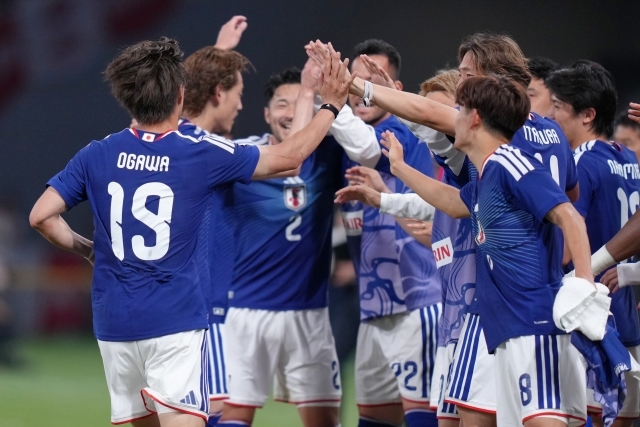 사진 확대
사진 확대 Japan won 1-0 in the warm-up match and opening ceremony against Iceland at the National Stadium in Tokyo, Japan, on May 31 (Korea time). Photo = AP = Yonhap News
The game was even more special because “Japanese legend” Yoshida played his retirement match for the national team. He, who represented Japan’s defense, delivered his final greeting in the 127th A-match.
Starting with goalkeeper Suzuki, Tomiyasu-Yoshida-Itakura-Doan-Endo-Tanaka-Nakamura-Kubo-Ueda started.
Iceland started with goalkeeper Valdimarsson, followed by Tomasson-Magnusson-Gretarson-Todarson-Sorshalson-Hrinson-Waldurson-Eletersson-Willumsson.
Japan opened in the 8th minute of the first half when Nakamura tried to shoot in the box after a one-two pass with Kubo. Iceland also fought back in the 31st minute with Tomasson’s mid-range shot.
In the 36th minute of the first half, Valdimarsson saved Kubo’s mid-range shot. Two minutes later, Nakamura connected Kubo’s cross with a header, and Valdimarsson blocked even this.
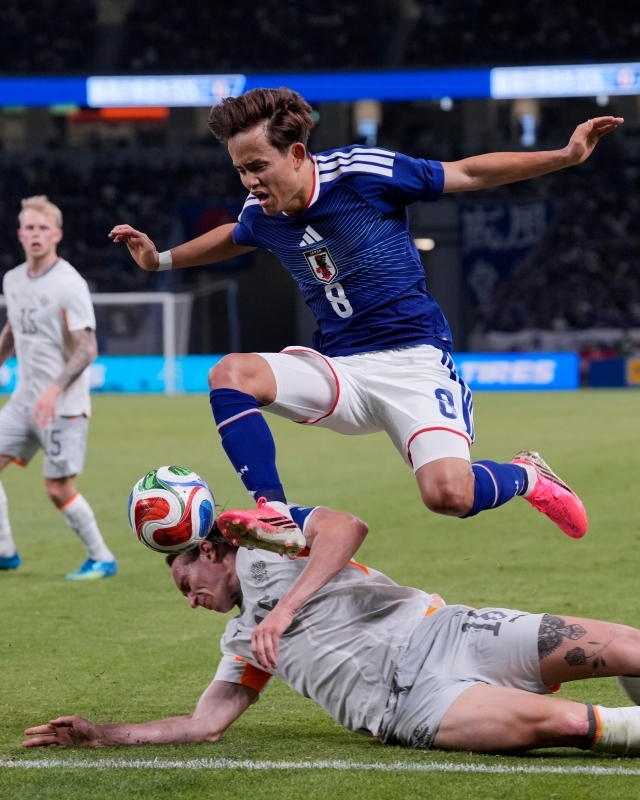 사진 확대
사진 확대 Lee Kang-in’s friend Kubo impressed in many scenes as a Japanese ace. Photo = AP = Yonhap News
Iceland’s counteroffensive was also fierce. In the 44th minute of the first half, Suzuki blocked Sorghalsson’s sharp mid-range shot. Japan tried to score with Nakamura’s cross and Tomayasu’s volley shot in the extra time of the first half, but failed to penetrate Valdimarsson.
In the second half, Japan pressed Iceland without losing the lead. Sugawara’s corner kick and Itakura’s shot were blocked by Valdimarsson in the 51st minute of the second half. Four minutes later, Sugawara’s cross and Nagatomo’s shot are the same.
Iceland’s counterattack was sharper than expected, but Japan did not have a big loss crisis. And Ogawa, who was replaced, showed good movements and increased his chances of scoring. Ogawa’s mid-range shot passed by the goal in the 63rd minute of the second half. Later, in the 87th minute of the second half, Ogawa finished off Sugawara’s cross with a header and eventually scored the winning goal.
Iceland aimed to tie the game with a mid-range shot that Hermansson attempted just before the end of the game. One, he failed to open the Japanese goal.
In the end, Japan has won six consecutive games, allowing it to play in the North-China World Cup in a good mood.
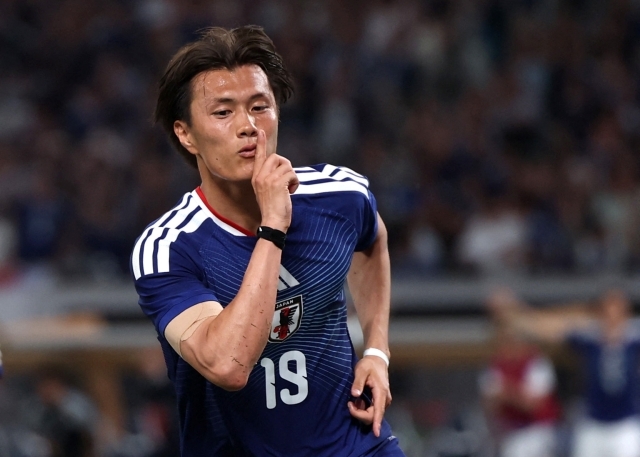 사진 확대
사진 확대 Ogawa scored the winning goal of the header to lead Japan to its sixth consecutive victory. Photo = REUTERS = Yonhap News
[MIN JUN KU, MK Sports Reporter]