
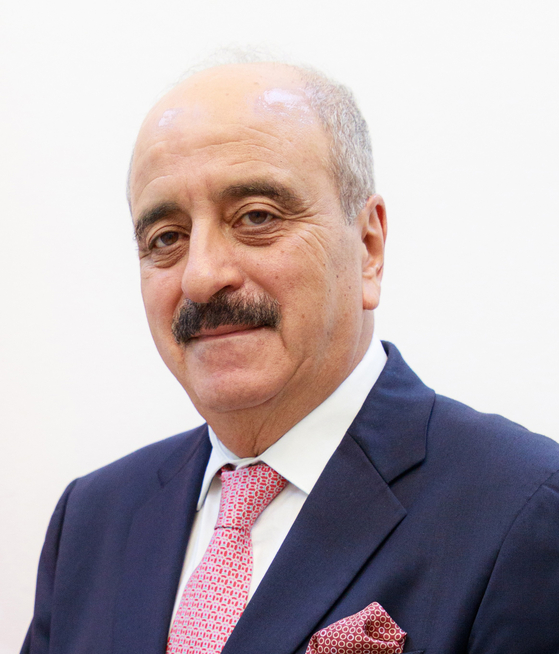
H.E. Mr. Mohamed Ali Nafti
The author is the Minister of Foreign Affairs, Migration and Tunisians Abroad of the Republic of Tunisia.
The geographic distance separating Tunisia and Korea might suggest an unbridgeable divide. Yet, a closer examination reveals a profound alignment in our core values, historic trajectories and national character. While Korea has achieved global prominence by projecting its energy toward the sea, Tunisia’s identity is similarly rooted in its coastal strength and maritime heritage.
![Foreign Minister Cho Hyun delivers opening remarks at the 2026 Korea-Africa Foreign Ministers’ Meeting at the Lotte Hotel in Jung District, central Seoul, on June 1. The meeting marks the first standalone foreign ministers’ gathering hosted by the Korean government with invitations extended to all 54 African countries and four regional organizations. Participants are expected to discuss practical measures to deepen Korea-Africa cooperation and coordinate responses to global challenges, including supply chain disruptions. [NEWS1]](https://www.byteseu.com/wp-content/uploads/2026/06/b0083e70-d266-4365-b9ec-2e21ef6ab58e.jpg)
Foreign Minister Cho Hyun delivers opening remarks at the 2026 Korea-Africa Foreign Ministers’ Meeting at the Lotte Hotel in Jung District, central Seoul, on June 1. The meeting marks the first standalone foreign ministers’ gathering hosted by the Korean government with invitations extended to all 54 African countries and four regional organizations. Participants are expected to discuss practical measures to deepen Korea-Africa cooperation and coordinate responses to global challenges, including supply chain disruptions. [NEWS1]
This deep cultural bond is uniquely embodied by our historic icons: Just as Admiral Yi Sun-sin is the ultimate pride of the Korean seas, Hannibal represents the eternal, resilient spirit of the Tunisian coast. Furthermore, both nations, lacking vast natural resources, made the pivotal decision at independence to invest heavily in human capital. This shared conviction has laid a solid bedrock of mutual understanding and common purpose, which has been instrumental in building a mature, forward-looking partnership.
Korea redefined its national growth through its “compressed development” strategy, transitioning from a war-torn, impoverished agricultural state to a high-income, tech-forward cultural powerhouse in just a few decades.
Inspired by this model, Tunisia is now embarking on an ambitious strategy and charting a bold new path toward knowledge-intensive, high-value-added industries. We are building dynamic ecosystems designed to foster startups and drive foreign direct investment into value-added sectors. Our success in the automotive components sector and the aerospace industry for global leaders like Airbus Atlantic and Safran stands as a testament to our capacity to manage complex, cutting-edge industrial processes.
To sustain this industrial momentum, Tunisia focuses on cultivating advanced skills and producing first-class engineers and researchers. Academic collaboration, therefore, remains at the heart of our bilateral vision. We proudly reflect on our partnerships and exchange programs with the Korea Advanced Institute of Science and Technology (KAIST) and other leading universities. Such initiatives empower exceptional groups of Tunisian alumni and bright minds. As we accelerate our technological ambitions, we are deeply committed to reinvigorating and expanding this vital academic bridge to equip the next generation of innovators.
In this transition up global value chains, Korea serves as both an inspiration and an ideal partner. Our collaboration has evolved beyond traditional Official Development Assistance into the realm of high-content technology, yielding visible, transformative results. Tunisia’s digital transformation has been profoundly enriched by this partnership.
We take great pride in our joint milestones: Tuneps, an online e-procurement system modeled after Korea’s Koneps; the Land Information System, a vital pillar for our national infrastructure; and the E-People Platform, a transformative tool that is redefining how the Tunisian government listens to and serves its citizens.
Our partnership with Busan Technopark has taken flight, quite literally, through our Agritech Drone Project. By integrating AI-powered drones into our agricultural sector, we have moved past simple modernization toward highly intelligent resource management.
Furthermore, our technology partnership is pushing the frontiers of advanced health care, with the introduction of Korean robotic surgery solutions aimed at elevating clinical operations. These sophisticated applications demonstrate how Tunisia serves as a living showcase and an operational window for Korean technology throughout Africa.
On the industrial front, the success of Yura Corporation, which operates five thriving cable and harness manufacturing plants across Tunisia, serves as an inspiring blueprint for other Korean corporate investors seeking a secure, highly capable manufacturing anchor.
As Korea broadens its strategic engagement with Africa following the 2024 Korea-Africa Summit, and the follow-up foreign ministers’meeting just concluded Monday, Tunisia stands ready to act as a constructive and reliable partner.
Korea’s bold initiative to establish a transformative paradigm of partnership with the African continent stands as a major milestone. Tunisia fully supports and adheres to this visionary outreach, recognizing its sincere commitment to co-prosperity rather than a traditional donor-recipient relationship. We view Korea’s focus on structural transformation, capacity building and technology transfer as the exact catalyst needed to accelerate Africa’s integration into global high-value supply chains.
In return, Africa offers Korea far more than just a new frontier; it provides a vital strategic anchor. Home to a burgeoning middle class and a tech-savvy youth population, the continent represents an expansive consumer base for Korean digital innovation and advanced manufacturing. Furthermore, in an era defined by geopolitical volatility, the weaponization of trade and disruptive technologies, Africa provides a crucial avenue for Korea to diversify its supply chains. Ultimately, Africa stands as a dynamic and reliable partner within the ascending Global South, ready to co-author a new narrative of global resilience and success.