
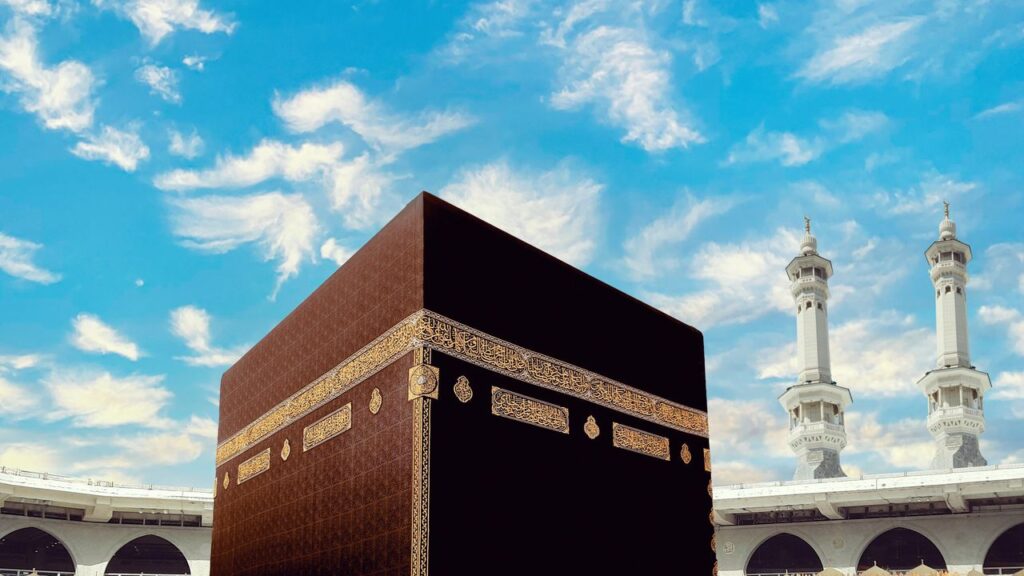
The main street leading to Masjid An-Nabawi in Madinah was teeming, as everyone paced to get a spot for the sacred Jummah (Friday) prayer.
“Try to get there three hours earlier,” a fellow worshipper had advised. They weren’t kidding. Though my husband, Christian and I had left the hotel earlier than my parents and sister, we still didn’t make it into the mosque’s grounds.

We each managed to claim a space in the vicinity beyond the masjid’s gates – in the shade, mercifully. It was almost midday, and the temperature was exceeding 30°C, though this is mild compared to the raging heat of a Saudi summer.
I laid out my prayer mat and placed my bag next to me, to reserve space for my mum and sister. They joined soon after, but I found out later that my dad had been forced to sit in the sun, exposed for the duration of the khutbah (sermon) and salah (prayer). It was also Ramadan, so we were all fasting.
In general, the heat alongside the lack of water was testing. Fortunately, Ramadan fell in March this year, while in recent years the summers here have reached 50℃. I hope to return one day for the Hajj pilgrimage – a rite of passage and obligatory act for all Muslims at least once in their lives – but the rising temperatures do concern me deeply.
“The long-term outlook is becoming more severe,” says Islamic Relief Worldwide’s head of global advocacy Shahin Ashraf MBE. “We’re probably going to see it start to become unsustainable in about two generations’ time, which means that for the first time in the history of our faith, we will have to carefully consider who goes to Hajj.”