
Environmental activist raises concerns about proposed nuclear projects
Published 4:17 pm Tuesday, June 2, 2026
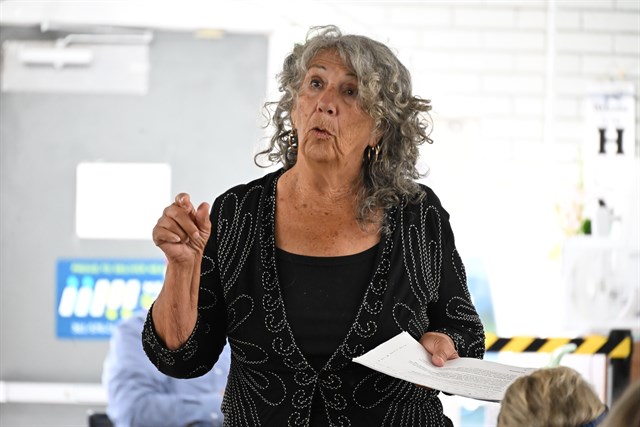
The Victoria County Democratic Party welcomed environmental activist Diane Wilson as the guest speaker at its monthly meeting, where she discussed proposed nuclear power projects and an artificial intelligence data center planned for the region.
Wilson, founder of the San Antonio Bay Estuarine Waterkeeper (SABEW), spoke about her decades-long efforts to hold major corporations accountable for environmental impacts and shared concerns about future industrial development along the Texas coast.
During her presentation, Wilson highlighted her work challenging companies such as Formosa Plastics and Dow Chemical, as well as the grassroots organizing efforts that have fueled many of those campaigns. She also provided attendees with information on how residents can contact elected officials and become involved in environmental advocacy efforts.
A significant portion of Wilson’s presentation focused on proposals by Dow and Blue Energy to develop nuclear power facilities in the area. Wilson and SABEW have publicly opposed the projects, citing concerns about potential impacts on local ecosystems and industries.
Blue Energy filed applications and permits with the Port of Victoria and the Victoria Navigation District in October 2025 to conduct feasibility studies for a potential nuclear power plant.
Wilson told attendees that reports submitted by Blue Energy indicate the project would have no environmental impacts. However, she questioned those findings, arguing that the proximity of the Victoria Barge Canal to San Antonio Bay could create risks for sensitive environmental resources.
Email newsletter signup

 Loading …
“You start messing with salinity, you start messing with water flow,” Wilson said. “When they start (dredging) a second time around, you start messing with the crabs, and then, you know, and then there’s an entire Vietnamese crab fishery. We’ve got the Hispanic oystermen over there and the fisherman (in Calhoun County), so it can affect all of that.”
Local party chair Jewel Buchanan said that part of the party’s mission is mobilization, which includes contacting elected officials, local and national and sharing concerns for upcoming projects. Wilson provided resources to do so, expressing the importance of opposing the projects to both the U.S. Army Corps of Engineers and Victoria Navigation District.
Wilson shared that her main concerns are the increased environmental impacts, as once a nuclear power plant creates nuclear waste, there is not an environmentally friendly way to dispose of it. She urged attendees to email the U.S. Army Corps of Engineers, who owns the land along the barge canal and copy the Victoria Navigation District, asking for environmental studies from Blue Energy.
Buchanan gave several resources to people wanting to send emails or call elected officials, including websites to use to find scripts and email templates. Wilson added that having citizen accounts was the only way she won her first lawsuit against Formosa Plastics.
“In 2019 (SABEW) won a huge citizen lawsuit against (Formosa), and it was a citizen suit because there was no evidence,” Wilson said. “For most of the files, our state environmental file is that citizens had to literally go out and gather the evidence, and so we actually won that case and got a $50 million settlement, zero discharge of plastics. We got monitoring, we monitor the plant, we got enforcement, and we made them do cleanup, and so now we have been fighting the Dow Union Carbide plant in Seadrift.”
In March, Wilson drew national attention when she launched a 30-day hunger strike outside Dow’s Seadrift facility to protest what she described as violations of agreements aimed at preventing plastic pollution from entering local waterways. During the demonstration, Wilson was arrested along with another supporter.
Wilson and several attendees also reflected on a previous effort to bring nuclear power generation to the region. In 2008, Exelon announced plans to build a nuclear power plant near the historic McFaddin Ranch in Victoria County. The project, however, was ultimately shelved in 2011 amid environmental concerns and changing economic conditions.
Many attendees shared their own concerns about the proposed developments and voiced their willingness to oppose both the nuclear power plant and a potential artificial intelligence data center planned for the region. Several participants said they intend to continue those discussions at a bipartisan town hall meeting scheduled for Thursday in Placedo, where the projects are expected to be a central topic of conversation.
As the meeting concluded, Wilson expressed optimism that community involvement could influence the future of the projects. She said that by organizing, educating themselves and engaging elected officials, residents may be able to reduce or prevent potential environmental impacts associated with the proposed nuclear facilities.
Lindsey Plotkin is a multimedia reporter for the Victoria Advocate.Contact her at lindsey.plotkin@vicad.com.