
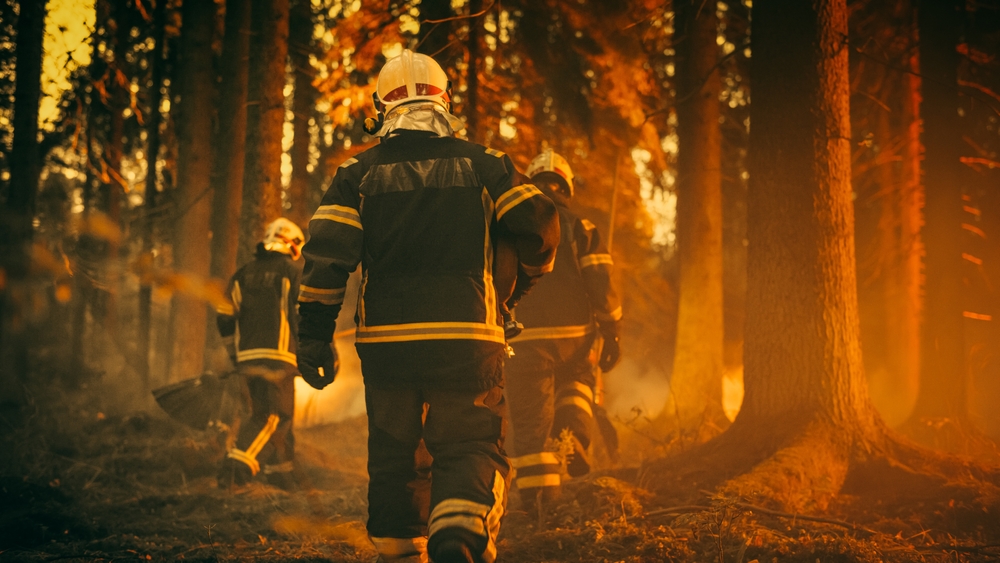
The move comes as EU wildfires continue to grow in frequency, intensity and duration due to increasingly extreme weather conditions.
A total of 777 firefighters from 14 European countries will be stationed in wildfire-prone regions including Cyprus, Greece, Italy, France, Spain, and Portugal.
The personnel will be supported by 22 firefighting aircraft and five helicopters that are on standby to assist countries facing severe outbreaks.
The expanded response aims to strengthen Europe’s ability to contain major fires quickly, reduce damage to communities and ecosystems, and provide rapid assistance when national emergency services become overwhelmed.
Hadja Lahbib, Commissioner for Equality, Preparedness and Crisis Management, believes the response will be instrumental in protecting European lives and infrastructure: “When fires threaten communities, Europe responds as one.
“I am proud of the firefighters pre-positioned in high-risk areas around Europe before disaster strikes, ready to help wherever they are needed, with the support of the EU.
“Together with our fleet of firefighting planes and helicopters, and experts working around the clock, we are turning European solidarity into action. When every minute counts, being prepared saves lives, protects livelihoods, and preserves our environment.”
Rising threat drives stronger EU coordination
Wildfires have become one of Europe’s most pressing climate-related challenges, with longer fire seasons and increasingly destructive blazes affecting multiple countries each year.
In response, the European Union is scaling up its collective emergency capabilities through the EU Civil Protection Mechanism. The mechanism allows countries to request assistance when domestic resources are insufficient.
Emergency support is coordinated through the Emergency Response Coordination Centre (ERCC), which operates around the clock and manages the deployment of firefighting personnel, aircraft and specialist teams.
A central pillar of the system is the European Civil Protection Pool, a network of pre-committed emergency resources provided by participating nations. These assets include aerial firefighting units, ground crews, medical teams, temporary shelter facilities and disaster response specialists.
RescEU reserve strengthens emergency capacity
To provide additional support during major crises, the EU has also developed rescEU, a strategic reserve designed to supplement national and pooled resources.
The reserve includes firefighting planes and helicopters, medical evacuation capabilities, field hospitals and emergency stockpiles. These resources are funded directly by the European Union and can be activated when existing capacities are exhausted.
This combination of pre-positioned personnel and rescEU assets will allow faster intervention during periods of heightened wildfire activity.
Technology and science at the centre of wildfire monitoring
The EU’s wildfire strategy increasingly relies on advanced forecasting and real-time monitoring tools.
Throughout the summer, the ERCC will work with wildfire experts and scientific partners to assess emerging risks using meteorological data and predictive analysis.
The European Forest Fire Information System will provide continuous risk assessments, while the Copernicus satellite programme will deliver emergency mapping and geospatial intelligence to support operations on the ground.
These tools are expected to improve situational awareness and help authorities make faster decisions during rapidly evolving emergencies.
Cyprus to host new regional firefighting hub
Looking beyond the 2026 season, the European Commission has announced plans to establish a new regional firefighting station in Cyprus.
The facility, scheduled to launch in 2026, will accommodate up to six aircraft and serve as a centre for training, exercises and knowledge-sharing among civil protection professionals.
The hub is intended to strengthen wildfire preparedness across both Europe and the South Mediterranean region.
2026 EU firefighting fleet
The EU-backed summer fleet includes aerial assets stationed across 12 countries. Major contributors include France, Greece, Italy, Spain and Croatia, while helicopters and light aircraft will also be based in countries such as Czechia, Romania, Slovakia, Portugal, Cyprus, North Macedonia, and Sweden.
With EU wildfires expected to remain a growing threat, European authorities are betting that greater coordination, stronger emergency reserves and improved technology will help limit the impact of another challenging fire season.