
Welcome to the Mad in America podcast. My name is Brooke Siem, and I am the author of the award-winning memoir on antidepressant withdrawal, May Cause Side Effects.
This series is a little different, as I am interviewing folks who have been through psychiatric drug withdrawal and have come out on the other side in either an interesting or inspiring way. I am here today with Fiona Frenzen, and I’m so excited to talk to her about this because she and I have been communicating over Instagram for a number of years now. I have been very interested in her journey in the world, physically, where she is and how she ended up there. But also, there has been an awareness and an intellectual approach to withdrawal that I’ve found to be very refreshing and interesting.
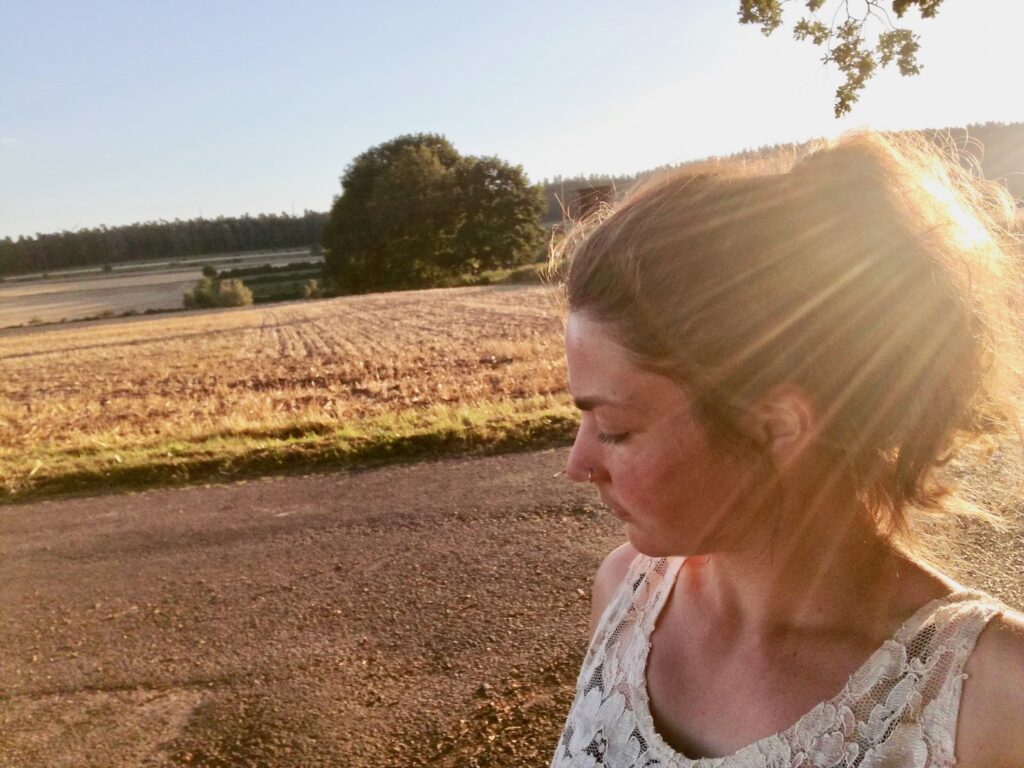
I will start with a little bit of a biography, which is super interesting. Born in Germany and raised in Denmark, Fiona is a qualified teacher with a master’s degree in anthropology. For years, she had a dream about living in Iceland. The raw nature had a grounding and healing effect on her. But due to her mental health challenges and severe withdrawal syndrome, this dream seemed unrealistic. However, this past fall, she moved to a rural part of Iceland where she began teaching at the local elementary and high school.
She’s happy to be there and very proud that she made it through the dark winter far away in the Arctic. But she thinks this is hopefully a stepping stone to another field. She dreams about putting her degree in anthropology to use by working in research and also contributing more to the awareness of the risks of antidepressants and the difficulties of withdrawal.
The transcript below has been edited for length and clarity. Listen to the audio of the interview here.
Brooke Siem: Fiona, thank you so much for joining us today.
Fiona Frenzen: Thank you so much. I’m really, really excited.
Siem: You mentioned before we started recording that your journey and this whole experience actually began with Mad in America. Can you start there and tell us how the journey began?
Frenzen: It was the fall of 2022, and I somehow found an episode of the Mad in America podcast with Anders Sørensen, the Danish researcher. I listened to him, and I was just, wow, okay, that’s what happened to me. I’m in withdrawal. That’s why I lost everything in my life, and everything broke down. A year earlier, I had decided to try coming off sertraline. I was on 200 milligrams and had been for years.
To give a little bit of context, I’ve always struggled with anxiety and OCD. I can remember the first symptoms started when I was five years old, and my mom died. I lived with it. Of course, it was hard and sometimes quite severe, especially when I had traumatic life events that broke out, and I went to therapy and got back on track. But I always lived without antidepressants until I was 25.
I had had years of severe sleep problems and issues, and it developed into anxiety around sleep and noises. In the end, with my GP, I decided to try sertraline and went on it at 100 milligrams. I became better, but my anxiety also just shifted because that is something I have with me. I quit my job and moved to Germany to do therapy, and got into a serious relationship. We were on together for a long time.
Then something really traumatic happened, and my OCD broke out, and I was on medication at that time. I was still on 100 milligrams, and there was never a plan for how to get off. I was on it and didn’t really think about it, and I took my pill every morning. So this thing happened, and I was working in a school as a teacher, and suddenly I was really afraid that my students would fall out of the window and die, and it would be all my fault. I kept checking windows, and somehow we ended up somewhere else with my OCD. I got like a phobia, and it got all crazy. Yeah, really bad. I went into therapy again, actually a few times.
In Germany, they have good treatment options; you can be an inpatient and have different treatments, but nothing really helped. I was just really stuck in this OCD loop, and it was just illogical for me. I felt really blocked. They raised my dose from 100 to 200 mg of sertraline, which is really a high dose.
Siem: That’s quite high. Even starting you on 100 is quite high.
Frenzen: Yes. If you know about receptor occupancy, it doesn’t really make sense to be on 200 milligrams. My gut got really bad, but I stayed on it. The doctors didn’t link my gut problems to the drug. I had started having gut problems from day one when I started on sertraline, and went from doctor to doctor, and no one really linked it. My thyroid also went down, so I had to be on Eltroxin.
Siem: That happened to me, too. I hypothesized that the antidepressants affected the thyroid.
Frenzen: Okay. I didn’t know. I was just so unaware that this small pill could do this to my whole body, like my thyroid function and my gut issues. So I was on 200 milligrams of sertraline and still had OCD. Nothing helped. My side effects got worse. I got really, really tired, and I couldn’t wake up in the morning. My sister had to call me and wake me up. I was back in Denmark and knew the psychiatrist who decided to try to get me off the drug.
Siem: Did the psychiatrists think the drugs might be causing it?
Frenzen: I think it was more my wish because I had a feeling something was off. I mean, I always had OCD, and I’ve always been able to work with it. Now I couldn’t, I was just stuck. I was just like, earlier on, I was still okay. I do stuff, even if I have it, it’s just following along. Now I was just in it, and nothing else had a place anymore. But he agreed. I started feeling better as I got to 100 milligrams, and I was more awake. I also felt I could think more logically again. I was happy. Also, my gut got better, and my thyroid stabilized and I was quite shocked after seven years. I was eager to get off.
I asked him, “Okay, can I just stop?” He said, “Yes.” So I was on 50 milligrams. If you know the occupancy curve, we are at like 70% occupancy. That was cold turkey, almost. I jumped off 50 milligrams, and then hell started. I started having flashbacks from the stuff I’ve experienced. I had severe anxiety. I had brain zaps. I had to run to the bathroom every single morning. I was feeling so hopeless. For the first time in my life, I couldn’t be alone. I just had so much anxiety, and I’ve always liked being alone. I hiked the Camino alone. I traveled to America alone. It’s something I’ve never had problems with.
I also got akathisia. I had to walk around in my yard, like around and around and around. My psychiatrist said, “Fiona, you need to be on medication. We’ll raise the dose again because apparently you’re really sick.”
He didn’t realize that I was in withdrawal. I didn’t know about it yet, but I refused because I now knew that my thyroid function depended on sertraline, and my gut had become better, and I didn’t want to risk it again. I refused to take a drug that gave me so many side effects.
Siem: Well, once you know, I mean, I was in such a similar situation where once I started connecting the dots between what I was experiencing and this drug, I just remember feeling so angry that I just said, I will deal with this for the rest of my life rather than ever spend another moment on that again.
Frenzen: Yeah, exactly.
Siem: I didn’t know what I was asking for at the time, but, in hindsight, I’m glad that that’s my reaction.
Frenzen: Yeah. It gives you a lot of power, I think, to pull through.
Siem: For me, that anger became useful. There were times when it wasn’t, because the rage, I would say, was not useful. The anger told me where my boundary was, and it would not let me cross it, no matter how bad things got. That was the saving grace, really, for me.
Frenzen: I must say I wasn’t there yet because I was in such hell. I just couldn’t deal with my life. I was lucky. I had one of my best friends staying at my place, but she couldn’t stay forever, so I needed to find a solution. My psychiatrist prescribed me a benzodiazepine, which was, of course, a big mistake, and I didn’t know what it was, but I was just desperate.
But it was not informed consent again. After two weeks, I was addicted, and it had a really short half-life. After five hours, I was shaking again, and I was admitted to the hospital, where I stayed for three months. Every morning, at six o’clock, I woke up panicked, and I had to run to the bathroom. Even they didn’t know what I was dealing with. But I had a good psychologist who recognized, okay, Fiona has experienced quite a bit of trauma, and before she can deal with her OCD, she has to do trauma therapy.
The former psychiatrist, when I told him about my flashbacks, said, “Oh, Fiona, that’s not really a big trauma.”
Siem: You don’t have to share what you’ve been through, but given what you wrote to me, I could not believe that he said that. What’s his definition of a big trauma if it’s not losing your mother at five, followed by everything else?
Frentzen: I think we have six criteria: sexual assault, fire and war. I cannot remember the last two or three. I think that was his framework, so I didn’t fit into that, but this psychologist, she was good. In Denmark, I knew I couldn’t get trauma therapy, so I needed to go to Germany, and they refused to take me when I was on benzodiazepines.
Siem: That’s very interesting and certainly not something we do here, but I mean, to me, it makes all the sense in the world. You can’t really access the emotional state if you’re high, basically.
Frenzen: Exactly. That’s what they told me. I find it really interesting that in Germany, they see benzodiazepines, like when you’re addicted to them, they see it as the same as when you’re addicted to heroin. Actually going to a clinic to get clean of benzos.
Siem: Which is probably how it should be. In the U.S., we have a lot of debates about that because of our cultural assumptions about people who are addicted to street drugs, but it’s just as dangerous and just as delicate.
Frenzen: It was really hard to get off. I was lying in my bed, shaking. To get off of that, I had to go back on sertraline, 150 milligrams, but then my gut, it refused. I had a lot of pain, and I had like severe inflammation. The doctor in Germany, he pulled me off that cold turkey, 150 milligrams again, and prescribed me something called opipramol. It’s not legal in Denmark. It’s really old and not good.
That’s when I started listening to podcasts and found the Mad in America podcast and realized, oh my God, this is what happened. I started reading your book also. I couldn’t finish because I felt like I was reading about myself, and it just hurt so much. I’m so sorry.
Siem: It’s okay. I’ve heard that before. Sometimes I recommend people just flip to the last 50 pages. If you’re in withdrawal, maybe just go to the last 50 pages and let your family members and doctor read the first bit.
What was so fascinating to me about your story was that it felt to me like, somehow, while you were going through all of this, this pull to go to Iceland just would not go away. That you were holding both of these experiences at the same time. Can you talk a little bit about the move to Iceland and what role that has played during this journey for you?
Frenzen: I was in Iceland in 2020, and that was after the breakup with my ex-partner, which was quite difficult. When I was in Iceland, I was still on medication, but I found community. I got to know new friends, and for the first time, I felt that my OCD actually also got better. I was out in nature a lot. Yeah, I felt really drawn to move back to Iceland. When I landed in this severe withdrawal, that was the thing I panicked most about. I was so sick. I couldn’t go back to Iceland.
I was told both by my parents and the staff in the hospital that I needed to move into supported housing. I could not be alone. I was so sick. I needed support like 24/7. I was shocked, and that really scared me because I worked in supported housing with refugees and also with disabled people. Now, suddenly, I was in the other role. But I kept looking at reels on Instagram about Iceland, the nature and waterfalls. That kept me going somehow. I got a book from my cousin about Iceland, and kept having contact with the people here.
Last year, after I finished my thesis in anthropology, which I did in severe withdrawal, I went to Iceland for three months, and it was during the wintertime, still with withdrawal symptoms. It was really, really hard. It was really dark and cold. I also remember texting you, actually, about nutrition, and I’m not sure this is the best idea because it’s really hard. But that’s also the first time I realized, okay, I can actually be alone without drugs in Iceland, far away from everyone I know, because I was in a rural place in the winter when it’s dark. If I can do that, I can do quite a lot. I think that’s when I realized, okay, I made it. I made it to the other side.
I went to Germany again, did treatment first to the end in the summer. It was like in the middle of the night, I was on Facebook scrolling, couldn’t sleep. Then I saw this job, and I just texted the school principal. The next day I had the job, and I was just, oh my God, now I have to move to Iceland. It was like really a coincidence. Then the doctors in the hospital kept being nervous about it, because of course, I still have my battles, and I still struggle.
They offered me to go out of the hospital, wait half a year in Germany, and go back into psychiatry and take another treatment, but I was done, and I am done with psychiatry. I moved here in late September. It’s a place in Iceland where I’ve never been before; it’s really rural. I’m the homeroom teacher for 8th grade, and Danish teacher from the 6th to 10th grade, and sports teacher also in 7th grade.
Then, around Christmas, a high school asked me, because they needed a Danish teacher, if I could step in. Since Christmas, I’ve been working both jobs. It has been a bit too much, if I have to be honest. But I think that has helped me more than any other therapy, because I needed to function for myself and all the hundred students that I have. Also, what really helped me was getting out of this role of being sick Fiona. Fiona in withdrawal, like having the whole day to focus on my symptoms, because I was really unhealthy, to have to be someone for someone else, and have quite a bit of responsibility.
Siem: I think that’s such a good point, and it’s one of the things that I talk with people often about, which is that we think withdrawal feels so much like illness, you feel sick. The instinct when you’re sick is to not do anything and stay under the covers and just wait until it goes away. I have seen over and over again, and I know this was true for myself, that even though that is the instinct, it’s typically more productive and helps withdrawal move forward if you treat it more like an injury that needs to be rehabbed, which means we have to work the parts of our body that are suffering, which for many of us is the brain.
I think that for people, anything they can do to try and train the mind, at whatever level you’re at, like if that’s doing crossword puzzles or word jumbles, because you can’t leave the house, do it.
I tell people all the time, go learn something hard for the sake of learning it. Go learn Latin. It’s not functional, that’s not the point. The point is to focus on something else, to force your body and brain to create new associations, new connections, build new pathways, and if it’s something in service, that’s even better. I think that you said in one of your pre-interview emails to me that finding something that creates distance from the symptoms gives you another role than the sick person, and that to me is such a huge part of this process.
Frenzen: It really, really is. I remember you talked about this really early on, so I had it in the back of my mind about learning something new, and it is really important. Also, the feeling of, okay, I’m able to do something, gives you the biggest getting out of antidepressants and coming back to life. It is so important that you feel that you get the power back because I feel that when we take antidepressants, we somehow give our power away. I mean, I’m not healed, I struggle, and life is hard, but it’s also, I think you also mentioned that sometimes, it’s part of being a human being, and it’s just really, really hard to run away from. I can numb myself, but that doesn’t necessarily heal us.
Siem: No, I feel like it can work until it doesn’t. Probably 100% of the people I’ve talked to have all had a very significant reason to start taking an antidepressant. Something happened, and when you look around, and you kind of say to yourself, okay, well, the reality is that something happens to everybody. None of us gets through this without some major problems.
Then, after this 30-40 year experiment of medicating people that I don’t particularly think is working well, maybe we need to try a different strategy. Also, when we hear all these withdrawal stories, it’s difficult, at least for me, I can’t say it was worth it. I would have done better just dealing with the grief of the death of my father than withdrawal. I know that now, because I’ve had to go through grief in a variety of different ways. It’s brutal, but it wasn’t withdrawal. Can you tell me a little bit about acceptance and how that has played a role in your recovery?
Frenzen: I’m still struggling with it, to be honest. I fully accept that it’s really hard to be a human being, and I think that really helps me. Now, when I’m sad, and I’m often sad, and I still have difficult memories and grief, because I think when you are on antidepressants, you just push the grief in front of you. When you get off, or that’s what happened to me, then I had to grieve, and I had to grieve a lot, and it takes time. But that’s something I have accepted, and I’m really proud I can hold it now.
I’m alone here in Iceland. I can deal with it alone without calling anyone and without panicking. But what I’m still battling a bit is the acceptance of having what I’ve been through and the symptoms I still have. About two years ago, I finally found out that I have lymphocytic microscopic colitis, which is a side effect of an SSRI. It probably started when I started taking the SSRI, and after 10 years, the doctors found out. I can hardly eat anything. I need to stick strictly to a ketogenic diet to not have to run to the bathroom, and I am in a process here with a doctor. She wants to put me on a steroid, and I’m really scared of that, because it’s again like this came from a drug, and now I need to take another drug to treat it. Just, no way, no. I really have a hard time trusting the medical system.
Siem: I will say that, for me, the gut health stuff has taken longer to get a hold of than anything else. It has changed and ebbed and flowed quite a bit over the years. It was, what, 2022 when this all started for you? It’s 2026 now, and you’ve been off the drugs for, what, a year and a half?
Frenzen: A bit more than two years.
Siem: Two years off, I mean, I think I probably didn’t start getting a hold of the gut stuff for probably until years between five and seven.
Frenzen: Oh, wow.
Siem: I don’t say that to scare people or anything like that. I mean, I say it because in recovery, there’s an order of operations, and I think sometimes we don’t realize that there’s an order that’s happening. Our gut health is not just connected to these drugs, but it’s also to our grief, to all that we’re processing, to the current stresses in our lives, to everything, right? At least in my experience, what I noticed is that it wasn’t until I really got through the majority of the emotional garbage that I needed to clear out that it felt like it was time to even address the gut issue.
I had sort of just accepted as well that this is always going to be what it is, and it was very embarrassing, and I was living with someone at the time, and it was bad. But at the same time, it was almost like the right tools did not enter into my life until I had cleared out enough of the emotional stuff that my body could actually respond to it.
When I started to figure things out a little bit, we got better to the point where I would say I’m mostly normal like 80% of the time, and then it kind of ebbs and flows. But I think what I’ve noticed over the past, this is my 10-year anniversary of being off all my drugs, is that I’m now starting to eat a little bit of gluten and dairy for the first time in five plus years, and I never thought we’d be able to come back here.
I say all this just because I would encourage you that I think the magic of acceptance is accepting where we’re at right now without projecting that onto the future. You’re going to have to accept where you’re at in three or four years, but you don’t know what that’s going to be, and whatever you think it’s going to be is almost definitely wrong. Leave open the possibility that your body can heal, because it has healed so much already.
Frenzen: I know, and actually, things can heal, because that’s the only thing our body wants. It’s healing. That’s what it does, and it takes time.
Siem: You mentioned that there was this very unfortunate common paradox between the doctors not believing you and your friends believing in you. Can you tell me about your support system, your friends and how they helped you through this?
Frenzen: I’m really lucky. I have an amazing friend, and I’ve known them since I was six years old. She has seen me when I was good and living my life. Of course, she also knows about my struggles and my story. She also tried out antidepressants at one point and wasn’t told how difficult it is to get off. She’s a really clever woman, and her dad is in pharma now and works with drugs. She really quickly got into, okay, she needed to cut the pills in half or into small pieces. She knew what I was going through.
The other friends just knew how I was normally. They believed in me and could see, okay, this is not the normal Fiona, or even the Fiona who struggled with OCD. This is weird. Whereas the doctors, of course, saw me when I was in my, I would say, craziness, because I felt really crazy. I didn’t feel like myself. Really, it’s so hard to describe how it feels to be in trouble. It’s just, it’s not possible to describe. If you see it from the outside, it is strange. Yeah, so I think that helped me the most, my friends, who support me.
Siem: Wonderful. In closing, I would love to hear a little bit more about your thoughts, and I realize this is a big question, perhaps not fully formed. Feel free to just talk a little bit about this, because we really don’t know who might be listening here on Mad in America. But you have this degree in anthropology, and you talked to me about wanting to maybe do some research around the connection between anthropology and psychiatry or antidepressants. I would love to hear just a little bit more about that, and perhaps if you’re dreaming about that, what does a dream look like?
Frenzen: Since I’ve been in this big crisis, I know what helped me was the podcast and listening to Anders Sørensen. I’ve listened to Mark Horowitz on repeat, just over and over again. I started reading your book and also your interviews on repeat. My really big dream is to turn my own crisis into helping someone else, because in the beginning, I couldn’t find anything about what happened to me. I felt like I was in the dark, and we need a bigger focus on this.
One thing is my sister is a doctor, and she has seen me struggle with withdrawal, and she has told me that she’s tapering people off way slower now, and they come back to her and say, “Oh, finally, I can get off. I couldn’t get off before,” and they are so happy. So I’m just like, okay, we need this.
As an anthropologist, I would like to talk to people in withdrawal or people who try to get off. Maybe dive into the gaslighting, how do they meet the system, or how are they met? I would also like to talk to doctors because something is going wrong. We know that withdrawal is difficult. The research is out. But there is somewhere a disconnect; doctors do not believe in it, or I’m not sure what the problem is.
Siem: All right. Is there anything else you would like to leave with the audience about getting through this experience and what it is like to be on the other side?
Frenzen: I think it’s just linked to what we just talked about. Something that I’m reflecting a lot on, because sometimes the thought comes up, okay, maybe it is easier to be on an antidepressant. I miss being numb sometimes because it’s just nice not to feel. I have to say that, honestly, I do understand people going back on. That’s like I think a mix of me being an anthropologist questioning facts, and a human being, like, how is it?
I just think that emotions and difficult times are part of that, and I said it before, I know the conversation that we cannot run from. Also, the perception of what is being sick. Are we sick when we are grieving and being sad and anxious? Of course, my OCD is not healthy. I know that. But is it really being sick? Is it my way of dealing with how I experienced a suicide, or my dad leaving, or being adopted? Is that really being sick? I know sometimes I feel sick and weird, but I wish that we could see being human more openly. Giving space for weirdness, yeah.
Siem: I really love that sentiment. Thank you so much for sharing a little bit of your story and taking the time. You’ve already shown that your experience has helped others by it influencing your sister, and there will be more of that to come, I’m sure. Thank you so much.
Frenzen: Thank you, too. Thank you for the great work that you are doing. It has really influenced my life a lot.
***
MIA Reports are supported by a grant from Open Excellence and by donations from MIA readers. To donate, visit: https://www.madinamerica.com/donate/