
The Diplomat author Mercy Kuo regularly engages subject-matter experts, policy practitioners, and strategic thinkers across the globe for their diverse insights into U.S. Asia policy. This conversation with Pekka Virkki – co-founder of Mission Grey, journalist specializing in international power dynamics, and author of the newly published book “Autopsy of Post-Finlandization: The Roots of the European Appeasement of Russia (Ibidem 2026)”– is the 511th in “The Trans-Pacific View Insight Series.”
Examine the strategic nexus of the Strait of Hormuz, Strait of Malacca, and the Baltic Sea.
They are global chokepoints demonstrating the return of the strategic seas. While their roles in global geopolitics and trade differ, there are important similarities as well. Most importantly, they illustrate the ongoing shift from the post-Cold War globalized international order toward a global political economy focused less on economic efficiency and more on securing one’s position within an increasingly fragmented system. Neither states, international organizations, nor businesses can afford to ignore this trend.
How do these three regions reveal a shift in the global order?
They all demonstrate the global shift toward what might be called a “multipolar coercive order.” This does not mean the old rules have been completely abandoned, nor does it mean one faces a full-fledged military threat everywhere. Rather, it means growing insecurity and unpredictability in regulations, practices, and the selective enforcement of norms. Fast, well-informed adaptability is becoming an even more valuable asset than before.
What has happened around the Strait of Hormuz might be described as classical coercion: the use of geography to pressure adversaries as part of an interstate power struggle. In the Baltic Sea, we observe persistent hybrid activities that weaken trust in supply chains, energy deliveries, and regional security.
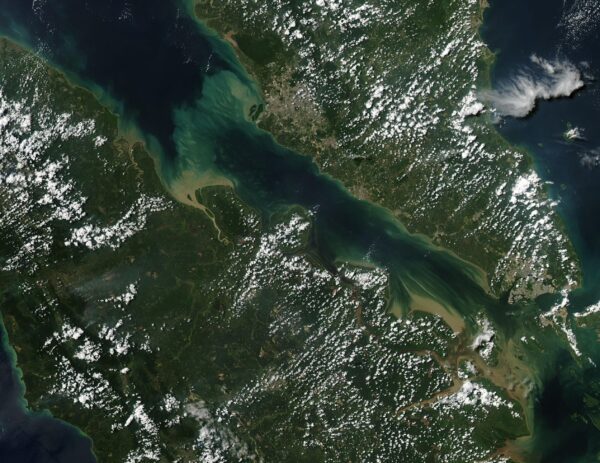
Of the three chokepoints, Malacca may be the most important. Should the bipolar rivalry between the U.S. and China deepen further, the space for neutrality could shrink, forcing states and even companies to decide where they stand. Even the mere threat of escalation could increase unpredictability, encourage rerouting, and raise insurance premiums – ultimately reshaping the structures of global politics and trade flows.
Explain the correlation between strategic seas and global economic continuity
The so-called “rising powers” often argue that the post-Cold War global economic system has merely been a subtler version of the European imperial world order developed during the 18th and 19th centuries. While this claim is propagandistic and highly simplified, it is not entirely without merit.
As the famous patriotic song declares, “Britannia rules the waves” – and even after the collapse of the British Empire, the U.S.-led collective West has treated freedom of navigation as a sacred principle that, if necessary, must be protected by military power. Quite often, deterrence alone proved sufficient and did not need to be tested.
Today, however, this tradition is changing. While the system is not collapsing outright, it is increasingly being questioned and tested. The logic of global trade flows is transforming, and disruption is becoming the new normal. Previously, competitive advantage depended on finding the cheapest and most efficient means of production overseas. Now, it increasingly depends on avoiding additional costs caused by delays, unpredictable trade policies, uncertain contract enforcement, and technological incompatibilities.
There is more to this transformation. Seas remain important, but they are only the most visible aspect of a broader trend. Beyond controlling physical maritime routes, the City of London and other financial hubs have long relied on a rules-based system and the free movement of capital. Financial flows that were meant to support growth-producing investment are now also exploited by authoritarian actors and criminal networks seeking to undermine free societies. Like open seas, these flows are vulnerable as well. To better understand these mechanisms, reading “Autocracy Inc.” by Anne Applebaum and “The Age of Unpeace” by Mark Leonard may be useful.
Ultimately, this is about weaponized interdependence. To succeed in such competition, it is essential to identify the methods and tools needed to achieve relative advantage in an increasingly complex environment shaped by unprecedented computing power, but also by an overwhelming supply of both relevant and low-quality information.
What is happening across the world’s strategic seas is not merely a regional phenomenon. Above all, it is a symptom of a deeper transformation of the international system. It reflects a global village building walls – or rather, checkpoints – between neighborhoods, each accusing the others of selectively applying norms and cherry-picking rules.
What are the top three lessons from the current crisis in the Strait of Hormuz that could adversely impact the Strait of Malacca and the Baltic Sea?
First, full closure is not required to weaponize a physical, digital, or financial chokepoint. It is often enough to disrupt logistics, conduct cyberattacks, raise insurance costs, or threaten gray zone military action.
Second, no world power possesses sufficient capabilities to fully guarantee that such disruptions will not occur. When they do, the resulting shock can severely damage the global economy. The era of Pax Americana is over.
Third, mitigating and managing uncertainty is often more important than simply avoiding higher costs. No state, company, or international organization should behave as though the world reflects their preferred assumptions. Those who recognize reality as it is are more likely to avoid economic losses, instability, and war. Different scenarios must be prepared for comprehensively; and when challenges materialize, adaptation must be rapid and decisive.
How should neutralizing chokepoints factor into the decision-making processes of government and industry decision-makers with regard to geopolitical risk mitigation?
It begins with mindset. Instead of relying on reactive “risk management,” decision-makers should treat resilience governance as a core strategic capability. They need processes capable of identifying, analyzing, and responding to weak signals, black swans, and emerging trends through a scenario-based approach. In the era of artificial intelligence, it is also becoming easier to identify non-intuitive second- and third-order effects.
The approach should be as holistic as possible. As the chokepoint analysis demonstrates, geopolitical, logistical, regulatory, environmental, military, cyber, and financial risks are deeply interconnected. No individual possesses enough expertise, data, or processing power to manage all of this alone.
Integrating AI tools as advisory participants in corporate boards and management processes is not without challenges, but it is already a reality – something I discussed with Risto Siilasmaa, former chairman of Nokia and co-founder of F-Secure, two years ago. Since then, not only have LLM [large language models] technologies, network analysis, and other AI tools developed at remarkable speed, but the external environment facing businesses has become significantly more demanding. Sticking to old methods is no longer a viable option for those who wish to survive – let alone for those seeking growth and success.